Religion
Islamic Symbols and Meanings: Crescent, Calligraphy & More
Discover what the crescent moon, Arabic calligraphy, geometric patterns, and the color green really mean in Islam — explained clea…
 KnowMastery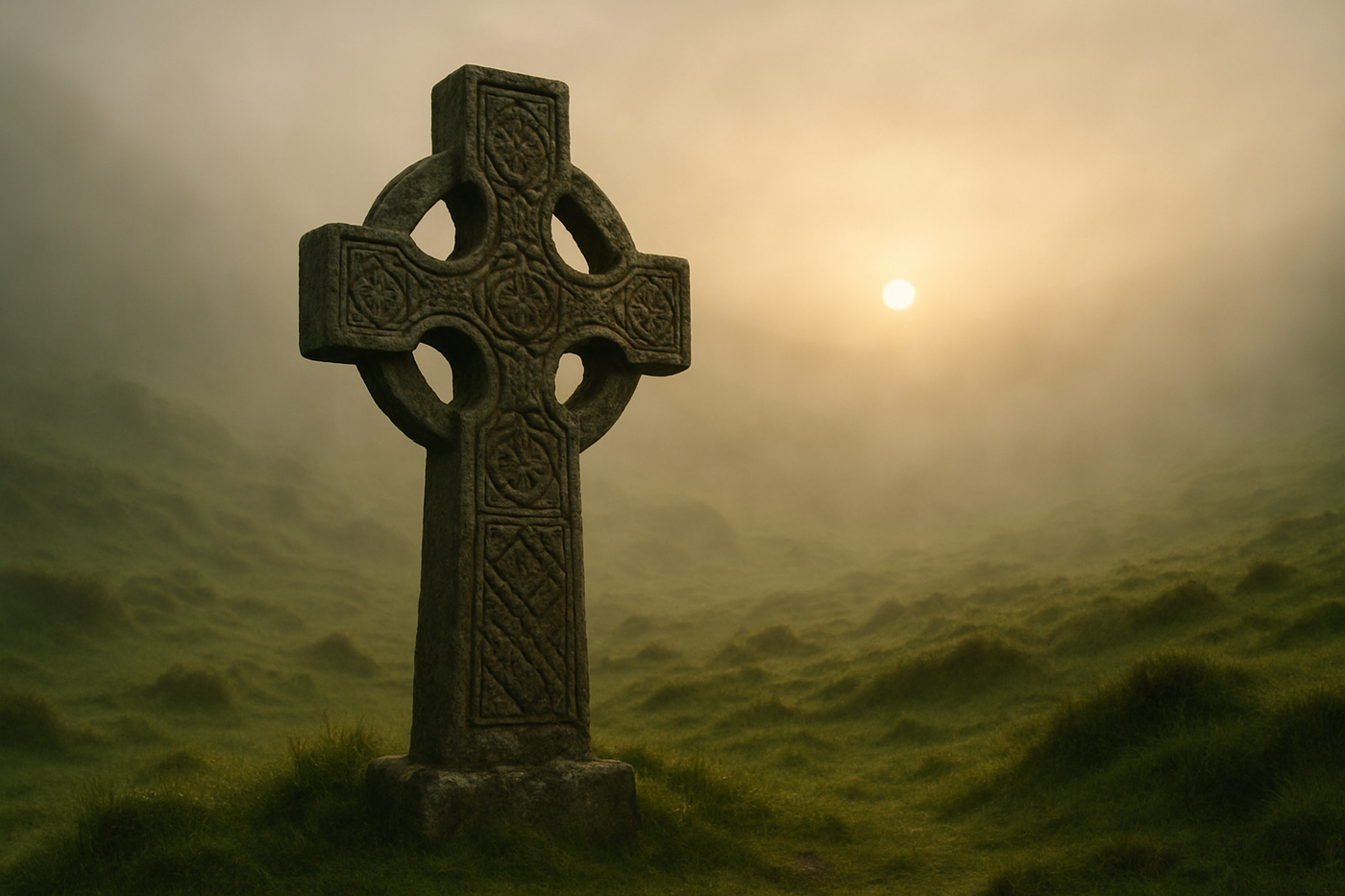
A cross is a symbol formed by two intersecting lines — usually one long vertical beam crossed by a shorter horizontal one — and in Christian tradition it represents the crucifixion and resurrection of Jesus Christ. Each major style carries its own distinct meaning:
This guide is the deep-dive companion to our complete catalog of every cross variation. Here, instead of cataloging dozens of shapes, we focus on the core cross meanings explained in depth — the history, the theology, and the symbolism behind the handful of crosses people actually encounter in church, in jewelry stores, and on gravestones.
Think about the last time you saw someone touch a cross around their neck before a hard conversation, or noticed one carved into a gravestone worn smooth by a hundred years of rain. That small gesture carries something heavier than metal or stone, a private history of loss and belief passed down without a word.
People have worn crosses into battle, buried them with their dead, and tattooed them onto their skin as a private promise to themselves. The shape looks simple, but the story behind each version is not.
At its root, the cross is a Christian symbol of sacrifice and salvation. It marks the execution device the Romans used on Jesus of Nazareth around 30 AD, and early Christians turned that instrument of death into a sign of victory over death itself. Believers scratched the symbol into the walls of Roman catacombs where they buried their dead in secret, using it as a quiet marker of faith at a time when practicing Christianity could get you killed. Constantine's conversion in the 4th century led the cross—often in the form of the chi-rho/labarum sign at first—to become a public Christian emblem on coins, banners, and basilicas.
Cross-like shapes existed in other cultures long before that. The Egyptian ankh represented life, the sun cross found across Bronze Age Europe marked the four seasons, and Norse peoples carved solar wheels onto standing stones centuries before missionaries arrived in Scandinavia. Christianity did not invent the shape. It took one version of an old and widespread symbol and gave it a new, specific meaning tied to one event.
Strip away the denomination and history, and most cross symbolism boils down to four recurring themes: sacrifice, faith, protection, and eternity. Sacrifice is the core meaning carried by the crucifix specifically, where the body of Christ makes the cost of salvation visible. Faith is the broader meaning carried by the plain Latin cross, a general statement of belief without any specific scene attached to it. Protection shows up in crosses worn as talismans, carried into battle, or placed over doorways, a tradition that predates and runs alongside formal church teaching. Eternity is the meaning most often attached to circular or looped crosses, like the Celtic cross, where the ring suggests a cycle without a clear end or beginning.
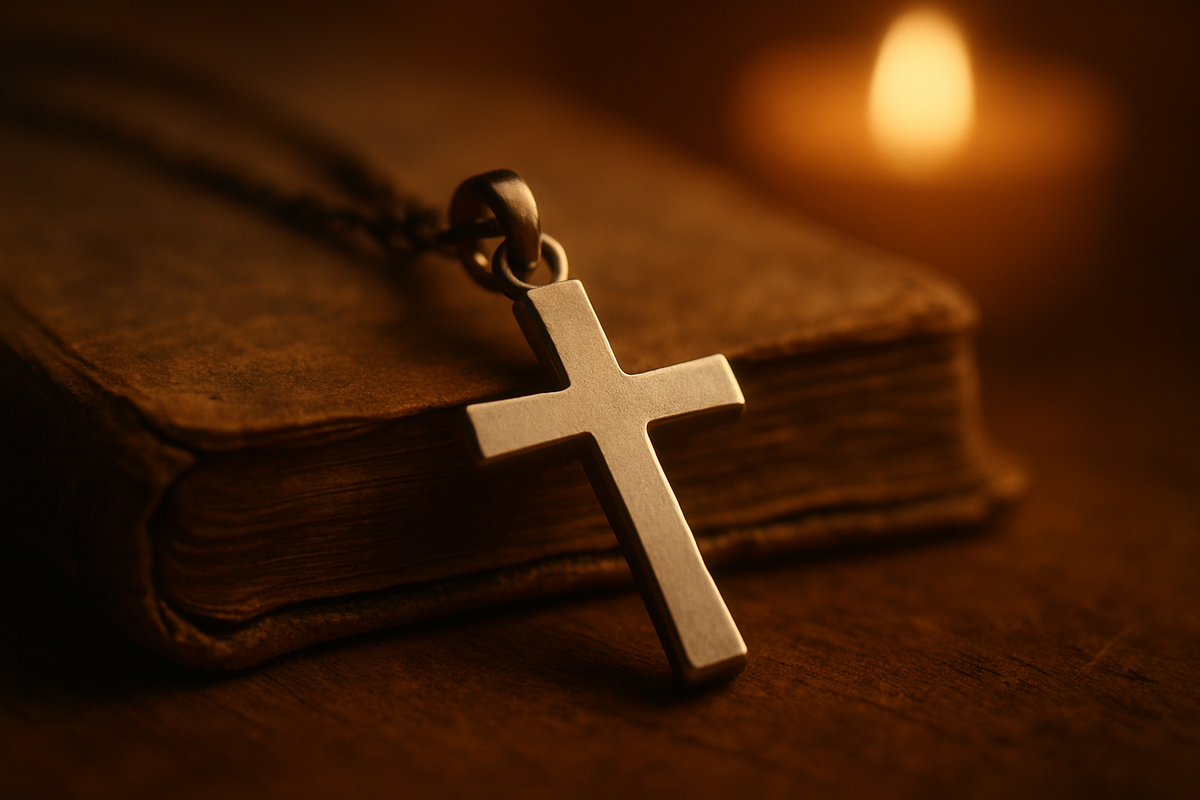
The Latin cross is the shape most people picture first: one long vertical beam crossed near the top by a shorter horizontal beam. It is the standard Christian cross used by most Protestant denominations, worn plain as a reminder of faith rather than a depiction of the crucifixion itself.
Protestant tradition generally favors the empty cross over the crucifix. The reasoning goes back to the Reformation: Martin Luther and later reformers wanted to emphasize the resurrection, the fact that Christ is risen and the cross stands empty, rather than dwell visually on the suffering of the crucifixion. That preference still shapes church design today. Walk into most Baptist, Methodist, or Presbyterian sanctuaries and you will find a bare cross at the front rather than a crucifix.
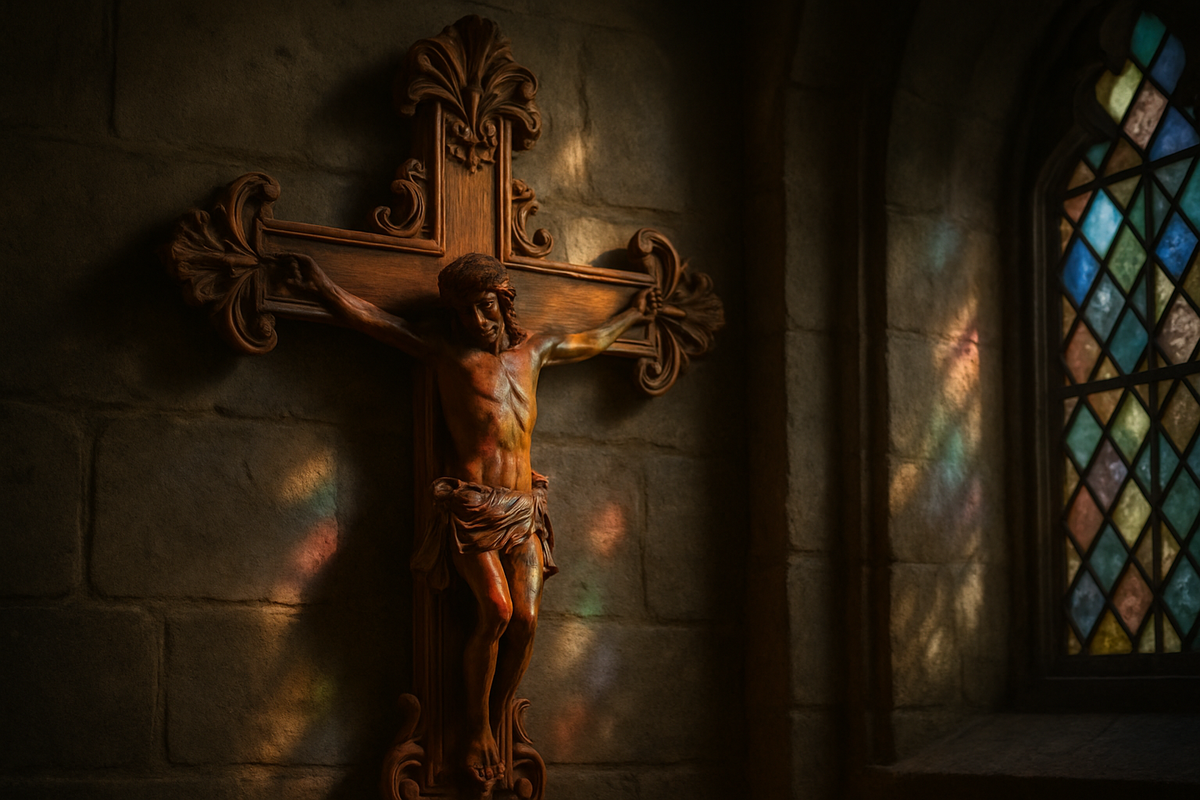
A crucifix is a cross that includes the corpus, the sculpted or painted figure of Jesus's body. Catholic and Eastern Orthodox churches keep the corpus visible because it makes the sacrifice tangible rather than symbolic. Walk into any Catholic parish and you will find a crucifix positioned above or near the altar, and most practicing Catholics wear a small one on a chain or keep one in their home.
The crucifix shows up in specific moments of Catholic practice. It is carried during the Stations of the Cross, kissed during the veneration of the cross on Good Friday, and often the first and last object a priest places in a dying person's hands during last rites. Eastern Orthodox churches use a similar image but usually as a flat icon rather than a three-dimensional sculpture. For more on how Catholic visual tradition works, see this guide to Catholic symbols and their meanings.
The San Damiano cross was painted around the year 1100 (commonly dated to the 11th century) by an unknown Umbrian artist, and, according to Franciscan tradition, gave Saint Francis a vision in 1205. The original hangs in the Basilica of Saint Clare in Assisi, and copies now hang in Franciscan chapels around the world, recognizable by their Byzantine style and the small figures surrounding Christ.
The Celtic cross combines a Latin cross with a circle intersecting the arms, and it is one of the most recognized crosses outside strictly Catholic or Protestant contexts. Celtic high crosses at Monasterboice and Clonmacnoise are generally dated to the 9th or 10th century, with Clonmacnoise's original Cross of the Scriptures reaching as early as the 9th century, and they depict scripture scenes.
Nobody has settled the origin of that ring with certainty. One tradition credits Saint Patrick with combining the cross with the sun symbol already sacred to Irish pagans, so new converts could keep honoring the sun's power while accepting the cross as the greater symbol. Others point to older sun-wheel carvings found near Newgrange and other Neolithic sites in Ireland, suggesting the circle predates Christianity entirely and was absorbed into the new faith the way many pagan symbols were.
Whatever its origin, the ring is usually read today as eternity, the sun, or God's love with no beginning or end. High crosses also worked as territory markers and outdoor preaching stations in a landscape with few churches, so they served practical community functions alongside their religious meaning.
Beyond the three major forms, several other crosses carry their own histories and specific religious or cultural roles. If you want the full catalog, this list of different types of crosses and their meanings covers more than a dozen variations in detail.
Crosses are far from the only enduring religious symbol with layered meaning. The Star of David plays a similarly central role in Jewish identity and worship, carrying its own history of protection, covenant, and heritage that runs parallel to how crosses function for Christians.
| Cross Type | Shape | Main Association | Common Use Today |
|---|---|---|---|
| Latin Cross | Long vertical, short horizontal near top | General Christianity, Protestant tradition | Jewelry, church steeples, tattoos |
| Crucifix | Latin cross with body of Christ | Catholic and Orthodox devotion | Altars, rosaries, homes |
| Celtic Cross | Latin cross with intersecting circle | Irish Christianity, Celtic heritage | Gravestones, jewelry, Irish identity |
| Greek Cross | Four equal arms | Eastern Orthodox Church | Flags, medical symbols, architecture |
| Maltese Cross | Eight-pointed | Knights of Malta | Fire departments, military honors |
Outside of formal worship, people report the cross showing up in dreams and everyday life in ways that feel personally significant. In popular dream-symbolism traditions, a cross appearing in a dream is sometimes read as a sign of faith, protection, or a turning point, though this is a matter of folklore and personal interpretation rather than an established psychological fact. Seeing a broken cross can point to a crisis of faith or a season of doubt, a cross on fire is sometimes tied to anger or unresolved guilt, and a glowing or bright cross is frequently interpreted as reassurance during grief.
Some people describe a strong pull toward wearing a cross during periods when they feel watched over or protected, a feeling often described in the same breath as the protective symbolism attached to Archangel Michael, traditionally invoked as a guardian against harm. Others tie the symbol to specific milestones: a first communion, a confirmation, a recovery from illness, or a promise made at a loved one's funeral. None of these readings come from official church doctrine. They come from folk tradition and personal experience passed between families, closer to how people read other everyday omens than to formal theology.
If you are picking a cross for yourself or as a gift, the shape should match the tradition or intention behind it. A plain Latin cross works for someone who wants a general symbol of faith without denominational specifics. A crucifix suits practicing Catholics or Orthodox Christians who want the full image of the sacrifice. A Celtic cross fits someone honoring Irish or Scottish heritage alongside their Christian faith.
Material and placement matter too. Small silver or gold crosses worn close to the chest are the most common choice for daily wear, and stainless steel or titanium options work well for anyone with a nickel allergy. Larger wooden or pewter crosses tend to go on walls or altars at home rather than around a neck. Some people combine a cross with other meaningful jewelry, the way a purity ring or a set of prayer beads might be worn together as a personal set of reminders rather than one statement piece.
Crosses broadly symbolize sacrifice, faith, protection, and eternity, with the specific meaning depending on the shape and tradition behind it. A plain cross tends to represent general belief, a crucifix represents Christ's physical sacrifice, and circular or looped crosses, like the Celtic cross, lean toward themes of eternity and endurance.
A cross is the plain shape of two intersecting beams, while a crucifix specifically includes the figure of Christ's body attached to it. Catholics and Orthodox Christians favor the crucifix to emphasize the physical sacrifice, while many Protestants prefer the empty cross to emphasize the resurrection.
The circle is usually explained as a symbol of eternity or the sun, and one popular tradition credits Saint Patrick with adding it to help early Irish converts connect their existing sun worship to Christian belief. Stone versions of these crosses still stand at monastic sites across Ireland dating back to the ninth century.
Wearing a cross for its aesthetic or cultural value rather than religious devotion is common and generally not considered offensive, though some religious communities may see it differently depending on context. If in doubt, a Celtic cross or a plain design worn as a nod to heritage rather than church membership tends to draw less concern.
A cross in a dream is often interpreted as a sign of upcoming hardship followed by relief, or as a prompt toward forgiveness of yourself or someone else. A broken cross may point to doubt or a difficult season of faith, while a bright or glowing cross is commonly read as comfort during grief.