Symbols
51 Powerful Self-Love Symbols & Their Meanings (2024 Guide)
Discover 49+ powerful self-love symbols — crystals, animals, flowers, and spiritual icons — and what each one means for building s…
 KnowMastery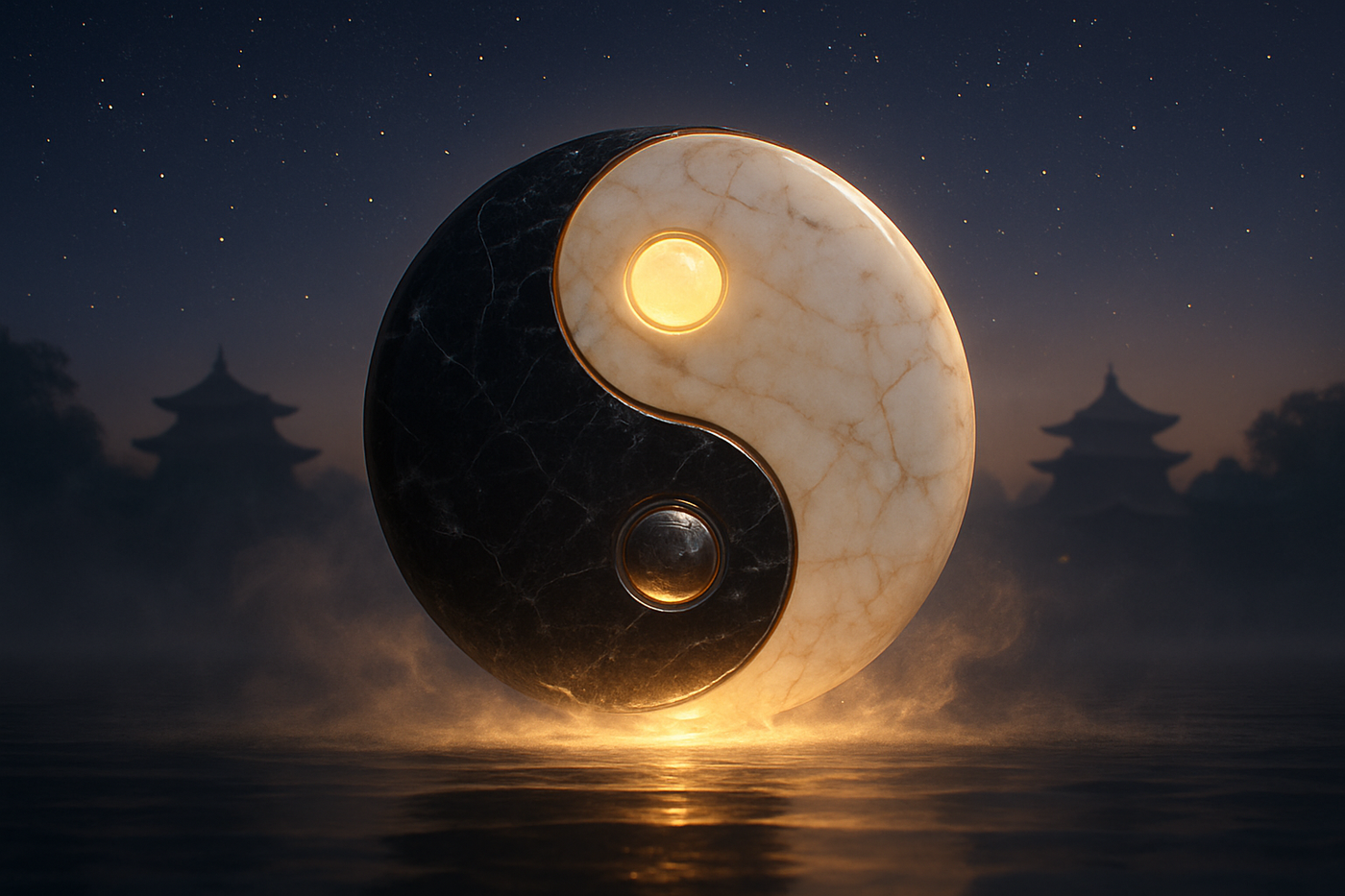
Yin Yang is an ancient Chinese philosophical concept describing how opposite forces—such as light and dark, active and passive, masculine and feminine—are interconnected and interdependent rather than locked in conflict. Rooted in Taoist thought, it teaches that harmony comes not from eliminating one force in favor of the other, but from balancing both within a constantly shifting whole. For thousands of years this principle has shaped Chinese spirituality, medicine, astrology, and daily life, and it remains a powerful framework for understanding balance in the modern world.
Yin Yang at a Glance:
At its heart, Yin Yang means that the universe operates through the dynamic interplay of two complementary forces rather than through fixed, isolated opposites. Neither Yin nor Yang is considered superior; each depends on the other for its own definition and existence. Day cannot exist without night, activity cannot exist without rest, and growth cannot exist without decay. This is the essence of the Yin Yang meaning: balance achieved through constant, cyclical exchange rather than static perfection.
At its core, the Yin Yang philosophy holds that seemingly opposed and contradictory powers are, in reality, interrelated and interdependent, balancing each other to create harmony within the natural world. This idea of duality emphasizes the unity of opposing forces, stating that one can never exist without the other.
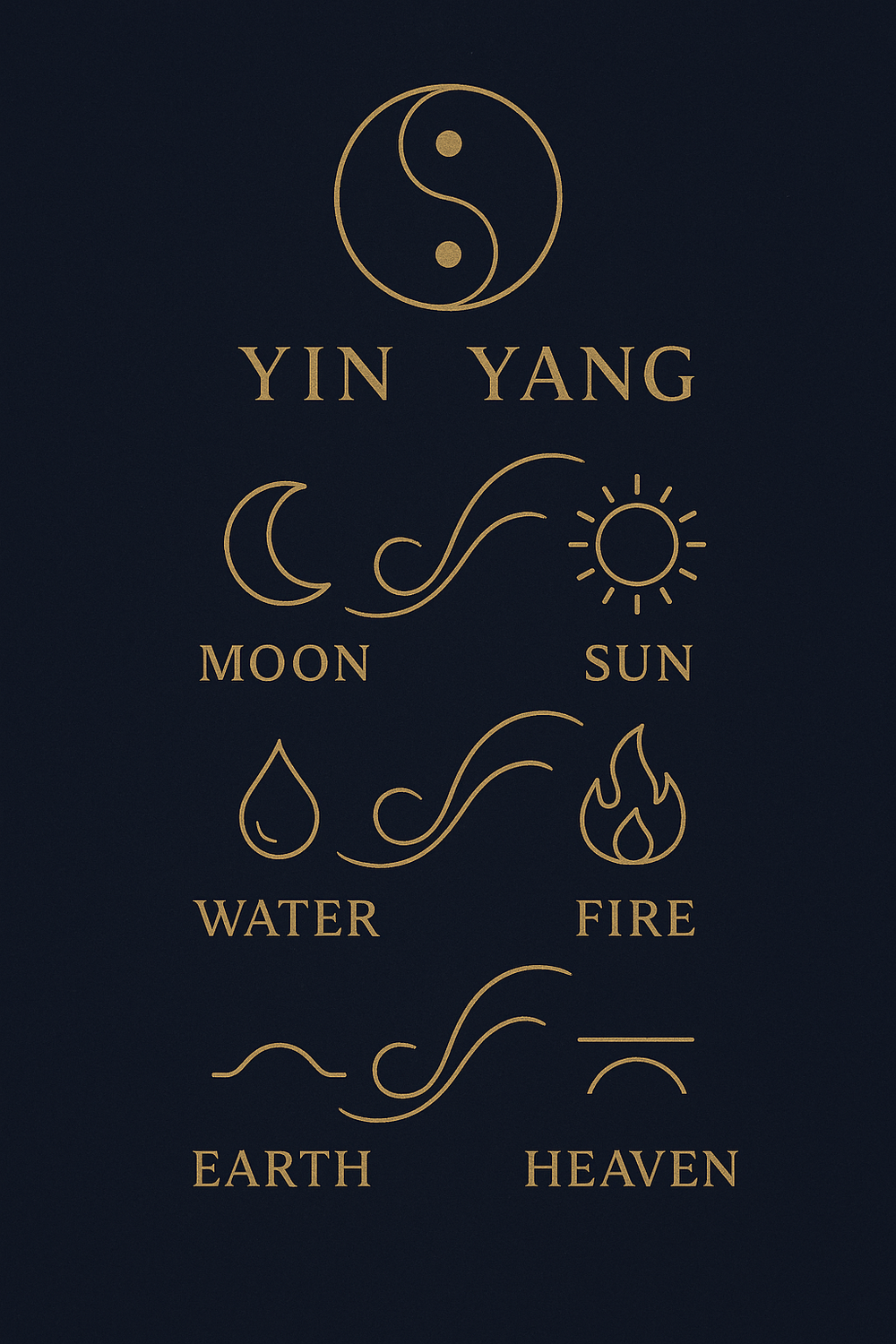
Let’s break down the features of each half to clearly grasp this profound concept:
| Yin | Yang |
|---|---|
| Associated with femininity | Associated with masculinity |
| Represents the moon, night, darkness | Symbolizes sun, day, and light |
| Symbolizes passiveness, receptivity, and introspection | Symbolizes activity, creativity, and extroversion |
| Affiliated with earth, cold, and water elements | Connected with heavenly, heat, and fire elements |
| Signifies downward and inward direction | Signifies upward and outward direction |
It is important to note that Yin and Yang are never absolute. Each contains an element of the other, as shown in the Yin Yang symbol by the small dot of the opposite color nestled within each half. This illustrates how nothing in the universe is entirely Yin or entirely Yang, but is instead a continuous, shifting combination of both.
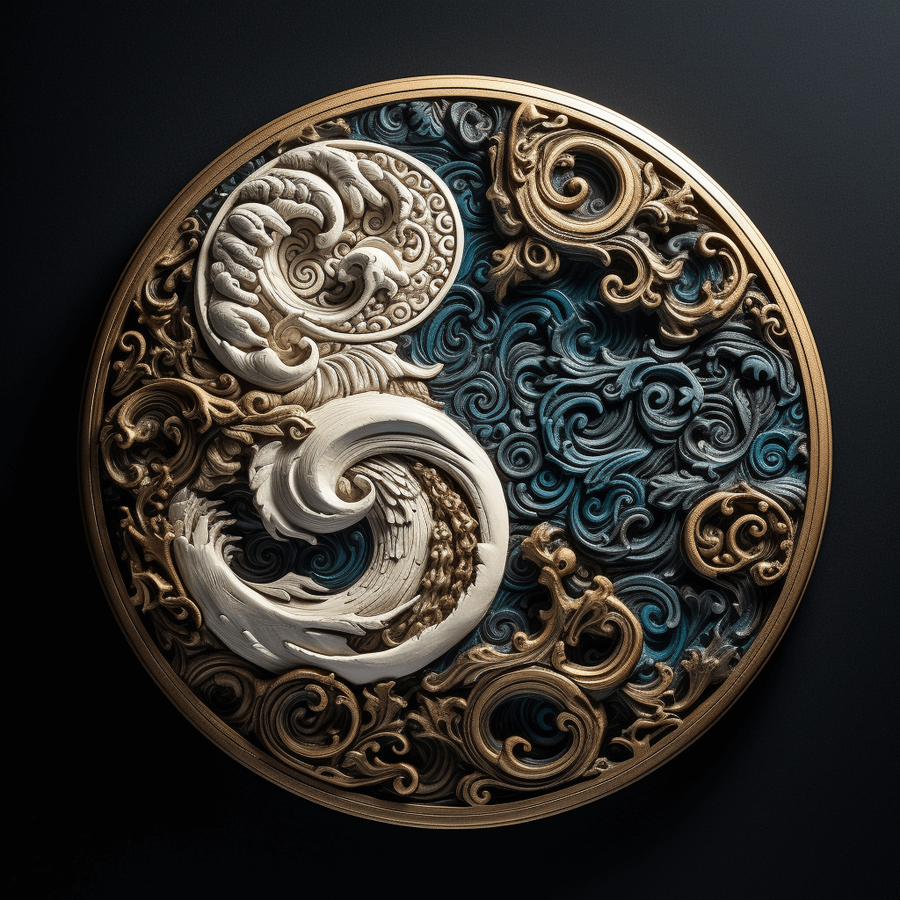 The concept of Yin Yang is very old, with roots that likely reach back into the Zhou Dynasty, though scholars note its exact origins are obscure and its earliest clear philosophical use is documented around the 4th century BC. This origin is best placed in the Zhou Dynasty (1046–256 BC), a period rich in culture and exploration of philosophical and naturalistic spiritual concepts. The words “Yin” and “Yang” originally meant the shady side and sunny side of a hillock, respectively. Over time, these meanings expanded dramatically to embody far more abstract, metaphysical ideas.
Most scholars believe the Yin Yang philosophy grew out of ancient Chinese observation of natural phenomena. The day-and-night cycle, the changing seasons, and forces in nature that both oppose and complement one another all exemplify the dynamics of Yin Yang, much like the universal duality explored in the Tree of Life meaning, another ancient symbol of interconnection and balance.
Lao Tzu incorporated Yin Yang concepts into his teachings, and tradition also credits Confucius with a related commentary on the I Ching that discusses Yin and Yang, though modern scholars doubt Confucius actually wrote it. While Confucianism emphasized the balance of Yin and Yang within social order, Daoism (Taoism) applied the principle to explain harmony throughout the universe and the nature of life itself.
From astrology, Feng Shui, and martial arts to medicine and art, Yin Yang theory has permeated countless disciplines since antiquity, giving rise to one of history’s most enduring frameworks for interpreting life and the universe.
The Yin Yang symbol, or the Taijitu, is a centuries-old Chinese icon expressing this dualistic philosophy in a single, elegant image. Its design is simple, yet it carries a wealth of philosophical meaning.
The symbol consists of two swirling halves — one black (Yin) and one white (Yang) — with each half containing a small dot of the opposite color. Traditionally, the black half, Yin, represents the feminine, dark, introspective, receptive energy of the moon. The white half, Yang, represents masculinity, light, activity, assertiveness, and the sun.
The small dot within each half signifies that a seed of its opposite exists within every element. This reflects the interdependent relationship between Yin and Yang — the fact that neither could exist without the other. It's a concept shared by other iconic dual symbols across cultures, such as the protective Hamsa hand and the interlocking triangles of the Star of David, both of which balance opposing spiritual forces within a single unified image.
Together, the Yin and Yang halves form a perfect circle, symbolizing that everything in the universe is unified and changes in a cyclical nature. The swirling pattern shows the continuous flow and exchange between the two forces, reflecting the idea that everything is always in motion, seeking balance.
Simply put, the Yin Yang symbol represents interconnection, complementarity, and the harmonious balance of opposing dualities within the vastness of the universe.
In Yin Yang philosophy, the universe is understood as a complex system of interrelated and interdependent forces. The energies symbolized by Yin and Yang are not opposites in conflict but complements in balance — constantly interacting to maintain equilibrium. Applying the concepts of Yin and Yang to various aspects of life can help us better understand the world around us.
| Yin | Yang |
|---|---|
| Feminine | Masculine |
| Darkness | Light |
| Moon | Sun |
| Passivity | Activity |
| Introspection | Expression |
| Receptivity | Assertiveness |
| Cold | Heat |
| Substance | Form |
Understanding these dualities can act as a compass for perceiving and responding to life’s challenges and opportunities. The interplay of Yin and Yang reminds us that every part of life is transient and constantly evolving.
It's worth remembering that Yin and Yang are never absolute. Every element carries a seed of its opposite, so under the right conditions, things can transform into their opposite — a reminder of just how fluid and complex the universe really is.
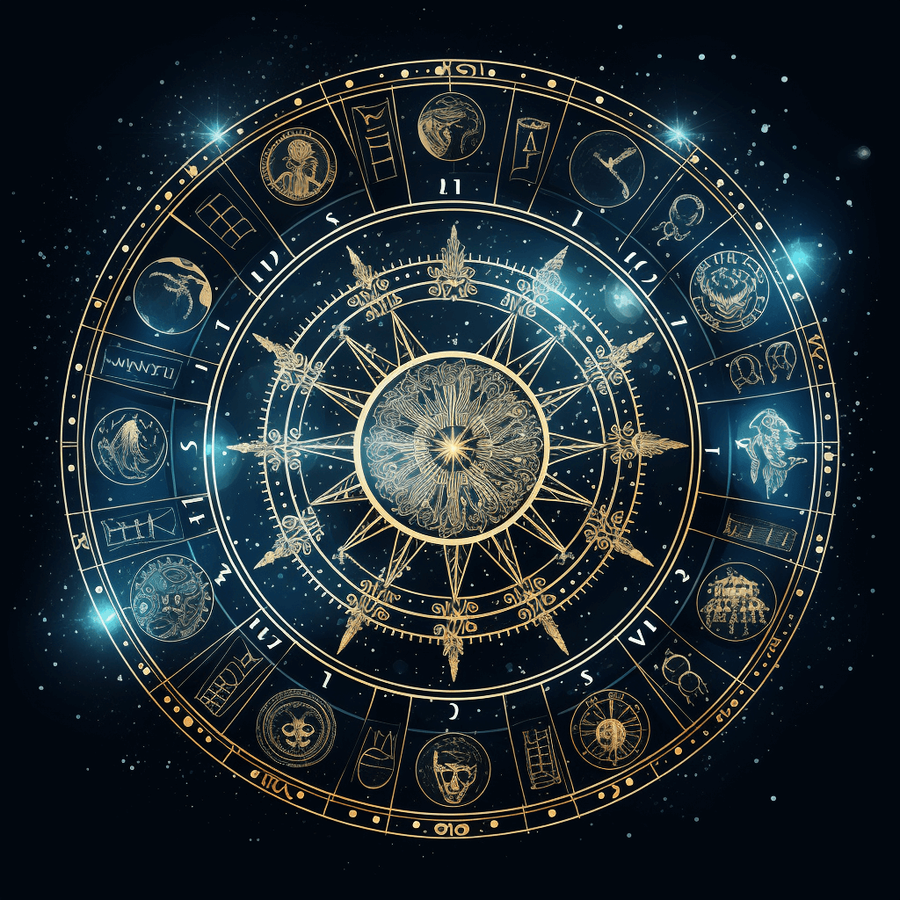 Yin and Yang are two critical concepts in astrology that offer useful insight into personality profiles and life paths. Yang energy — active, expressive, and outward-focused — tends to leave a strong mark on a person’s astrological chart.
Astrology divides the twelve zodiac signs into Yin and Yang categories, with fire signs (Aries, Leo, Sagittarius) and air signs (Gemini, Libra, Aquarius) falling under Yang. These signs are typically dynamic, extroverted, and proactive — traits commonly associated with Yang energy.
Yang in astrology denotes action, determination, and forward momentum. People with a predominance of Yang in their chart tend to display these traits:
Still, a healthy balance of Yin and Yang is essential. Individuals with dominant Yang energy benefit from cultivating their Yin side too — becoming more introspective, receptive, and nurturing in order to lead a balanced, fulfilling life.
The Yin Yang philosophy is deeply focused on the concept of balance. The opposing forces of Yin and Yang are complementary, acting upon each other within a greater whole where everything exists in a pattern of constant change and fluctuation.
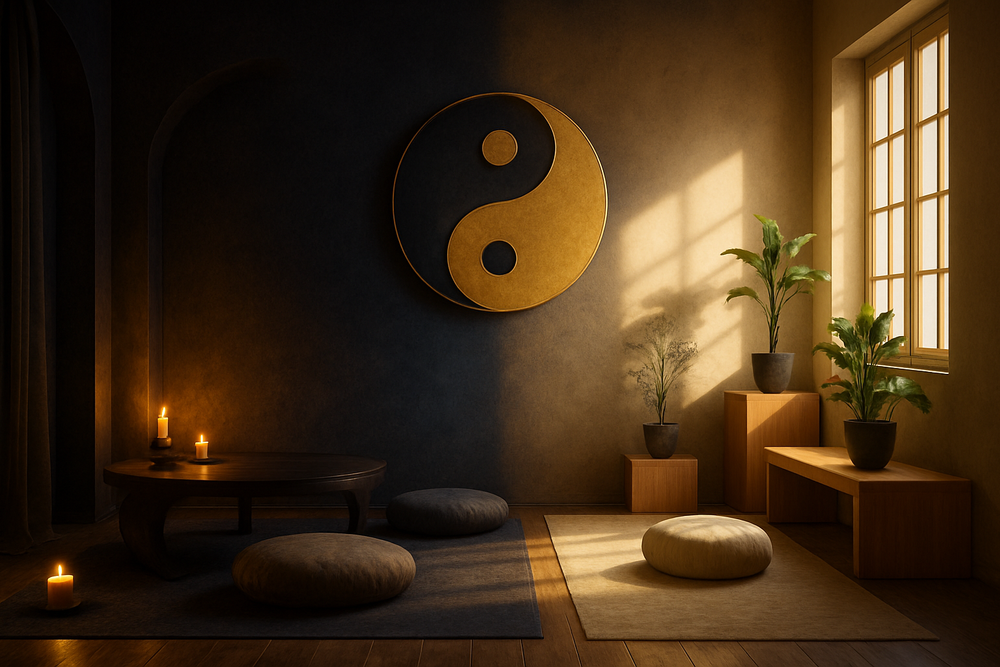
A key insight of Yin Yang philosophy is that neither aspect is ever superior. A balance of the two is necessary for a healthy, well-rounded life. This is a dynamic balance, not a static equilibrium — one that constantly adapts to ever-changing circumstances.
An imbalance of Yin and Yang can result in disharmony. A person with excess Yin can become passive and sluggish, while a person with excess Yang may experience stress and burnout. On the other hand, a healthy balance of both energies is associated with vitality, health, and peace of mind.
Another intriguing concept related to Yin Yang is the Five Phases (Wu Xing) — Wood, Fire, Earth, Metal, and Water — each associated with different elements, colors, seasons, and anatomical structures. The interaction and transformation set in motion by Yin and Yang drive the evolution of these phases, viewing nature as an ever-changing process in which no single phase is permanent.
In practical applications like Feng Shui or Traditional Chinese Medicine, the goal is often to restore a better balance of Yin and Yang in a person’s environment or body — whether through the arrangement of a home, dietary changes, or the use of acupuncture and herbs.
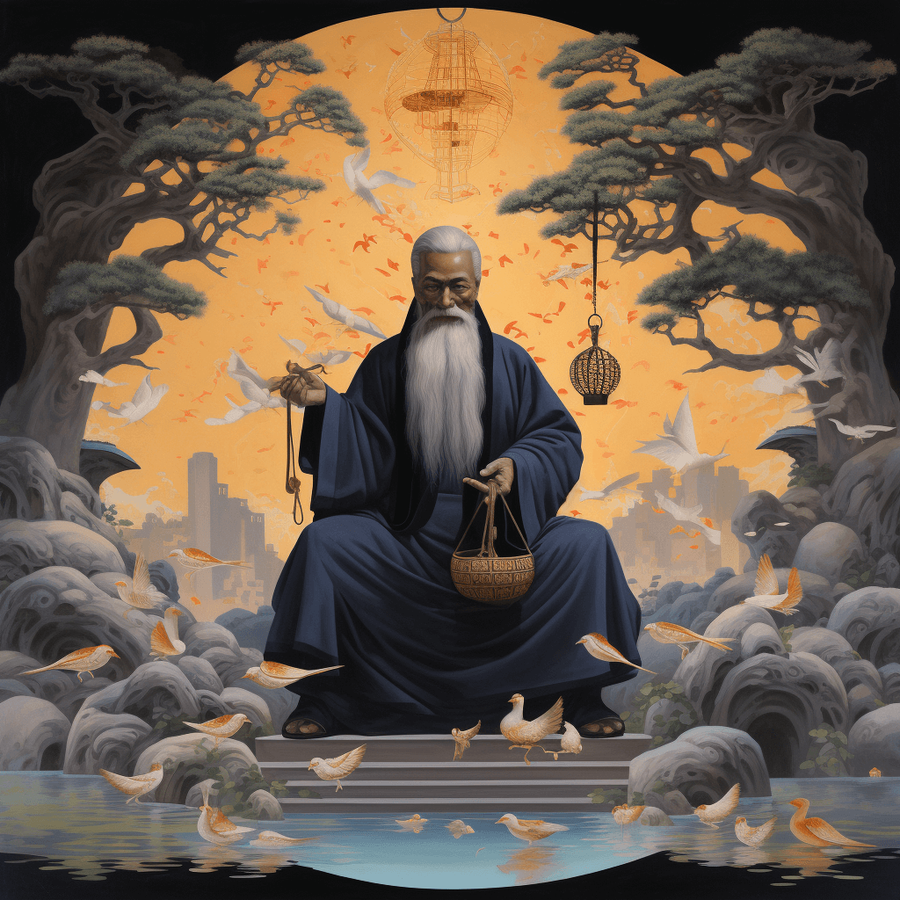 The concept of Yin Yang is deeply rooted in Taoism, a philosophical and religious tradition that has shaped Chinese culture for more than two thousand years. It's woven directly into Taoism’s outlook on life, nature, and the universe.
In Taoist philosophy, the Tao (also known as Dao, or “The Way”) refers to the universal natural order — an eternal, flowing force that connects all life. Yin and Yang are considered the two primary elements that flow from the Tao, embodying the opposing yet complementary forces found within everything in the universe. This same spirit of protective, spiritual duality can be seen in symbols like the dream catcher, which likewise balances protective and receptive energies within one object.
The Tao Te Ching, traditionally attributed to Lao Tzu (though scholars debate his historical existence and whether it had a single author), is one of the oldest Taoist texts. It explicitly names Yin and Yang in its famous 42nd chapter, and the idea of balanced opposites runs through the work more broadly, emphasizing balance in every aspect of human life in accordance with the harmony of the Tao.
Another crucial Taoist concept connected to Yin Yang is ‘Wu Wei,’ often translated as ‘effortless action’ or ‘non-action.’ It means acting in harmony with a given situation, aligning with the flow of the Tao, and allowing nature to take its course.
In Taoist practices such as Qigong, Tai Chi, and various forms of meditation, the philosophy of Yin Yang takes center stage. These practices aim to balance Yin and Yang energy, harmonize with the Tao, and cultivate good health, peace, and spiritual awareness.
Feng Shui is an ancient Chinese art centered on harmonizing with — and influencing — the surrounding environment, and it draws heavily on Yin and Yang. In practice, Feng Shui is about creating harmony and balance within living and working spaces, reflecting a universe defined by Yin and Yang.
Different sections of a home or workplace correspond to different life areas in Feng Shui, including prosperity, health, career, and relationships. These areas are also linked to the elements — wood, fire, earth, metal, and water — along with Yin or Yang characteristics. The goal is to balance these elements and energies to create a harmonious, productive environment.
In Feng Shui, Yin energy represents restfulness, calmness, and introspection. It's associated with soft textures, darker colors, and curved shapes, and is often incorporated into bedrooms, meditation spaces, and other areas meant for relaxation and rejuvenation.
Yang energy, on the other hand, is light, uplifting, stimulating, and energizing. It's best represented by strong colors, straight lines, and dynamic forms — ideal for offices, exercise rooms, or any space geared toward activity and productivity.
The essence of Feng Shui isn't eliminating either Yin or Yang, but striking the right balance between them. A home with too much Yin can feel lethargic and gloomy, while too much Yang can bring restlessness and tension. Feng Shui works to harness both energies in balance to encourage well-being, prosperity, and happiness.
Yin Yang philosophy is deeply embedded in Traditional Chinese Medicine (TCM), where it serves as the foundation for understanding the body, diagnosing ailments, and guiding treatment. According to TCM, health reflects a balance of Yin and Yang within the body, mirroring the harmony of these forces throughout the universe.
In TCM, Yin represents coolness, dampness, and quietness within the body, and is associated with the moon and restful nighttime hours. Yin aspects of the body include the interior organs, blood, and bodily fluids. Yin-related ailments tend to be chronic, deficiency-based, and marked by cold, damp, and slow-moving symptoms.
Yang, by contrast, represents heat, dryness, and activity. It's connected to the sun, daylight hours, and physical exertion. Yang aspects of the body include the surface, protective Qi (energy), and metabolic activity. Yang-related conditions tend to be acute, excess-based, and marked by hot, dry, and rapid symptoms.
In TCM, illness arises from an imbalance between Yin and Yang. Fever, for example, is traditionally seen as a sign of excess Yang, and practitioners often use cooling, Yin-nourishing herbs to help restore balance — though this remains a traditional framework rather than a scientifically proven treatment. Conversely, symptoms like fatigue (a Yang deficiency) are typically addressed with warming, Yang-boosting remedies.
TCM practitioners use a range of techniques — herbal medicine, acupuncture, Qi Gong, and dietary therapy — to rebalance the Yin-Yang relationship and support health and well-being. This is how the concept of Yin and Yang functions as a foundational principle in both diagnosis and treatment within TCM.
The principles of Yin and Yang significantly shape martial arts, particularly those originating in China, such as Tai Chi, Kung Fu, and Qi Gong. These disciplines reflect the dualistic balance of Yin (the passive, receptive, yielding force) and Yang (the active, aggressive, forceful energy) to develop physical strength, mental clarity, and spiritual growth.
In martial arts, Yin is often associated with defensive, reflective techniques and fluid, internal strength — the practice of absorbing or redirecting an opponent’s force rather than meeting it head-on.
Yang, on the other hand, is associated with offensive, direct, physically assertive movement — hard, fast, and forceful, in contrast to the soft, slow, yielding nature of Yin.
A core aspect of martial arts training is learning to harmonize these Yin and Yang elements. Tai Chi, for example, is characterized by slow, fluid movements that shift continuously from softness (Yin) to hardness (Yang) and back again — visible in the transformation from defense (Yin) to attack (Yang).
By integrating Yin and Yang into their practice, martial artists achieve balance across both physical and mental dimensions. The principles that guide a practitioner's use of Yin and Yang serve not only as fighting strategy, but also as a framework for personal and spiritual development.
The simple yet profound design of the Yin Yang symbol has left a lasting mark on art and pop culture around the world. It transcends cultural borders, becoming a global emblem of unity, balance, harmony, and the interconnectedness of all things.
In art, the Yin Yang symbol is frequently used as a design element in paintings, sculptures, and architecture to express balance and duality across cultures and time periods.
In popular culture, the Yin Yang icon appears throughout movies, TV shows, music, fashion, and video games — ranging from serious philosophical statements to purely decorative uses.
It's not uncommon to see characters in film and television meditating before a Yin Yang symbol to illustrate their pursuit of inner peace and harmony. The symbol has also appeared on countless album covers and band logos to represent life's dualities, and the fashion industry regularly incorporates it into clothing and accessories as a nod to balance and harmony.
Beyond its aesthetic appeal, the widespread presence of the Yin Yang symbol in art and pop culture speaks to the depth of its philosophical meaning — encouraging a deeper understanding and appreciation of this ancient Chinese concept.
Though conceptualized in China, the Yin Yang philosophy has traveled across cultures, including India. In Hindi, it's generally rendered phonetically as “यिन यांगक्क्ष्म।” The core essence of Yin Yang remains the same, even within a different cultural context.
This philosophy of Yin and Yang aligns well with certain concepts within Hindu and Buddhist thought. For example, the principles of duality, balance, and interconnectedness echo Hinduism's concepts of “Prakriti” and “Purusha,” which represent the feminine and masculine components of reality, respectively.
While each philosophy carries its own unique interpretations and nuances, the shared theme of balance and complementary opposites is a tenet found across many ancient cultural systems.
This resonance across Hindi-speaking and South Asian traditions underlines the universal nature of Yin Yang philosophy — a reminder that even amid cultural differences, many truths about how existence is organized are shared across the world's philosophical traditions.
Applying the concepts of Yin Yang in everyday life means embracing balance and recognizing that every opposing force is interconnected. It's about understanding that everything in life has a complementary side, and that this can be managed thoughtfully to achieve harmony.
Applying Yin Yang to daily life can foster personal growth, stronger relationships, and a healthier lifestyle. It offers a way to understand life's complexities and to move through them with real inner peace.
In conclusion, the Yin Yang philosophy is a profound, timeless idea that gives us a way to understand the universe and our place within it. It shows that dualities are not two separate entities operating in isolation, but interdependent elements of a single whole.
Embracing the Yin Yang philosophy helps us appreciate balance and harmony in life. Challenges and difficulties (Yin) are just as necessary as successes and victories (Yang) for our growth and development. In learning to see the wisdom of balance, we can apply this understanding to every part of our lives.
Remember: the philosophy of Yin Yang isn't just an abstract idea — it's a practical guide to living a balanced, fulfilled life. Whether in personal relationships, work-life balance, health, or mental well-being, applying the tenets of Yin Yang can bring lasting, positive transformation. Embrace the Yin and the Yang — for it is in balance that we find true peace and fulfillment.
The true meaning of the Yin Yang symbol is the interconnection and interdependence of opposing forces within a unified whole. It represents the idea that light and dark, active and passive, and masculine and feminine energies are not enemies but complementary halves of a single, ever-changing system.
You can balance Yin and Yang by pairing periods of activity and effort (Yang) with rest and reflection (Yin) in your daily routine, diet, and relationships. Practices like Tai Chi, meditation, mindful eating, and thoughtfully arranging your living space with Feng Shui principles are all practical ways to cultivate this equilibrium.
Saying that everything has Yin and Yang means that every person, situation, or object contains both active and passive, or light and dark, qualities simultaneously. Nothing is considered purely one or the other; even the darkest circumstance carries a seed of light, and vice versa.
General duality often frames opposites as separate, competing, or even hierarchical — such as good versus evil. Yin Yang, by contrast, frames opposites as interconnected and interdependent, each containing a piece of the other and neither existing without its counterpart, which makes it a more relational, dynamic form of duality.
Yin Yang does not symbolize good versus bad. It represents balance, harmony, and the interconnection of opposites rather than a moral judgment of either side.
Yin is traditionally associated with feminine energy, while Yang is associated with masculine energy. However, the concept is ultimately about balance rather than strict gender roles, since everyone contains both energies.
Yin Yang energy refers to the dual forces of nature and life that exist in a constant state of balance and interdependence, shifting and flowing into one another rather than remaining fixed.
While it doesn't directly mean love, Yin Yang can symbolize complementary forces within a relationship that balance and complete one another, which is why the symbol is often used to represent romantic harmony.
Yin Yang isn't traditionally considered a good luck symbol; instead, it represents harmony, balance, and interconnectedness rather than fortune.
Yin and Yang are foundational concepts in Chinese astrology used to describe the energetic nature of each zodiac sign, rather than being a zodiac sign themselves.
Black represents Yin in the Yin Yang symbol, which is traditionally associated with feminine energy.
A Yin personality tends to be introspective, nurturing, and receptive, valuing cooperation and reflection over competition and assertiveness.
In the Chinese zodiac, years alternate between Yin and Yang. You can determine which applies to you by looking up your specific birth year in the Chinese zodiac calendar.
In the Chinese zodiac, the Yin animals are the Rat, Ox, Rabbit, Snake, Horse, Monkey, Rooster, Dog, and Pig.
In the Chinese zodiac, the Tiger, Dragon, Horse, and Sheep are traditionally considered Yang animals.
Neither Yin nor Yang is inherently stronger or better than the other. Both are considered equally essential to maintaining balance and equilibrium.
Yin is typically represented by the color black within the Yin Yang symbol.
Water is considered a Yin element, symbolizing calmness, intuition, and depth.
Yin-Yang is a central concept in Taoism, the Chinese philosophy and religious tradition. It also appears within Confucianism and various forms of Chinese Buddhism.
Discover 49+ powerful self-love symbols — crystals, animals, flowers, and spiritual icons — and what each one means for building s…
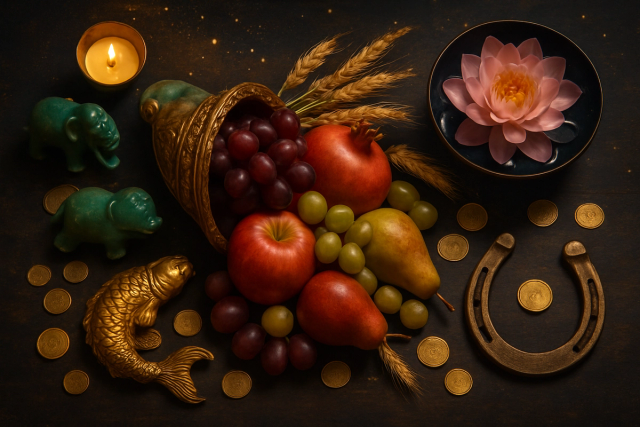
Explore ancient wealth symbols — from cornucopias to koi fish and elephants — and discover what each abundance symbol truly means.
Explore the world's most powerful healing symbols—from the Ankh to the Hamsa—and discover what they mean, spiritually and historic…