
Animal Symbolism
Lynx Symbolism: Spiritual Meaning & Significance
Discover what the lynx symbolizes spiritually—secrecy, intuition, and hidden truth—plus its meaning in dreams, myth, and as a tote…
 KnowMastery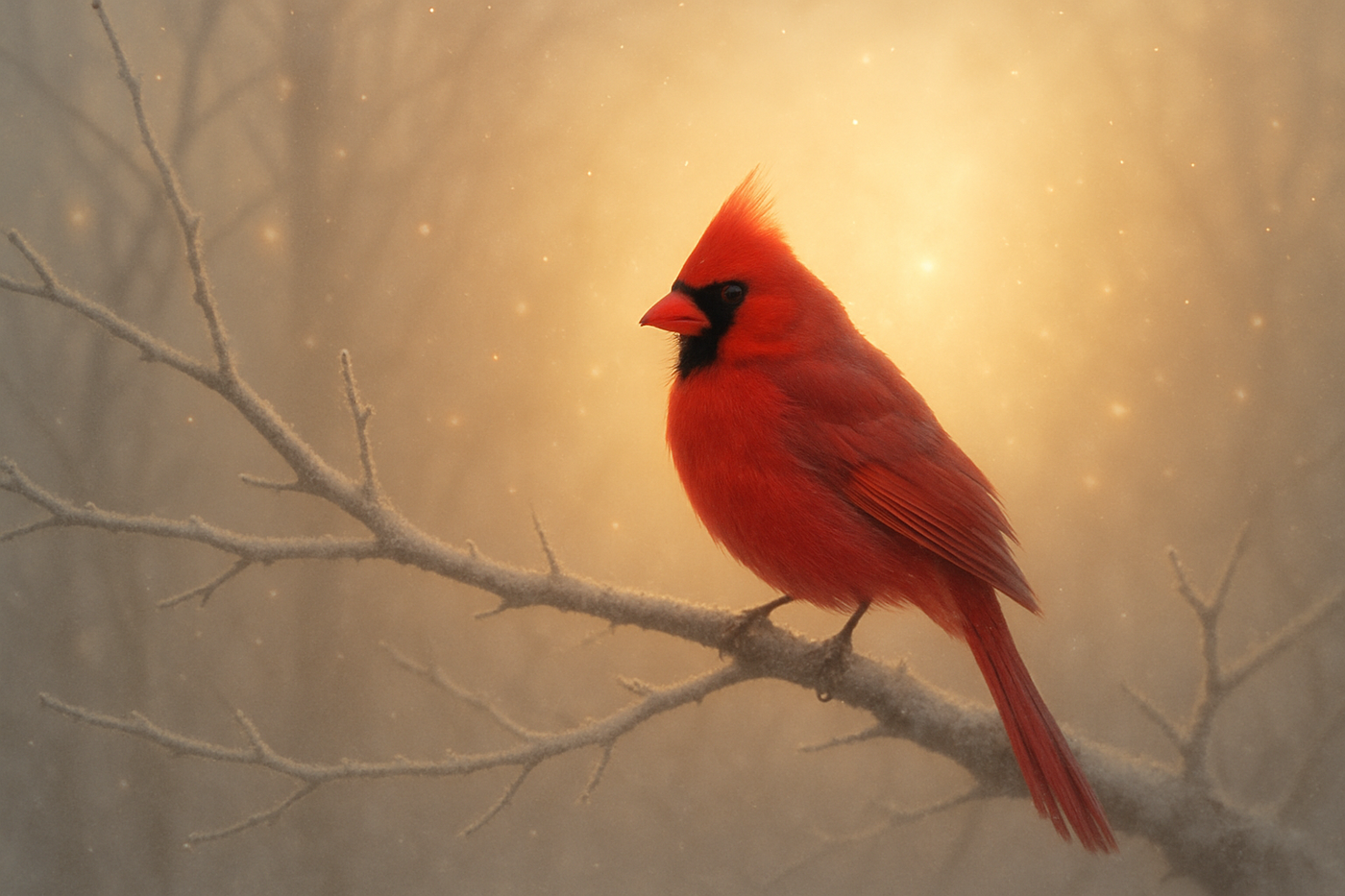
A cardinal symbolizes vitality, faith, and the presence of loved ones who have passed on. Across North American folklore, this brilliant red bird is regarded as a spiritual messenger: when a cardinal appears unexpectedly—especially during grief or a major life transition—it's widely believed to carry a comforting message that someone from the spirit realm is watching over you. Its scarlet color also symbolizes passion, courage, and renewed energy for the living, making the cardinal one of the most recognized spiritual omens in modern folk belief.
There's a reason your breath catches when a cardinal lands on the fence outside your window. That flash of red against gray winter branches feels less like coincidence and more like a visitor. People write in grief forums about the cardinal that showed up the morning of a funeral, the one that tapped on a hospital window, the pair that nested outside a childhood bedroom the year a parent passed.
It's easy to dismiss these moments as pareidolia—our minds finding meaning in noise. But symbolism has always worked this way: nature offers the raw material, and the human heart supplies the story. The cardinal, with its fearless color and its habit of staying through the coldest months rather than migrating south, has earned its place as one of the most beloved spiritual omens in North American culture.
At its core, cardinal symbolism centers on four themes: remembrance, faith, vitality, and self-worth. Unlike migratory songbirds, cardinals remain visible year-round, which is why they became associated with steadfastness and loyalty—especially loyalty to the people we love, living or dead. The male's brilliant red plumage draws the eye instantly, making the bird a natural symbol for anything that demands to be noticed: a warning, a comfort, a nudge to pay attention.
The cardinal's name itself reinforces its symbolic weight. Ornithologists named the bird after the scarlet robes worn by Roman Catholic cardinals, a color chosen historically to represent the blood of martyrs and a willingness to die for one's faith. That association ties the bird permanently to ideas of sacredness, importance, and divine rank.
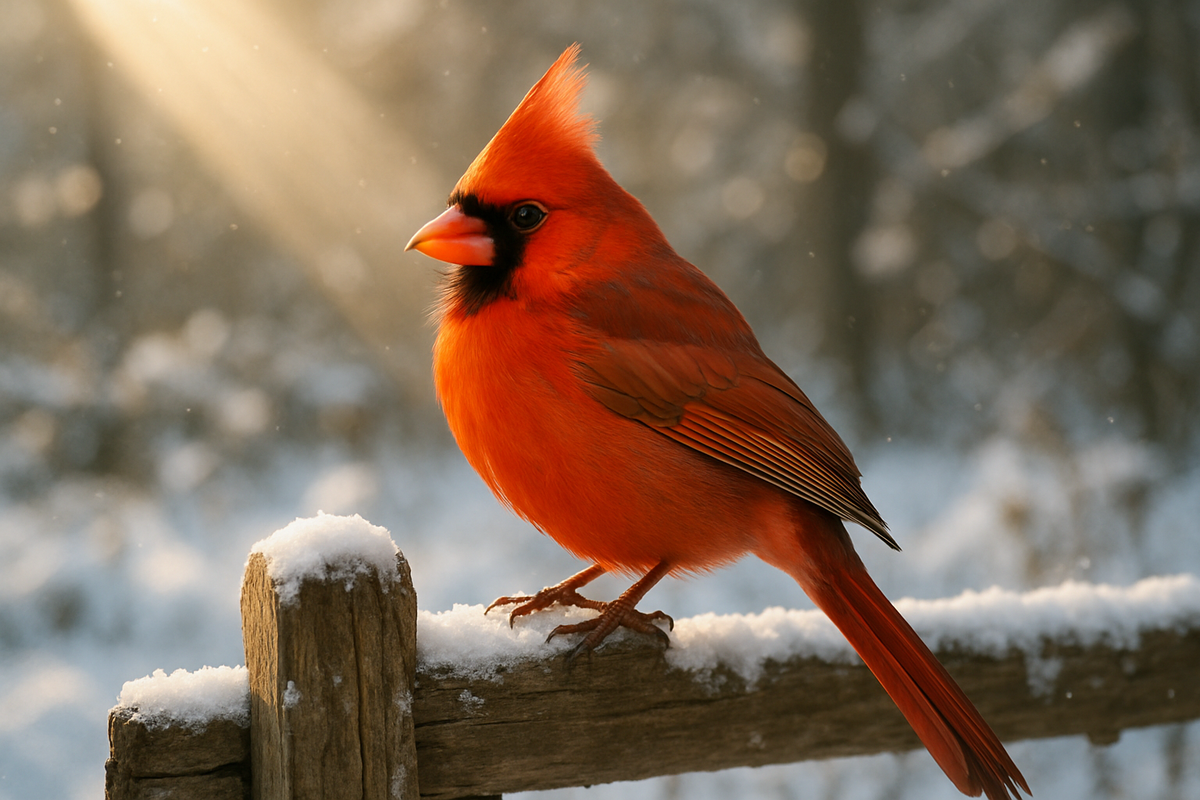
The most widespread modern belief is that a cardinal sighting represents a visit from a deceased relative or friend. This idea gained enormous popularity through folk sayings like "When a cardinal appears, an angel is near," often shared at funerals and inscribed on memorial jewelry. People report cardinals appearing on birthdays, anniversaries of a death, or during moments of intense emotional need—interpreting the bird as reassurance that a loved one's spirit is still present and at peace.
Beyond ancestral spirits, many spiritual traditions frame the cardinal as a direct messenger of angels or a higher power. Its sudden, vivid appearance is read as confirmation that prayers have been heard, that a difficult decision has divine backing, or that protection surrounds the observer during uncertainty. This mirrors how other striking birds—like the hawk in its role as a messenger of clarity, or the owl as a keeper of hidden truths—are treated as intermediaries between the earthly and spiritual worlds.
Several Native American nations, including the Cherokee and the Choctaw, viewed the cardinal as a bearer of important weather warnings and news from the spirit world. In Cherokee folklore, the cardinal was said to have received its red color from the sun as a reward for its cleverness, and its appearance near a home was believed to signal an upcoming visit from a relative or good news arriving by mail—an old superstition that persists in parts of the rural American South today.
In Christian iconography, the cardinal's red feathers are linked to the blood of Christ and to sacrifice, while its resilience through winter represents enduring faith during spiritual darkness. European settlers who brought this symbolism to North America blended it with local folklore, cementing the cardinal's association with hope surviving hardship—much like the swan's symbolism of grace enduring through transformation.
In Appalachian folk tradition, a cardinal tapping repeatedly on a window is considered a particularly potent omen, often interpreted as a specific loved one trying to get a message across before or after a significant life event, such as a wedding, birth, or death in the family. Some families in this tradition will even name the visiting bird after the relative they believe it represents.
The dramatic color difference between male and female cardinals has produced two distinct symbolic readings, each tied to different aspects of masculine and feminine energy in folk belief.
| Aspect | Male Cardinal (Bright Red) | Female Cardinal (Soft Brown/Red) |
|---|---|---|
| Core Meaning | Passion, courage, visibility, action | Nurturing, intuition, quiet strength |
| Common Interpretation | A masculine ancestor or protector visiting | A feminine ancestor or gentle guidance appearing |
| Life Area Represented | Confidence, leadership, standing out | Balance, patience, emotional healing |
| Symbolic Season | Winter's boldness against gray landscapes | Spring's renewal and quiet growth |
While the classic scarlet male is the most recognized, rarer color variants carry their own layered symbolism among birdwatchers and spiritual enthusiasts alike.
| Cardinal Type | Rarity | Symbolic Meaning |
|---|---|---|
| Standard Red Male | Common | Vitality, passion, a clear message being sent |
| Brown/Tan Female | Common | Grounded intuition, maternal protection |
| Yellow (rare mutation) | Extremely Rare | Unexpected miracles, once-in-a-lifetime turning points |
| Albino/White | Extremely Rare | Purity, spiritual awakening, a major life shift |
Dreaming of a cardinal often reflects a subconscious need to reconnect with someone you've lost, or a signal that you're being called to trust your instincts more boldly. Common dream scenarios include:
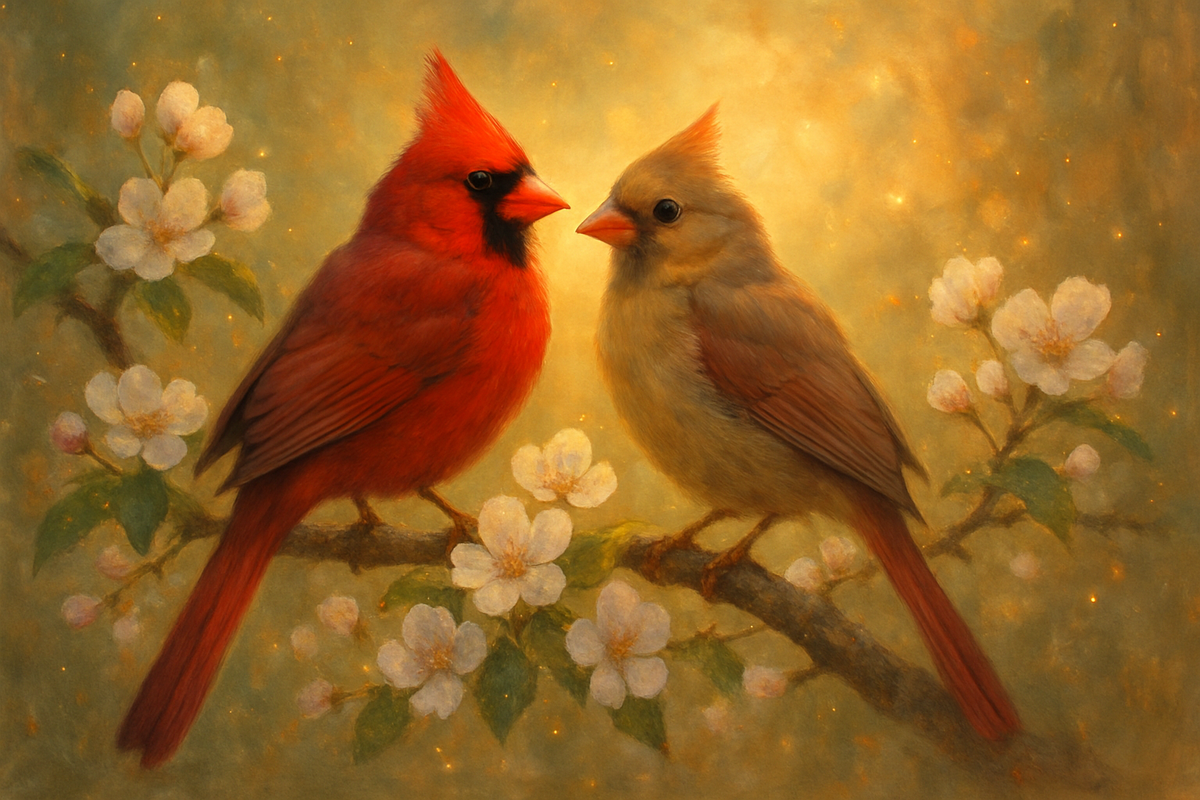
People who resonate with the cardinal as a totem or spirit animal are often described as fiercely loyal, emotionally intuitive, and unafraid to stand out even when it invites criticism. Cardinal people tend to mate for life symbolically, meaning they invest deeply in a small circle of relationships rather than spreading themselves thin. They are frequently the ones in a family who remember anniversaries, keep traditions alive, and sense when someone needs a call before that person even reaches out.
If the cardinal is your totem, it's often a nudge to trust your gut feelings about people and situations, and to stop shrinking yourself to avoid attention you've rightfully earned.
Spiritual sightings are only as meaningful as the attention we bring to them. Here's how to work with a cardinal encounter rather than let it pass unnoticed:
Repeated cardinal sightings are typically interpreted as a persistent message from a departed loved one or spirit guide who wants you to feel supported during a specific situation. Pay attention to what you're going through each time it appears, since the recurring theme often points to what the message actually concerns.
Cardinals are almost universally considered a positive omen, associated with comfort, protection, and renewed hope rather than warning or danger. Unlike some birds with mixed reputations, the cardinal's symbolism rarely carries a negative interpretation in folklore.
After a death, a cardinal sighting is widely believed to signal that the deceased person's spirit is at peace and remains close to those they loved. This belief is so common that many hospice workers and grief counselors mention it as a source of comfort for grieving families.
Yes, according to popular folk belief captured in the well-known saying "When a cardinal appears, an angel is near," the bird is thought to represent divine or angelic presence watching over you. Many people treat the sighting as reassurance during prayer, mourning, or moments of doubt.
Discover what the lynx symbolizes spiritually—secrecy, intuition, and hidden truth—plus its meaning in dreams, myth, and as a tote…

Discover what the seahorse truly symbolizes - patience, protection, fatherhood, and inner strength - across myth, dreams, and mode…
Discover what a praying mantis really means spiritually, from patience and intuition to ancient myths, dream meanings and totem wi…