
Animal Symbolism
10 Animals That Symbolize Integrity & Loyalty, Explained
See which animals symbolize integrity and loyalty, from wolves and elephants to dogs and salmon, and what their steady honesty can…
 KnowMastery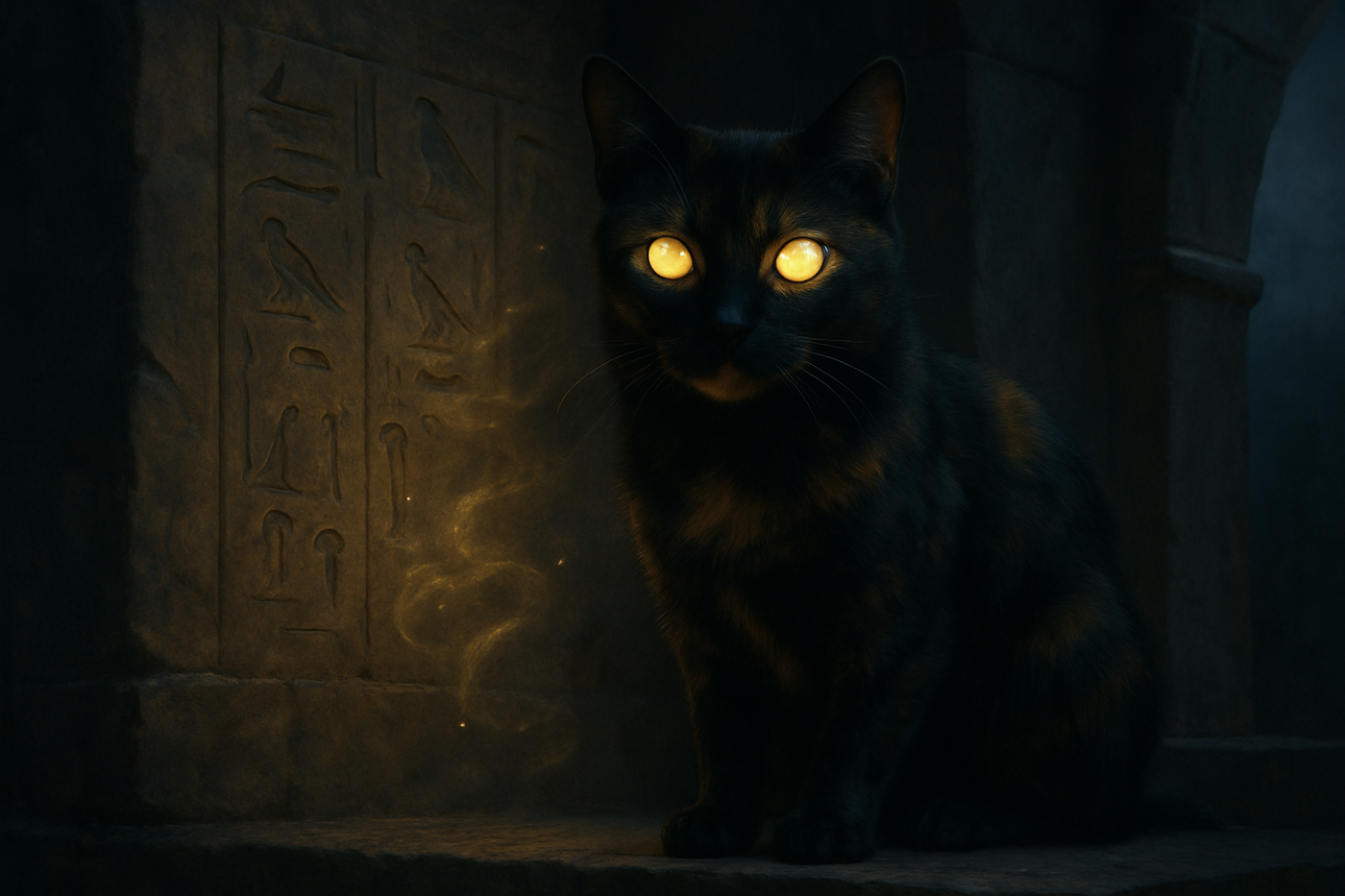
A cat symbolizes independence, intuition, mystery, duality, and the guarding of thresholds between the seen and unseen worlds. A cat crossing your path or appearing in a dream is usually read as a nudge to trust your instincts, reclaim some autonomy, or notice something your rational mind has missed.
Picture a cat pausing at the edge of the porch light, eyes catching the glow like two small moons, then simply watching you. Not with fear, not with need. Just quiet, unreadable attention that feels older than the moment itself.
People have been unsettled and captivated by cats for thousands of years. They were worshipped as gods in ancient Egypt, then centuries later drowned as omens of bad luck in medieval Europe. Across cultures, cats have stood for both protection and misfortune, feminine power and dark magic, depending on the color of the cat, the context, and the era.
At the center of almost every cat myth is one idea: the cat sees what humans cannot. Their night vision, their silent movement, and their knack for sensing danger before it arrives fed centuries of belief that cats operate on a different frequency than the rest of us.
That belief shows up in a few consistent symbolic themes:
Nowhere was the cat elevated higher than in ancient Egypt. The goddess Bastet was depicted with a woman's body and a cat's head, protecting the home, women, and children, and later merging with the fiercer lioness goddess Sekhmet in some regional traditions. Killing a cat, even by accident, could carry the death penalty. Ancient Egyptian families shaved their eyebrows in mourning when a household cat died a natural death, and some cat mummies were buried alongside small mummified mice as grave offerings for the afterlife.
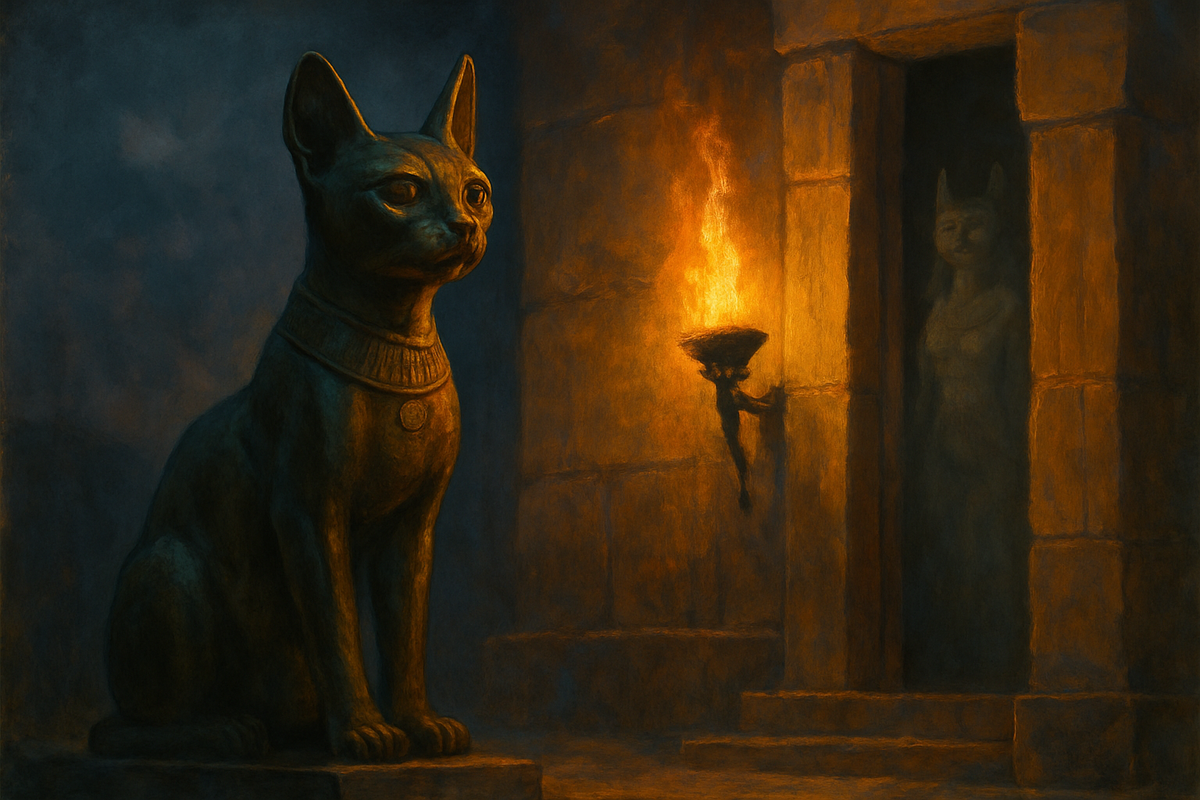
Egyptians believed cats absorbed protective magic and kept evil spirits away from the home. Bronze statues of seated cats, ears alert and spine straight, were placed near doorways for exactly that reason.
Move north to Scandinavia and the symbolism shifts but does not soften. Norse mythology depicts Freyja's chariot as being pulled by two cats, sometimes described in later retellings as gray, though the earliest sources do not specify their color. Farmers who left offerings out for Freyja's cats were said to be rewarded with good harvests, linking the animal to abundance rather than menace.
Celtic folklore took a darker turn with the Cat Sith, a fairy creature resembling a large black cat with a white spot on its chest, believed to steal the souls of the dead before burial rites were completed. Families would keep watch over a body through the night specifically to prevent the Cat Sith from getting near it.
In Japan, the story flips toward good fortune entirely. The maneki neko, the beckoning cat figurine with one paw raised, sits in shop windows across the country to invite prosperity and customers. An Edo-period legend describes a temple cat, popularly known in some retellings as Tama, beckoning the feudal lord Ii Naotaka into Gotoku-ji temple, which later thrived under his patronage, giving rise to the maneki-neko tradition.
These stories sit in sharp contrast to the European witch trials, where black cats in particular were accused of being witches' familiars. Some historians have linked medieval cat killings to worsening rat infestations and the spread of plague, though the Black Death recurred repeatedly across centuries independent of any single cat massacre, so the connection remains more symbolic than proven.
Color has always mattered in cat symbolism, sometimes deciding whether the animal was worshipped or feared. Here is a breakdown of how different colors are read spiritually and culturally.
| Cat Color | Common Symbolic Meaning | Cultural Association |
|---|---|---|
| Black | Mystery, protection, or bad luck depending on region | Good luck in Japan and Britain, ill omen in parts of Western Europe and the United States |
| White | Purity, spiritual clarity, new beginnings | Associated with ghosts and spirit visitors in several folk traditions |
| Orange or ginger | Warmth, confidence, vitality | Linked to solar energy and good fortune in folk belief |
| Gray | Balance, neutrality, quiet wisdom | Freyja's chariot cats in Norse mythology |
| Calico or tortoiseshell | Luck, abundance, protection | Called "money cats" in Japanese and American maritime folklore |
In Wiccan practice and much of modern New Age thought, the cat represents the feminine, intuitive, and hidden side of the self. This ties the cat to lunar energy, the subconscious mind, and what Hindu and Theosophical writers describe as the third eye, or inner sight. In parts of India, cats are also loosely connected to Shashthi, a folk goddess linked to the protection of children, though the association is regional rather than fixed doctrine.
Seeing a cat repeatedly, especially at unusual times or places, is often read as a nudge to slow down and listen to your gut instead of overthinking a decision. The cat's habit of sitting perfectly still before pouncing is treated as a lesson in patience paired with decisive action: wait for the right moment instead of rushing every opportunity.
Cats are also tied to the idea of psychic protection, similar to how a hawk is seen as a messenger of clear sight from above. Where the hawk represents vision from a distance, the cat represents vision up close, the ability to sense danger or dishonesty in someone standing right in front of you.
If the cat feels like your spirit animal or keeps showing up as a totem, it is usually pointing to a few personal traits or lessons:
People who resonate with cat energy often share traits with those drawn to other independent, night associated creatures, similar to how those pulled toward the owl tend to value solitude and quiet observation over constant social noise.
Dreams involving cats are common and tend to follow recognizable patterns:
As with any dream symbol, the tone of the dream matters more than a fixed dictionary meaning. A calm, curious cat in a dream carries a very different message than one that is hissing or cornered, in the same way that dreaming of a spider weaving quietly feels different from one dropping onto your skin.
Symbolism is only useful if it leads somewhere. If a cat has been showing up in your dreams, your neighborhood, or your thoughts more than usual, a few grounded steps can help you make sense of it instead of leaving it as a vague feeling.
Where were you, what were you deciding, and how did the cat behave. A calm cat during a stressful week points to reassurance. An aggressive or frightened cat during a calm week might be flagging something you have been avoiding.
Cats do not rush. Before responding to whatever prompted the symbolism, whether it is a relationship question or a career move, give yourself at least a day of quiet reflection instead of an immediate reaction.
Since cats are so strongly tied to independence, use the moment as a check in. Is there a relationship, job, or obligation where you have been too accommodating and need to pull back, the way a cat withdraws affection the second it feels crowded?
One appearance is likely coincidence. Repeated appearances, especially of a specific color or in a specific setting, are worth writing down. Patterns tend to reveal themselves the same way that repeated sightings of a crow or a scorpion often carry more weight than a single encounter.
A cat crossing your path is generally read as an invitation to trust your instincts about a current situation rather than relying purely on logic. The color of the cat can shift the meaning slightly, with black cats tied to either luck or caution depending on the region, and lighter cats tied more to clarity and new beginnings.
An orange or ginger cat is typically read as a symbol of warmth, confidence, and vitality, drawing on its association with solar energy in folk belief. Spiritually, encountering one is often interpreted as encouragement to step into your own light and act with more self-assurance.
A white cat is widely associated with purity, spiritual clarity, and new beginnings, making it a common symbol for a fresh chapter or a cleansing of old energy. In several folk traditions, white cats are also linked to ghosts and spirit visitors, so an unexpected sighting is sometimes interpreted as a message from beyond.
A gray cat visiting you is traditionally tied to balance, neutrality, and quiet wisdom, echoing its mythological role pulling Freyja's chariot in Norse legend. Many interpret a gray cat's appearance as a sign to stop leaning too far toward either extreme in a decision and find middle ground instead.
A cat as a spirit animal or totem usually points to a need for firmer boundaries, permission to rest without guilt, and trust in instincts you cannot fully explain. It often appears for people learning to move through life quietly and efficiently rather than forcing outcomes.
It depends entirely on where the belief comes from. In Britain and Japan, a black cat crossing your path is considered good luck, while in parts of Western Europe and the United States the same event has historically been treated as a warning sign, a difference rooted in medieval superstition rather than anything universal.
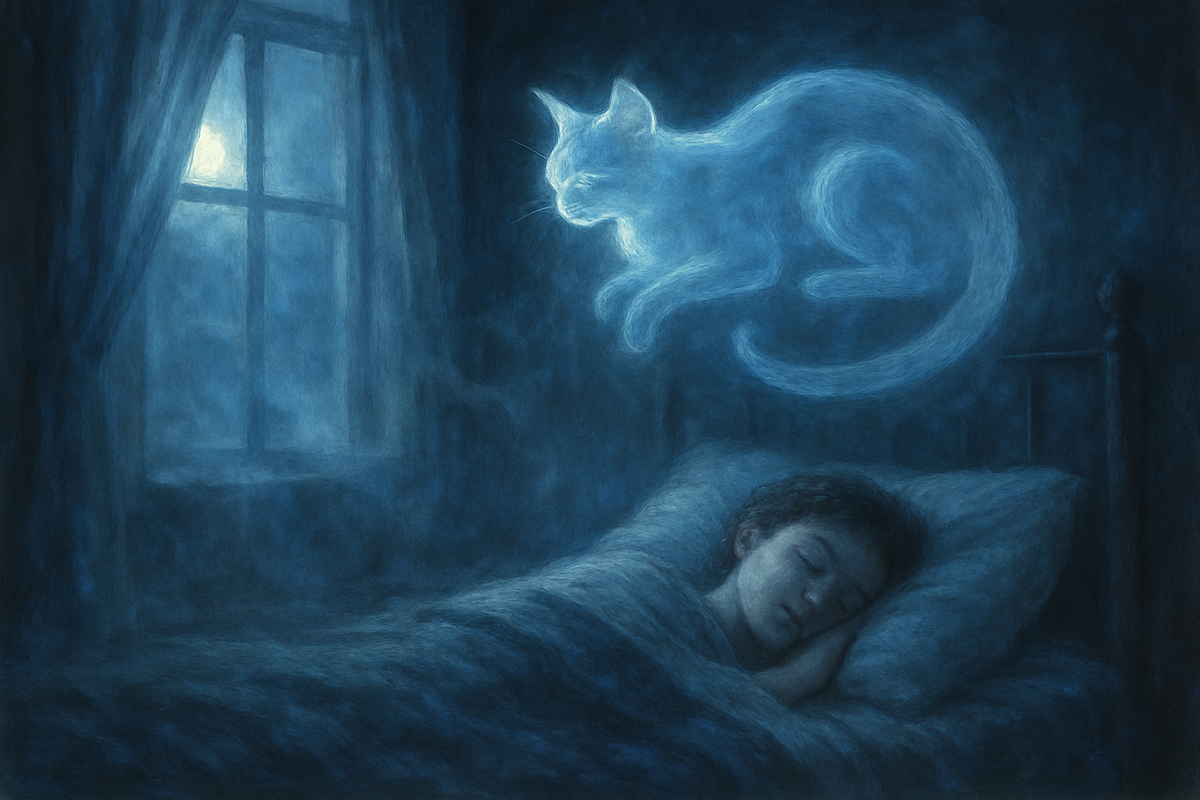
Dreaming about a cat usually relates to independence, intuition, or feminine energy in your waking life, and the specific meaning shifts based on the cat's behavior in the dream. A calm, affectionate cat points to comfort or healing, while an aggressive or frightened cat often reflects unresolved tension or a decision you have been putting off.
Ancient Egyptians associated cats with the goddess Bastet, who protected homes, women, and children, and believed the animals carried genuine protective magic against evil spirits. Harming a cat was treated as a serious offense, and families mummified their cats with the same rituals used for human burials.
See which animals symbolize integrity and loyalty, from wolves and elephants to dogs and salmon, and what their steady honesty can…
Black cats carry centuries of myth, from witches' familiars to Japanese luck charms. Discover their real spiritual meaning today.
Black cat meaning explained: luck, protection, dream symbolism, and spiritual signs across cultures, decoded simply.