Animal Symbolism
Black Cat Spiritual Meaning: Superstitions & Symbolism
Black cats carry centuries of myth, from witches' familiars to Japanese luck charms. Discover their real spiritual meaning today.
 KnowMastery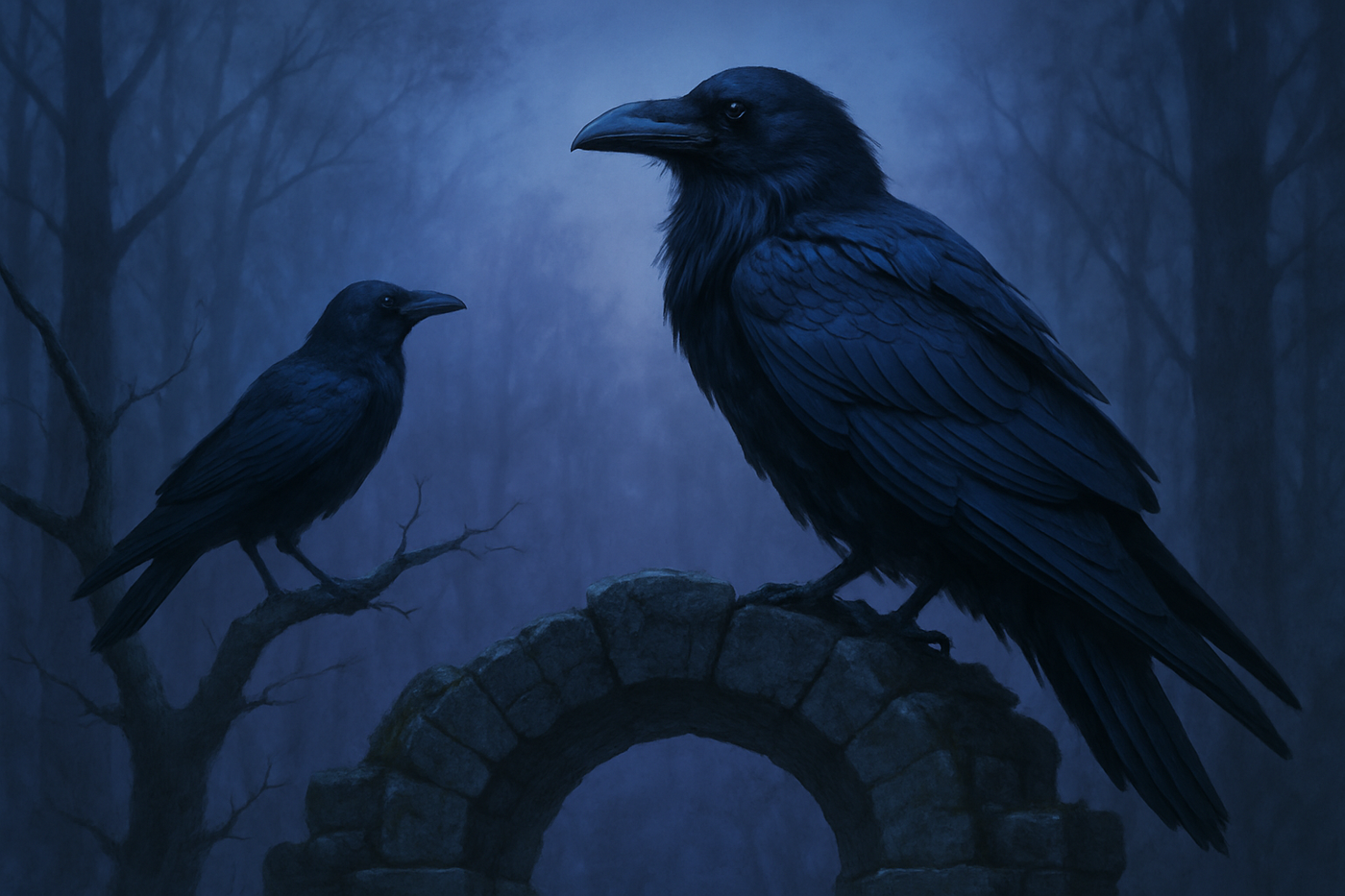
Crows and ravens are both members of the corvid family, but they carry distinct symbolic weight. Crows typically symbolize change, adaptability, and messages tied to community and everyday transformation. Ravens carry heavier, older associations with death, prophecy, and the threshold between worlds. Physically, ravens are larger with shaggy throat feathers and a deeper croaking call, while crows are smaller, sleeker, and travel in noisier groups. The symbolic split comes down to size, behavior, and thousands of years of separate mythological treatment.
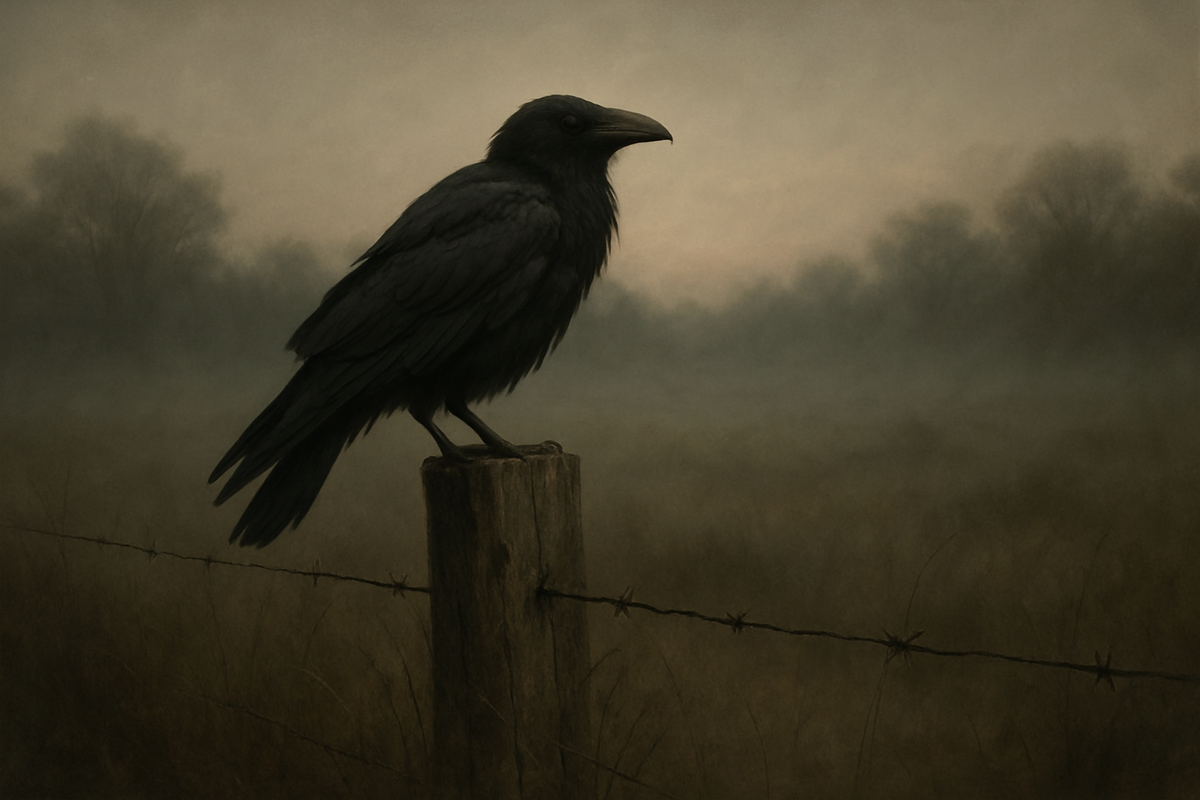
Maybe you found a crow perched outside your window three mornings in a row. Or maybe it was a raven, alone on a fence post, watching you with a patience that felt almost personal. Either way, something in you paused. That's the pull these birds have always had on people.
Long before science sorted them into separate species, people already sensed a difference between the two. One felt like a neighbor. The other felt like a messenger from somewhere darker and older. That instinct wasn't wrong.
The symbolism attached to crows and ravens didn't come from nowhere. It grew out of how each bird actually looks, sounds, and behaves in the wild. A raven's size and solitary habits made it feel otherworldly to ancient observers. A crow's chatty, social nature made it feel more like part of daily human life.
| Feature | Crow | Raven |
|---|---|---|
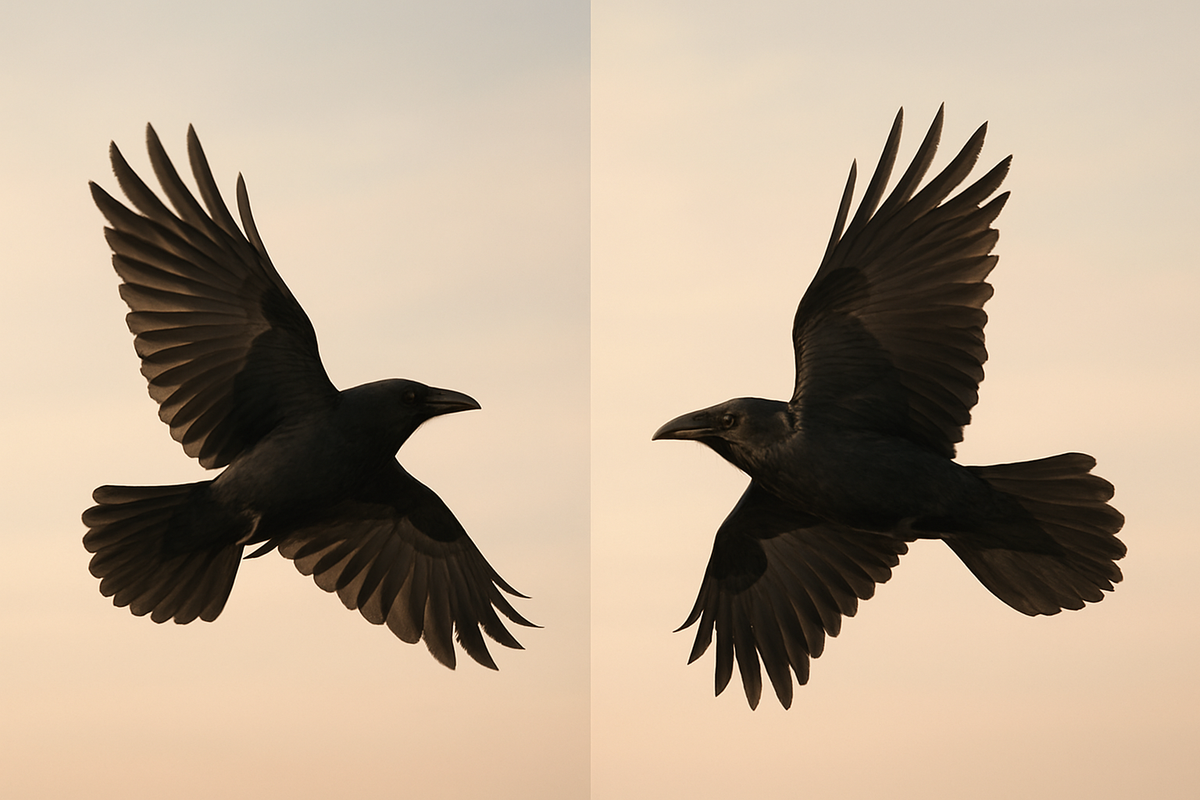
| Size | 17-21 inches, smaller and lighter | 24-27 inches, noticeably larger |
| Tail shape | Fan-shaped, straight edge in flight | Wedge or diamond-shaped in flight |
| Voice | Sharp, nasal "caw-caw" | Deep, croaking "gronk" or rattle |
| Social behavior | Large, loud flocks | Often solitary or in pairs |
| Throat feathers | Smooth | Shaggy, visible "beard" |
| Flight style | Steady flapping | Soars and glides, sometimes tumbles playfully |
Crows are usually read as symbols of adaptability, cunning, and collective knowledge. Because they live in social groups and problem-solve together, they've long stood in for community intelligence and the idea that survival often depends on cooperation rather than isolation. Seeing a crow is frequently interpreted as a nudge toward change, a signal that you're clever enough to handle what's coming. For a deeper breakdown of what specific numbers of crows mean, the article on crow symbolism and what seeing 1, 2, or 3 crows means covers this in detail.
Ravens carry heavier associations: death, prophecy, transformation, and the crossing between the physical and spiritual worlds. Their solitary habits and deep voice made them feel less like a social animal and more like an individual with a private, unknowable purpose. Where a crow feels like a busy neighbor, a raven feels like a watcher, something with a message meant specifically for you.
In Norse tradition, the god Odin kept two ravens named Huginn (thought) and Muninn (memory). Each day they flew across the world and returned to whisper what they'd seen into Odin's ears. This made ravens symbols of wisdom, intelligence gathering, and the god's own far-reaching awareness. They weren't feared as omens of death here so much as respected as extensions of divine mind.
Among Pacific Northwest peoples, including the Haida and Tlingit, Raven is a trickster and creator figure, credited with stealing the sun and bringing light into the world. This raven is clever, mischievous, and not entirely trustworthy, but ultimately responsible for shaping the world as it exists. Crow carries a different role in Lakota and Cherokee tradition, where it more often appears as a messenger of prophecy, warning of danger or carrying news from the spirit world rather than tricking anyone out of it.
The Morrigan, a Celtic goddess of war and fate, was said to appear as a raven or crow hovering over battlefields, foretelling who would live and who wouldn't. Her sister Badb played the same role in Irish mythology, often shown as a hooded crow shrieking before a death. In medieval Europe, both birds were linked to plague and death because they were seen scavenging near battlefields and gallows, which fixed their association with mortality for centuries afterward.
Greek myth holds that Apollo's raven was originally white, until it delivered bad news about a lover's betrayal and the god scorched its feathers black as punishment. That story turned the raven into a symbol of truth telling that comes at a cost. Roman augurs took a more official approach, studying the flight and calls of crows as part of state divination, reading their direction and number before battles and elections. A crow calling from the left was considered lucky, while one calling from the right warned that trouble was on the way.
In Japanese Shinto tradition, a three-legged crow called Yatagarasu is regarded as a guide sent by the heavens, leading Emperor Jimmu to found the nation. This is a rare example of a corvid symbolizing divine guidance rather than doom, showing how the same family of bird can carry a completely opposite meaning depending on the culture telling the story.
Because so many traditions treat crows and ravens differently, it helps to see the split laid out side by side.
| Culture or Tradition | Crow Meaning | Raven Meaning |
|---|---|---|
| Norse | Rarely distinguished from raven | Wisdom and memory, seen in Huginn and Muninn |
| Haida and Tlingit | Minor, secondary role | Trickster and creator who brought light to the world |
| Lakota and Cherokee | Messenger of prophecy and warning | Rarely distinguished from crow |
| Irish and Celtic | Omen of the Morrigan and Badb | Omen of the Morrigan and Badb |
| Greek and Roman | Bird of state divination for augurs | Truth teller punished by Apollo |
| Japanese Shinto | Divine guide, seen in Yatagarasu | Rarely distinguished from crow |
Dream interpretation tends to follow the same split found in mythology, though the details shift depending on the dream's tone and setting.
Crows are often treated as messengers of practical, immediate guidance, while ravens are treated as messengers of deeper, slower moving spiritual shifts. Neither bird is inherently bad news. The old association with death is really about transition and closure, not punishment. Crows and ravens both eat carrion, which put them at the edges of death long before anyone assigned them meaning, but that placement made them natural symbols for the boundary between life and what comes after.
This is similar to how other birds carry layered meaning depending on context. The owl symbolism guide covers a bird tied to night vision and hidden truth, while hawk symbolism focuses on clear sight and focused pursuit. Corvids sit apart from both because their meaning depends so heavily on solitude versus community, which is exactly the crow-versus-raven divide.
If one of these birds has caught your attention repeatedly, treat it as an invitation rather than a warning. A few practical ways to work with the symbolism:
Seeing a raven isn't inherently bad luck. Its old association with death comes from scavenging habits near battlefields centuries ago, but most modern spiritual interpretations treat a raven sighting as a sign of transition or a call to pay attention, not a curse.
Crows are generally linked to adaptability, community, and everyday change, while ravens are tied to deeper transformation, prophecy, and the crossing between life and death. The split mirrors their real behavior, since crows are social flock birds and ravens are more solitary.
Not exactly. Crow dreams usually point to social situations or messages you've been ignoring, while raven dreams tend to signal bigger life transitions or unresolved grief that needs attention.
Check the tail shape in flight: crows have a fan-shaped tail with a straight edge, while ravens have a wedge or diamond shape. Ravens are also noticeably larger, have shaggy throat feathers, and make a deep croaking sound instead of a crow's sharper caw.
Black cats carry centuries of myth, from witches' familiars to Japanese luck charms. Discover their real spiritual meaning today.
Black cat meaning explained: luck, protection, dream symbolism, and spiritual signs across cultures, decoded simply.

Cicada symbolism explained: rebirth, patience, and voice, with dream meanings, cultural history, and ways to work with the sign.