Animal Symbolism
Barred Owl Spiritual Meaning: Calls, Signs & Dream Guide
What does a barred owl's call really mean? Discover the spiritual symbolism behind its cry, daytime sightings, dreams, and cultura…
 KnowMastery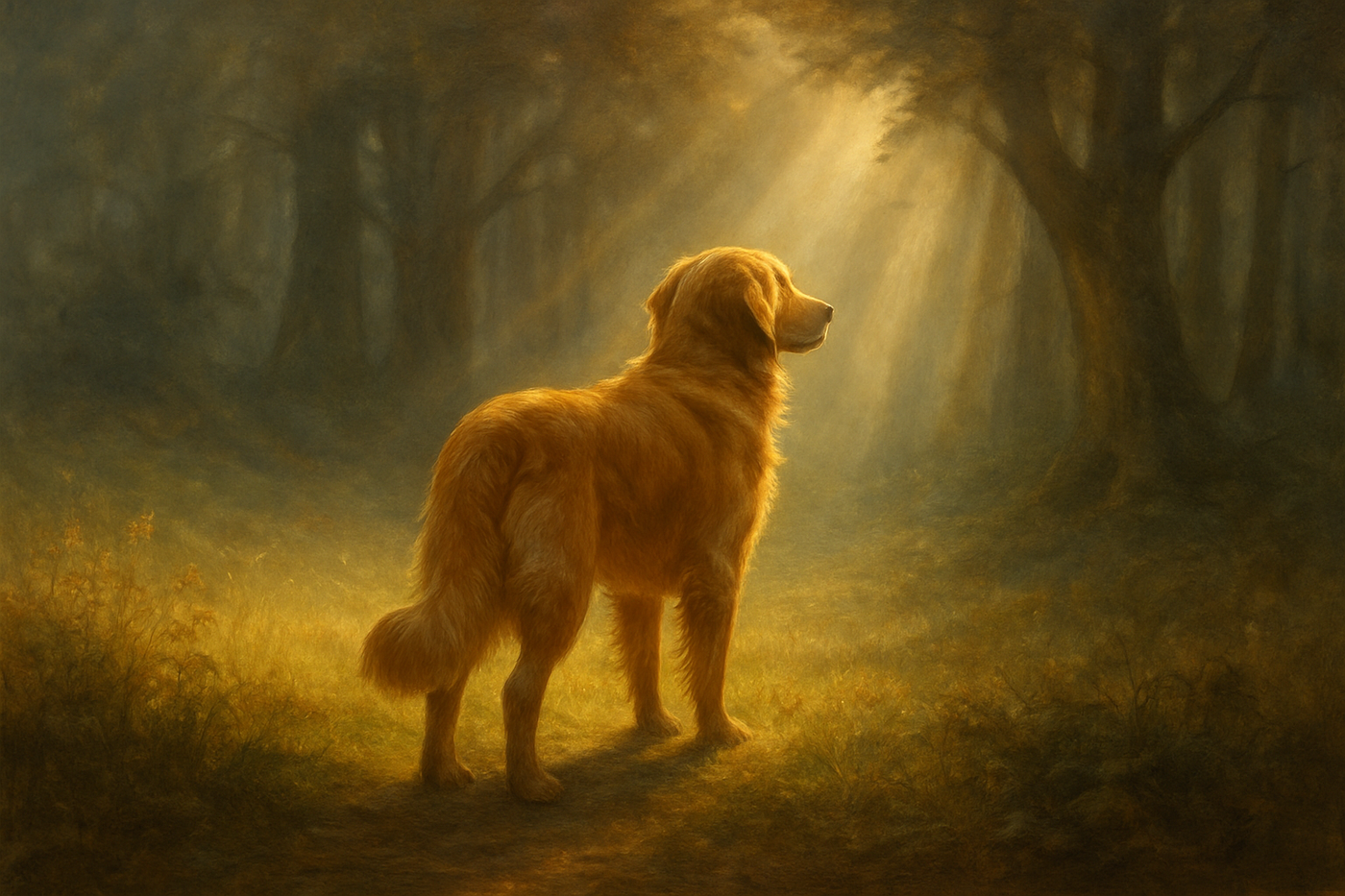
The dog is the most universal symbol of loyalty across human cultures, and a dog's spiritual meaning centers on that loyalty alongside protection and unconditional love. Across cultures, dogs symbolize guardianship of the living and the dead, faithful companionship, and the ability to sense what humans cannot, from approaching danger to unseen presences. When a dog appears in your life through a dream, a chance encounter, or a sudden pull toward a specific breed, it often signals a call to trust someone fully, stand guard over what matters most, or return to a simpler, more devoted way of loving.
Think about the last time a dog looked at you. Really looked, the way they do, without judgment, without agenda, just fully present. There's a reason that gaze lands differently than almost any other connection we experience. Dogs and humans have shared a bond for at least 15,000 years, though some genetic studies push the origins of that relationship back as far as 25,000 to 40,000 years. They became mirrors for our own capacity to love without conditions.
That's why a dog showing up in a dream, a symbol, or a spiritual reading tends to hit somewhere deep. It's rarely abstract. It usually points straight at questions of trust, safety, and who is truly on your side.
At the core, dog symbolism rests on a handful of qualities that show up again and again regardless of geography or era:
When someone says a dog is their spirit animal, they're usually pointing to one or more of these traits as something they need to embody or something they've been missing in the people around them.
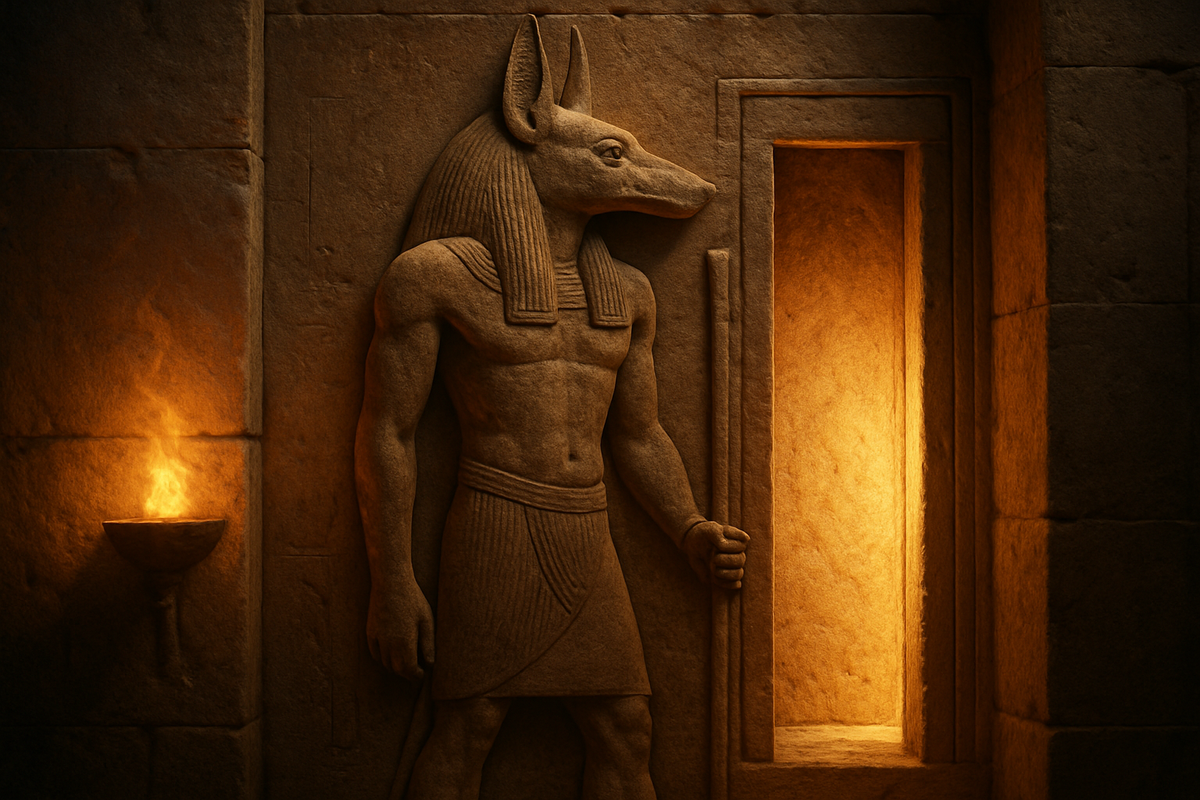
Dog symbolism didn't start with the family pet. It started with gods, gatekeepers, and guides to the afterlife.
In Egyptian religion, Anubis, shown with the head of a jackal, presided over embalming and guided souls through judgment in the underworld. He weighed the heart of the deceased against the feather of Ma'at. The jackal-dog wasn't feared so much as trusted, an escort who made sure no soul got lost between worlds.
The three-headed Cerberus guarded the gates of the underworld, keeping the dead from leaving and the living from entering uninvited. Hecate, goddess of magic and crossroads, was regularly depicted with hounds at her side, animals said to sense her approach before she could be seen. Both stories point to the same idea found in Egypt: dogs stand watch at the boundary between life and death.
In Norse tradition, the monstrous hound Garmr guarded the entrance to Hel, the realm of the dead, and was fated to fight the god Tyr during Ragnarok. Norse sagas also describe dogs as loyal companions to warriors, and archaeologists have found dog remains buried alongside their owners at sites such as the Oseberg ship burial in Norway.
In the Rig Veda, Yama's two four-eyed dogs are named Shyama and Sabala (elsewhere given as Sharvara and Shyama) and are said to guard the path souls travel toward the afterlife. Separately, the fierce deity Bhairava, a form of Shiva, is traditionally shown riding or accompanied by a dog, a sign that even wildness can be tamed into service.
In Aztec religion, the dog-headed god Xolotl guided the souls of the dead through the underworld of Mictlan, a nine-level journey filled with obstacles. The hairless dog breed named after him, the Xoloitzcuintli, was often buried alongside its owner, believed to swim the dead across the river that stood between the living world and Mictlan. Some families in Mexico still keep Xoloitzcuintlis today as a nod to that old belief.
Among Plains nations, dogs were the first domesticated animal used to carry loads before horses arrived, holding a working, almost family-member status in daily life. In Zuni fetish carving traditions, the dog represents loyalty and guardianship, often carved to protect the home or the carrier from harm.
Christian art often placed a small dog at the feet of tomb effigies as a symbol of fidelity, and Saint Roch is frequently pictured with a dog said to have fed him while he recovered from plague. The dog in the Quran's Sleepers of the Cave story is not named in the Quranic text itself, but Islamic tradition gives it the name Qitmir, making it one of the best-known animals associated with the Quran.
If the dog has appeared to you as a totem or spirit guide, it typically arrives during periods when you need to relearn trust, either in yourself or in someone close to you. The core of dog spirit animal meaning is simple: people who resonate with dog medicine, a term drawn from Native American animal-guide traditions, tend to be natural protectors, fiercely loyal to their inner circle, and uncomfortable with dishonesty. The dog spirit animal also asks you to notice who in your life offers loyalty without asking for anything back, and whether you're returning that same energy.
This kind of animal guidance often shows up alongside other messengers. Some people notice a hawk circling overhead during moments of decision, or an owl appearing when hidden truths are about to surface. A dog tends to arrive with a gentler message: stay close to what's real, and don't wander far from the people who show up for you.
Dreaming about dogs is one of the most common animal dreams, and the meaning shifts sharply depending on the dog's behavior, color, and condition in the dream.
Color adds another layer to the message, whether it appears in a dream, a vision, or a real dog that crosses your path at a meaningful moment. The table below describes the spiritual symbolism tied specifically to a dog's coat color, which is a different tradition from the broader "color of loyalty" used in Western heraldry and symbolism, which is typically blue or navy, representing steadfastness, trust, and constancy independent of any particular animal.
| Dog Color | Spiritual Meaning |
|---|---|
| Black dog | Guardianship of the unknown, tied in British and Celtic folklore to omens at crossroads and graveyards |
| White dog | Purity, spiritual guidance, and messages from ancestors or higher wisdom |
| Brown dog | Grounding, home, and steady everyday loyalty |
| Golden or yellow dog | Warmth, healing energy, and emotional comfort during hard times |
| Grey dog | Wisdom earned through experience, often linked to older, more instinctual guidance |
| Red or reddish dog | Passion, protective fire, and readiness to defend loved ones |
If you're drawn to how color carries spiritual weight beyond coat markings, the same principle shows up in insect symbolism too. The ladybug, for instance, carries different meanings depending on its red, yellow, or black coloring, which reinforces how widespread color-based symbolism is across the animal world.
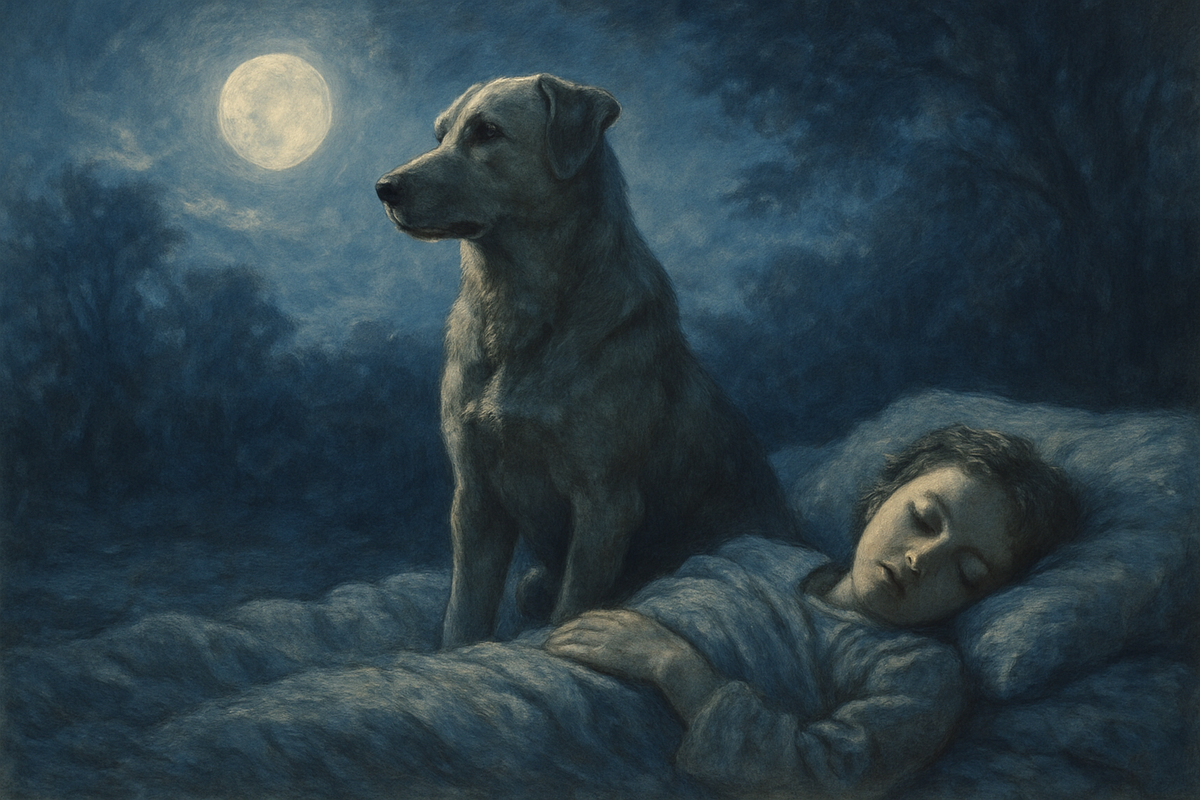
Because the dog is the most universal symbol of loyalty, it's worth knowing what else carries that same message, whether you're decorating with intention, choosing a tattoo, or just curious what shows up alongside dog symbolism in myth and folklore.
Wolves and geese are the animals most commonly named alongside the dog as symbols of loyalty, largely because of their lifelong pair bonds and pack devotion. A wolf stays with its pack and defends it without hesitation, which is why wolf imagery often appears in loyalty-themed art and heraldry. Geese mate for life and fly in protective V-formations, taking turns at the exhausting lead position so the group survives together. The swan belongs in this group too, pairing for life and famously forming the heart shape with its neck when facing its mate, a visual shorthand for devotion that has outlasted centuries of folklore. The dog still sits above all of them as the clearest symbol, because its loyalty is chosen and directed at humans rather than only at its own species, which is part of why the bond feels so personal.
Loyalty symbolism isn't limited to animals. The anchor is one of the oldest objects used to represent steadfastness, a visual reminder of something that holds firm no matter how rough the surrounding waters get. Knotwork, especially the Celtic knot and the sailor's knot, represents an unbroken bond, since the line never has a visible start or end. The oak tree carries similar weight in European tradition, symbolizing endurance, strength, and deep roots that don't give way easily, qualities people associate with a loyalty that has been tested by time rather than just declared.
Blue, particularly navy blue, is widely recognized as the traditional color of loyalty in Western symbolism, which is why it shows up so often in military insignia, wedding traditions ("something blue"), and corporate branding meant to signal trust. This is a separate tradition from dog coat-color symbolism, so a blue-toned dog isn't automatically tied to this meaning, but the color itself carries loyalty symbolism independent of any specific animal.
Symbolism means little without action. If dogs keep appearing in your dreams, thoughts, or waking life, a few grounded steps can help you make sense of it.
Other animal messengers carry different but related lessons. The crow often shows up around change and messages from beyond, while the swan speaks to grace and emotional transformation. Comparing these guides can help you see whether your dog encounter is part of a larger pattern of animal signs entering your life.
A dog following you, whether in waking life or a dream, is generally read as a sign of protection or guidance being offered to you at that moment. It can suggest that support you didn't ask for is present, or that you're being watched over during a period of uncertainty. Pay attention to whether the dog seems calm or anxious, since that shifts the message from reassurance to warning.
In most cases, yes. A calm or friendly dog in a dream typically points to loyalty, security, and trustworthy relationships in your life. The meaning shifts only when the dog is aggressive, sick, or lost, which usually reflects fear or a broken sense of trust rather than danger from an outside source.
Black dogs carry a mixed reputation across cultures. In British and Celtic folklore they're sometimes tied to omens or guardian spirits at crossroads and burial grounds, while in other traditions a black dog simply represents deep, steady protection and the guarding of hidden truths. Context matters more than color alone, so look at how the dog behaves before deciding which reading fits.
Wolves, geese, and swans are the animals most often named alongside the dog as symbols of loyalty, thanks to their lifelong pair bonds and pack or flock devotion. The dog still stands apart because its loyalty is directed at humans by choice rather than only at its own species.
The dog is the most common living symbol of loyalty, while the anchor and the unbroken knot are the most widely used object-based symbols. All three represent the same idea: something that holds firm and doesn't let go, whether that's a bond, a promise, or a position.
Blue, especially navy blue, is the traditional color associated with loyalty in Western symbolism. It appears in military insignia, wedding customs, and branding specifically because it signals trust and steadfastness, independent of any particular animal or object.
What does a barred owl's call really mean? Discover the spiritual symbolism behind its cry, daytime sightings, dreams, and cultura…
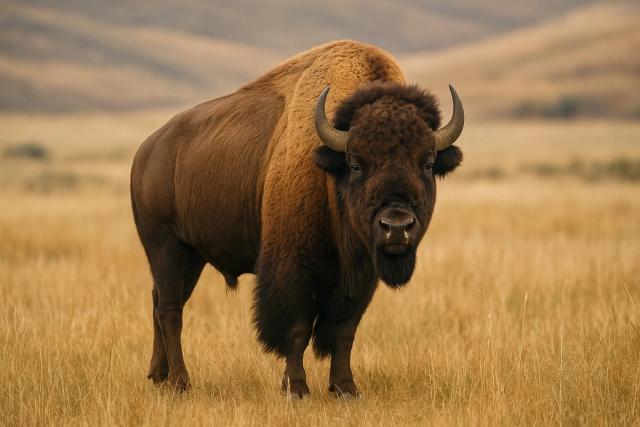
Bison symbolism meaning: what it represents spiritually, as a totem and spirit animal, in dreams, and in Native American tradition…
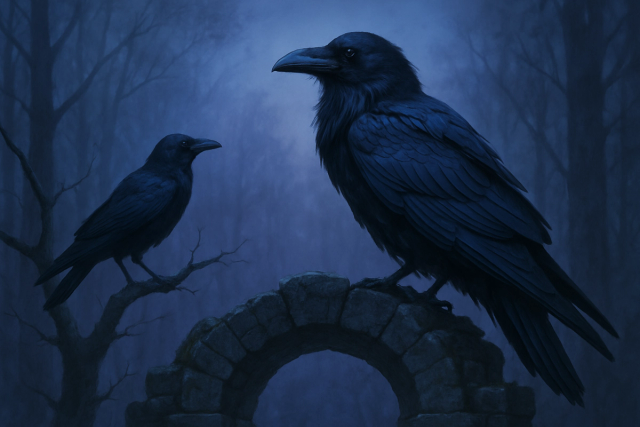
Crows and ravens look alike but carry different spiritual meanings. Here's how to tell them apart and what each one is really tell…