
Animal Symbolism
Otter Symbolism: Spiritual Meaning & Significance
Discover what otters symbolize spiritually—joy, playfulness, feminine energy, and community—across cultures, dreams, and totem ani…
 KnowMastery
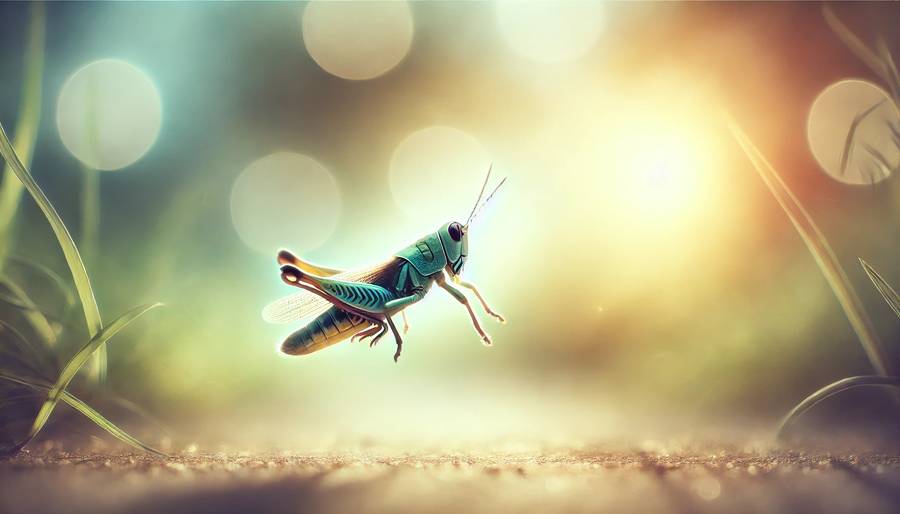
Spiritually, a grasshopper symbolizes freedom, luck, courage, and the push to take a leap of faith. Seeing one is often a sign to trust your instincts, release fear, and move forward into a new phase of life. Its sudden appearance—indoors, outdoors, or in a dream—usually carries a message of encouragement rather than warning.
This guide breaks down every major angle of grasshopper symbolism, from biblical references and house sightings to color meanings, dream interpretations, and totem wisdom—so you can understand exactly what your encounter is trying to tell you.
The grasshopper carries powerful messages in spirituality and mysticism. Its appearance in your life—whether physically or in dreams—often symbolizes growth, courage, and freedom. Here are some core spiritual meanings behind the grasshopper:
Grasshoppers are known for their remarkable ability to leap great distances, symbolizing forward movement and the courage to take big steps in life. When a grasshopper appears to you, it may be encouraging you to move forward, often in ways that require a leap of faith. This message is especially relevant if you've been feeling stuck or hesitant about making a decision. The grasshopper reminds you that it's okay to take a bold leap toward your dreams.
Grasshoppers embody courage and the willingness to embrace risk. Unlike many animals that move cautiously, grasshoppers make powerful jumps into the unknown, symbolizing the courage to face uncertainty. Seeing a grasshopper might be a nudge to trust in your abilities, let go of fear, and embrace the opportunities that lie beyond your comfort zone.
In various cultures, grasshoppers are seen as good luck symbols. Their appearance is often a positive omen, signaling that luck, abundance, or prosperity is on the way. The grasshopper's message may be one of optimism, reminding you to keep an open heart and mind as new opportunities come your way.
Grasshoppers hold significant meaning across cultures, myths, and folk traditions worldwide. Here's a look at how different civilizations interpret the grasshopper's symbolism.
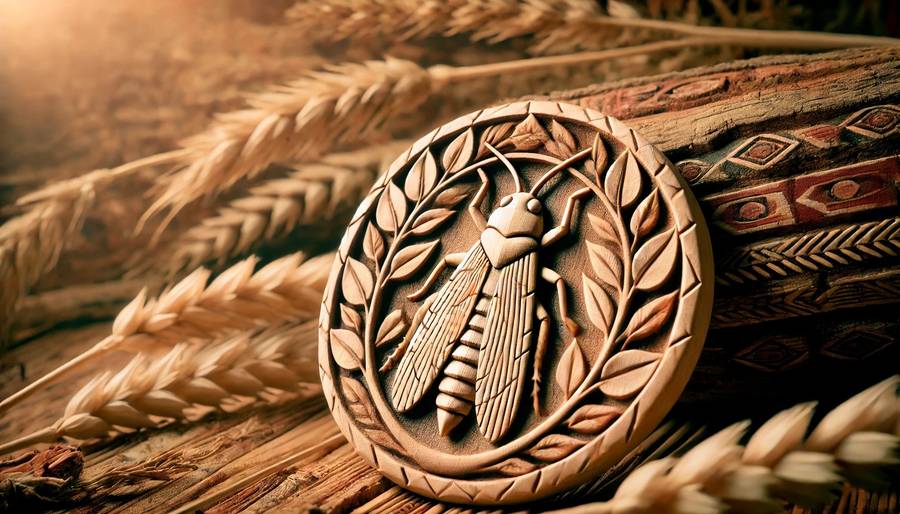
For many Native American tribes, the grasshopper is a symbol of luck, abundance, and happiness. Some tribes believe grasshoppers are totem animals that bring messages from ancestors or spirit guides. When a grasshopper appears, it's a reminder to pay attention to your life path and stay open to blessings. The grasshopper also embodies the Native American ideals of courage and forward movement, teaching us to focus on the future without dwelling on the past.
In Chinese culture, grasshoppers symbolize prosperity, longevity, and positive energy. In Chinese tradition, it is crickets—not grasshoppers—that have long been kept in cages or carved gourds as symbols of good fortune and prized for their song, though grasshoppers were occasionally kept as pets too. Their chirping was believed to protect the home and attract positive energy, symbolizing joy, vitality, and abundance.
In Greek tradition, Apollo carried the epithet Parnopios ('locust-averter'), honored with a statue on the Athenian Acropolis after he was said to have driven away a devastating locust plague—a narrower, pest-related link rather than a broad grasshopper symbolism. Greeks admired the grasshopper for its harmonious chirping, seeing it as a creature of beauty, joy, and creative expression that inspired artists and musicians to overcome fear. In ancient Greek culture it was the cicada, sacred to Apollo, that was regarded as a symbol of immortality—linked to the myth of Tithonus, who was turned into a cicada after being granted eternal life without eternal youth—rather than the grasshopper.
In African folklore, the grasshopper is often seen as a guide or messenger from the spiritual realm, offering guidance during difficult times. Grasshoppers are also symbols of resilience, as they survive in harsh environments and adapt to changing landscapes. African stories about grasshoppers depict them as wise creatures who teach the value of adaptability and perseverance—much like the resourceful trickster energy found in crow symbolism and folklore.
In Japan, grasshoppers and crickets are respected for their singing, which is believed to bring harmony to nature and the home. Their song is often associated with the changing seasons and quiet reflection.
These stories add depth to the grasshopper's symbolism and reveal its importance across nearly every continent and culture.
The grasshopper appears several times in scripture, most notably in the Book of Exodus, where locusts (a close relative of the grasshopper) devastate the crops of Egypt as one of the ten plagues. While locusts and grasshoppers are biologically related, the Bible generally uses them differently: locusts represent divine judgment and destruction, while grasshoppers are more often used as a symbol of human smallness and humility.
In the Book of Numbers, the Israelite spies who scouted the Promised Land described themselves as feeling "like grasshoppers" in comparison to the land's giant inhabitants — a phrase that has come to symbolize feelings of insignificance, vulnerability, and fear in the face of a daunting challenge. Leviticus also lists locusts and grasshoppers among the few insects considered permissible to eat, reflecting their abundance and practical role in ancient life.
Spiritually, the biblical grasshopper carries a dual message: it can represent humility and the need to trust in a higher power despite feeling small, or it can serve as a warning against destructive, swarm-like behavior when grasshoppers appear in overwhelming numbers. For most people who encounter a single grasshopper today, the humbler, faith-based interpretation is the more fitting one.
Finding a grasshopper inside your home is one of the most commonly searched grasshopper encounters — and for good reason, since it feels unusual and attention-grabbing. In most folk traditions, a grasshopper in the house is considered a sign of good luck, unexpected good news, or a visit from a protective spiritual presence checking in on you.
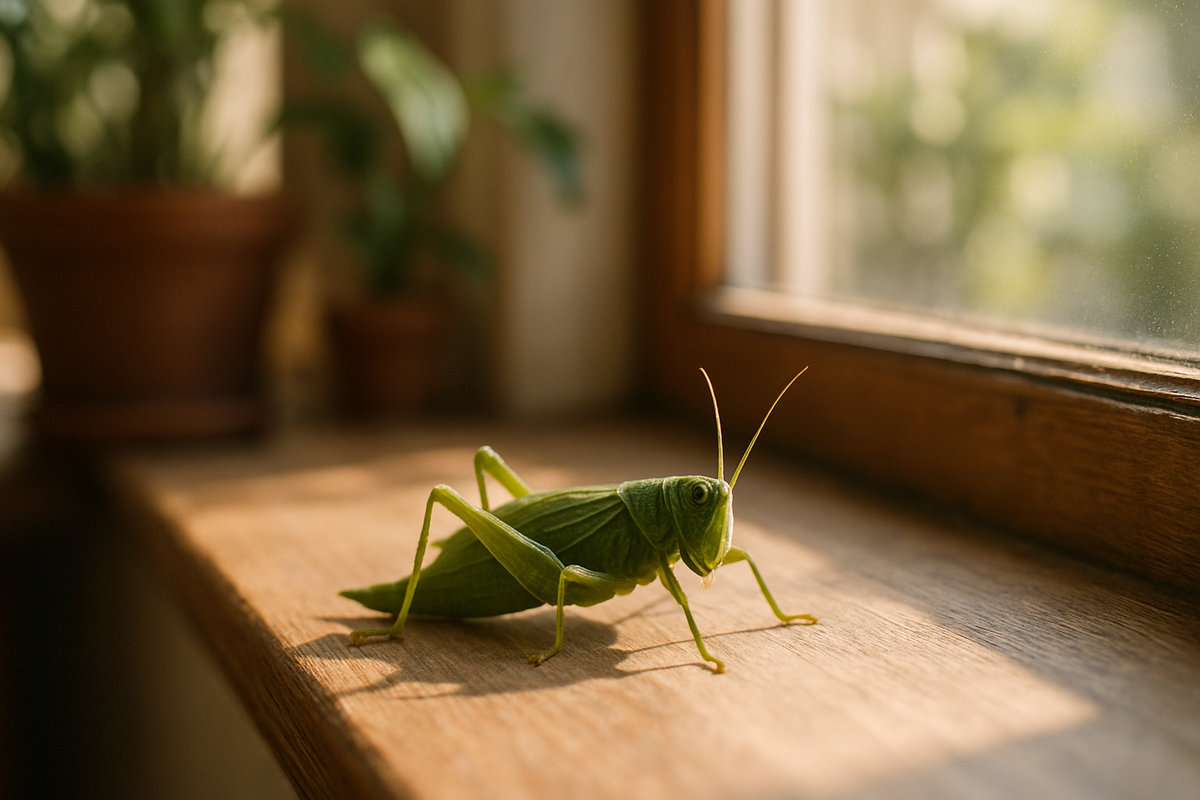
Some interpretations suggest that a grasshopper indoors is nudging you to slow down and pay attention to your surroundings, since these creatures rarely wander far from open, natural spaces. Others see it as a gentle reminder that abundance and opportunity can show up in unexpected places — even inside your own walls. If the grasshopper enters and leaves peacefully, it's generally regarded as a positive omen rather than something to fear.
Practically speaking, it's fine to gently guide the grasshopper back outside using a cup and paper. Spiritually, take a moment before you do to consider what area of your life could use a small leap forward — that's often the message it's delivering.
Grasshoppers and crickets are frequently confused, but their symbolism differs in important ways. Understanding the distinction can help you interpret your encounter more accurately.
In short: if the message feels like "take action and jump forward," you're likely dealing with grasshopper energy. If it feels more like "trust your inner voice and stay patient," that's closer to cricket symbolism.
For people who feel a strong connection to the grasshopper, it may serve as a spirit animal or totem. As a spirit animal, the grasshopper encourages you to embrace courage and move forward in life. People with a grasshopper totem are often brave, adaptable, and open to new experiences. They are usually focused on growth, ready to take risks, and rarely linger in the past — a quality shared by those who resonate with the far-sighted, watchful nature of an owl totem or the joyful, energetic spirit of a hummingbird spirit animal.
Wondering if the grasshopper might be your spirit animal? Here are some signs:
If these traits resonate with you, the grasshopper may indeed be a guiding spirit animal for your journey.
Dreaming of a grasshopper can hold various symbolic meanings, depending on the context of the dream. Here are a few common interpretations:
Dreaming of grasshoppers often relates to growth, change, and the courage to move forward. If your dream also involved unsettling or web-like imagery, it may be worth comparing notes with the very different message found in spider spiritual meaning, since insect dreams often overlap in symbolism but point in different emotional directions.
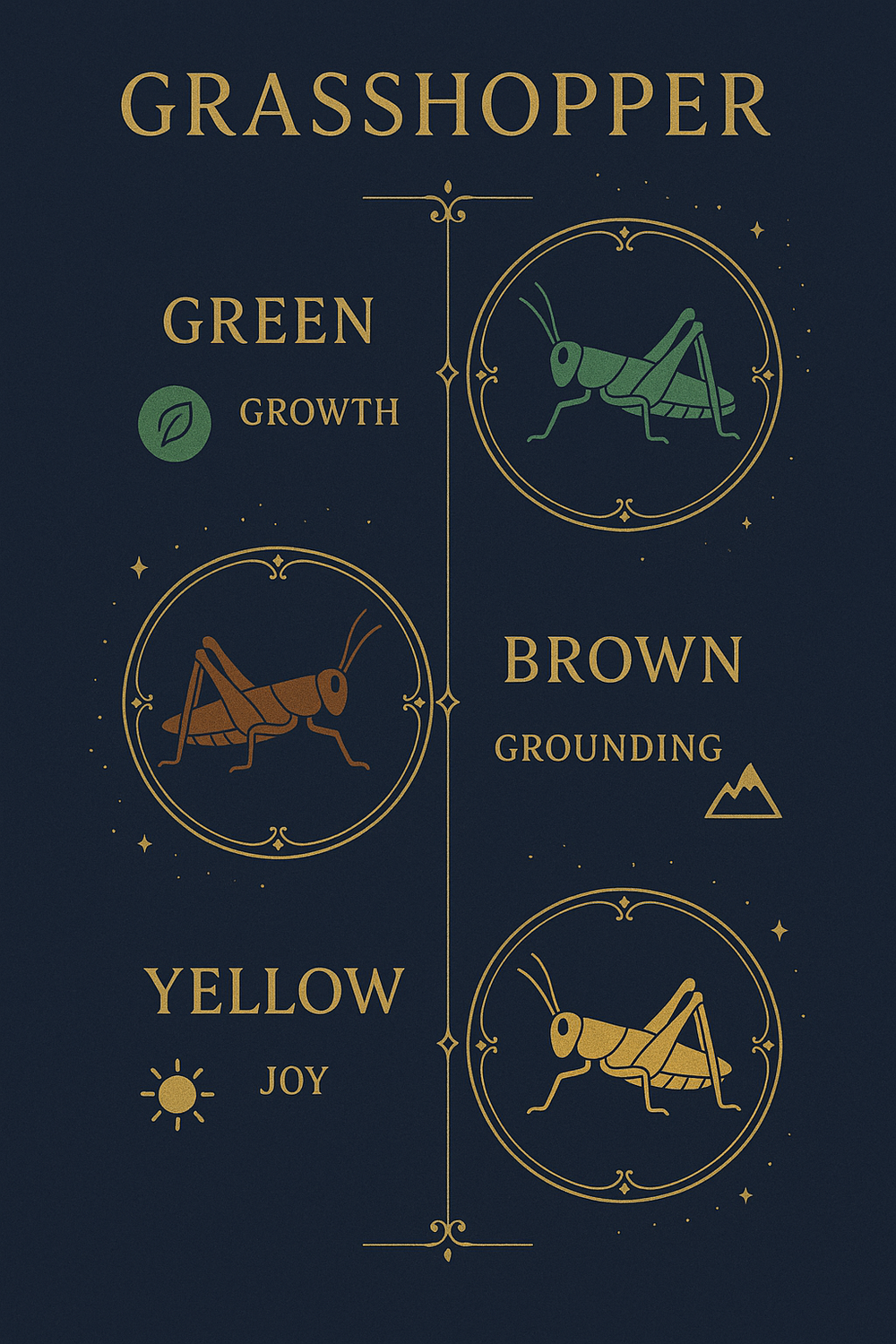
Grasshoppers come in a range of colors, and each color carries its own spiritual significance. Observing the color of a grasshopper can provide additional insight into its message, much like noting the shade of a lucky ladybug can refine its meaning.
| Color | Meaning | Message |
|---|---|---|
| Green | Growth, harmony, connection with nature | Embrace new growth and seek balance |
| Brown | Grounding, stability, practicality | Stay rooted and build a strong foundation |
| Yellow | Joy, optimism, rare positive energy | Approach life with a cheerful outlook |
| Black | Transformation, hidden potential | Look beneath the surface for a deeper lesson |
| Pink or Red | Passion, rare fortune, intense emotion | Pay attention to strong feelings guiding you |
By paying attention to the color of the grasshopper, you can gain deeper insight into the specific message it's conveying to you.
If you feel drawn to the grasshopper, here are some ways to align with its energy of courage, growth, and movement.
Set aside time each day to meditate on the idea of moving forward in life. Visualize yourself as a grasshopper, leaping confidently over obstacles. Imagine yourself reaching new heights and overcoming barriers, just as a grasshopper does in nature.
Write down your goals and intentions for growth and change. Reflect on areas in your life where you need to take a leap of faith. The grasshopper's energy is all about positive change, so set clear intentions and trust that you have the courage to achieve them.
Carry a small charm or totem of a grasshopper, such as a piece of jewelry or a keychain, as a reminder of its wisdom. This totem will help you stay courageous and embrace new beginnings, encouraging you to take bold steps in your life.
Here are some practical ways to incorporate the grasshopper's energy into your everyday life:

If you keep seeing grasshoppers in unusual places or repeatedly encounter them, it may be an example of synchronicity—when seemingly random events carry personal meaning. This type of occurrence suggests that the universe is trying to catch your attention, possibly encouraging you to look closely at an aspect of your life where a leap is necessary. Trust in these signs as guidance from the spiritual realm.
Use these questions to reflect on the grasshopper's message in your life:
Reflecting on these questions can help you internalize the grasshopper's wisdom of courage and forward movement.
Here are a few affirmations inspired by the grasshopper's qualities. Repeat these to help internalize the grasshopper's spirit of courage and growth:
The grasshopper's symbolism teaches us about courage, freedom, and forward movement. By connecting with the grasshopper's energy, you can find the strength to embrace change, take risks, and trust in the universe's guidance. Whether you're encountering grasshoppers in nature, finding one in your house, dreaming of them, or simply feel drawn to their symbolism, the message is clear: life is a journey, and sometimes it requires a leap of faith. Repeat the affirmations, embrace the symbolism, and let the spirit of the grasshopper inspire you to leap toward a life full of purpose, abundance, and joy.
A grasshopper crossing your path is generally seen as a sign to keep moving forward despite hesitation. It's often interpreted as encouragement to trust your timing and take the next step you've been putting off.
A dead grasshopper often symbolizes the end of a cycle, a missed opportunity, or a phase of growth that has run its course. Rather than a bad omen, it's usually a nudge to release the past and prepare for a fresh start.
Some spiritual practitioners consider the grasshopper a twin flame sign, particularly when it appears during moments of doubt about a relationship's direction. In this context, it symbolizes the courage needed to take a leap toward reunion or a new stage of connection.
When a grasshopper lands or jumps directly on you, it's traditionally viewed as a especially strong sign of incoming luck, a personal message, or confirmation that you're on the right path. Many folk traditions treat direct contact as an intensified version of the grasshopper's usual good-fortune symbolism.
Grasshoppers are typically solitary and symbolize personal courage, luck, and forward movement, while locusts—biologically similar but behaviorally different—swarm in large numbers and are more often associated with destruction, upheaval, or divine judgment in biblical and folk traditions. Context and numbers matter: one grasshopper is a nudge; a swarm is a warning.
Discover what otters symbolize spiritually—joy, playfulness, feminine energy, and community—across cultures, dreams, and totem ani…

3 butterfly meaning explained: alignment of mind, body & spirit, guides walking with you, and why three together is a stronger sig…

What does a cat symbolize spiritually? See what cats mean across cultures, in dreams, and when one crosses your path.