
Greek Mythology
The Minotaur: Myth of the Labyrinth Explained
Discover the true story of the Minotaur, Crete's bull-headed monster, its Labyrinth, Theseus's quest, and what the myth symbolizes…
 KnowMastery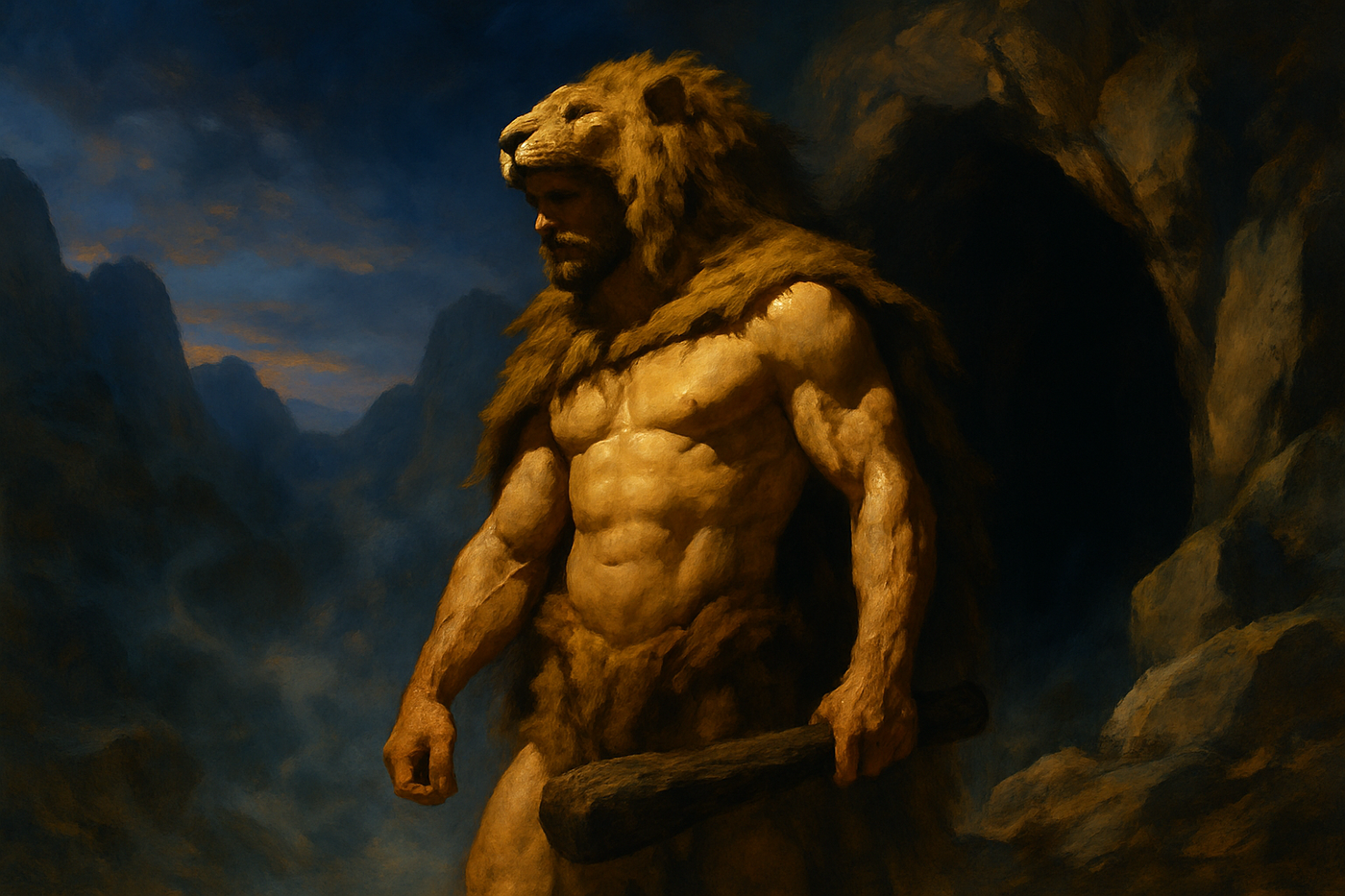
Heracles (known to the Romans as Hercules) was the greatest hero of Greek mythology — a demigod son of Zeus and the mortal woman Alcmene, famed for superhuman strength. He is best remembered for completing the Twelve Labors, a set of nearly impossible tasks assigned by King Eurystheus as punishment after Hera drove him to kill his own family in a fit of madness. Completing them was the price of his purification and, eventually, his path to immortality. His story is less about brute force than about endurance, atonement, and the long road toward becoming worthy of the gods.
Picture a man torn apart by grief he did not fully understand, sent into the wilderness to wrestle lions, hydras, and his own guilt. That is the real Heracles — not a comic-book strongman, but a wounded soul forced to labor his way back to grace.
Every culture eventually invents a hero who suffers before he is allowed to shine. Heracles is the Greek answer to that ancient need, and nearly three thousand years later, his twelve trials still read like a map of what it costs to overcome ourselves.
Heracles was born in Thebes, the son of Zeus and Alcmene, a union that instantly made him a target of divine jealousy. His name literally means "Glory of Hera," a bitter irony, since Hera, Zeus's wife, despised him from birth and worked throughout his life to destroy him. This tension between Heracles and Hera is the engine that drives the entire myth — his greatness exists precisely because a goddess tried to crush it.
Unlike the Olympian gods listed in most Greek gods catalogues, Heracles was a hero, not a deity — at least until his death. He occupied the space between mortal and divine, which is exactly why the Greeks found him so compelling: he was proof that a human, however flawed, could earn a place among the gods through sheer perseverance.
Hera's hatred did not stay symbolic. According to the most widely cited version of the myth, preserved by the tragedian Euripides and later by the mythographer Apollodorus, Hera drove Heracles into a fit of madness in which he killed his own wife Megara and their children. When the fog of insanity lifted and Heracles understood what he had done, he sought purification at the Oracle of Delphi.
The Pythia — the oracle's priestess, speaking in the name of Apollo — told him to serve King Eurystheus of Tiryns for twelve years. Eurystheus, delighted at the chance to humiliate a rival with a stronger claim to the Mycenaean throne, devised ten labors he believed impossible. When Heracles completed them with divine help, Eurystheus disqualified two and added two more, bringing the total to the twelve labors we know today.
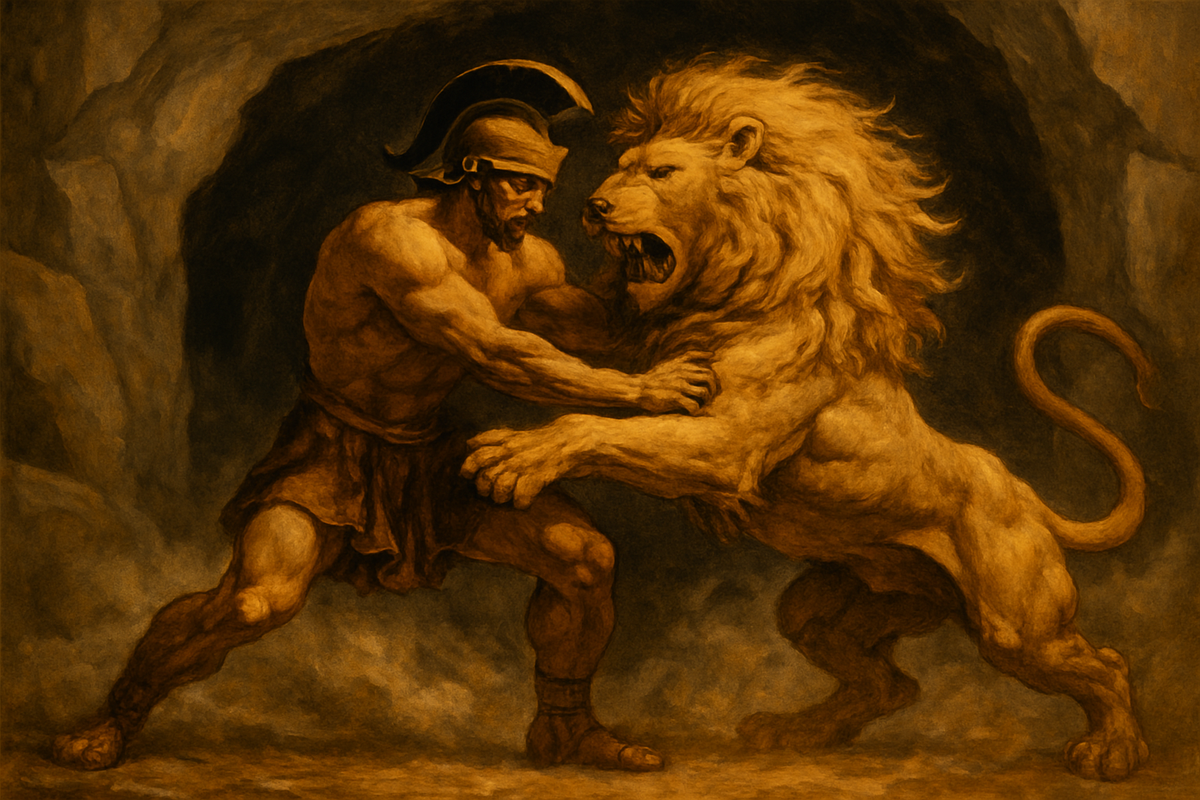
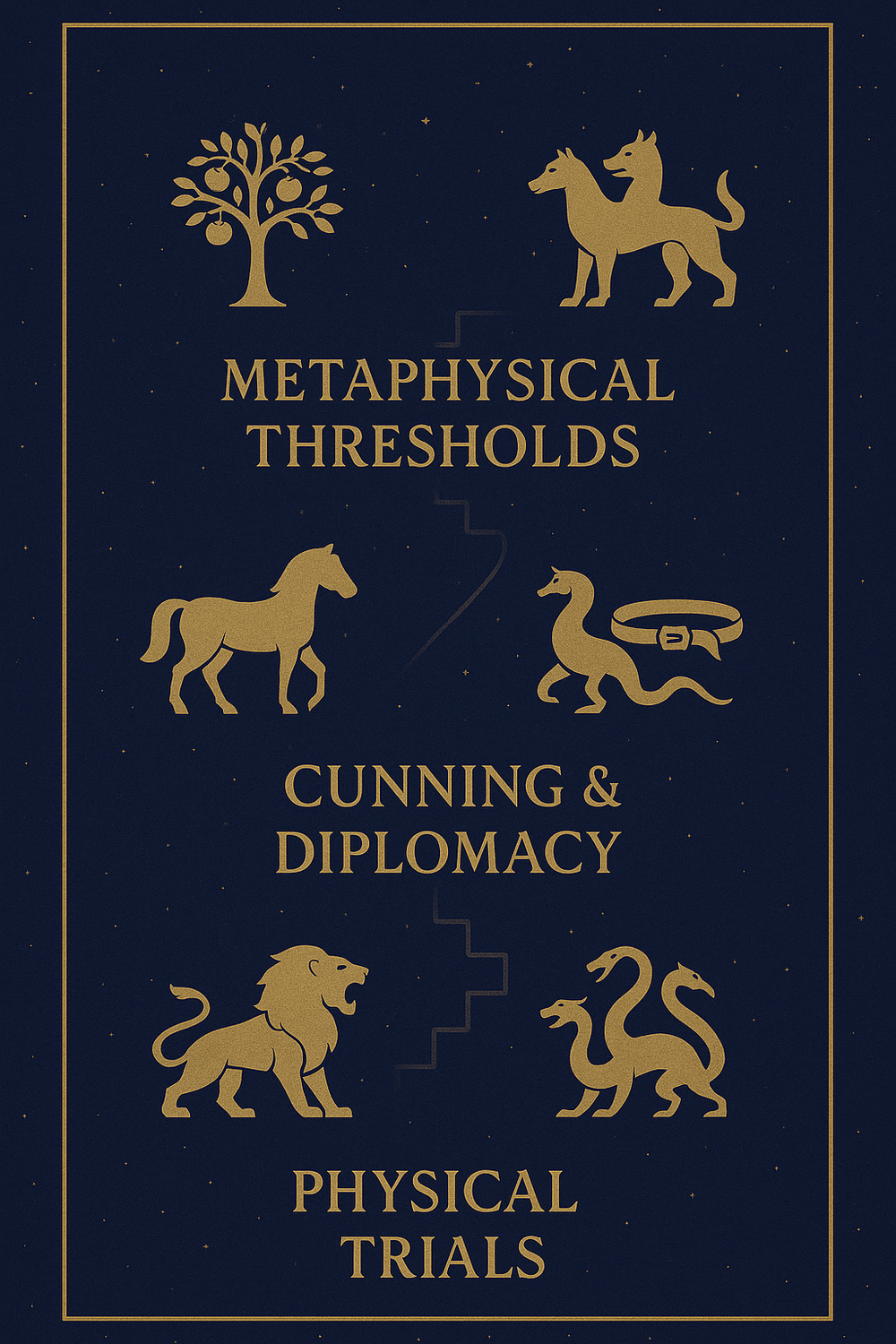
Each labor targeted a monster or challenge tied to a specific region of Greece, which is part of why scholars believe the myth cycle absorbed and unified older local legends into one national hero narrative. The table below summarizes each labor and its symbolic core.
| Labor | Challenge | Symbolic Meaning |
|---|---|---|
| 1 | Slay the Nemean Lion | Facing a fear no weapon can pierce |
| 2 | Kill the Lernaean Hydra | Problems that multiply when attacked carelessly |
| 3 | Capture the Ceryneian Hind | Patience over force |
| 4 | Capture the Erymanthian Boar | Restraint amid chaos |
| 5 | Clean the Augean Stables | Confronting accumulated filth and neglect |
| 6 | Slay the Stymphalian Birds | Clearing toxic noise from the mind |
| 7 | Capture the Cretan Bull | Taming inherited rage |
| 8 | Steal the Mares of Diomedes | Overcoming cruelty with cunning |
| 9 | Obtain the Belt of Hippolyta | Negotiating with pride, not conquest |
| 10 | Capture the Cattle of Geryon | Crossing the edge of the known world |
| 11 | Steal the Apples of the Hesperides | Seeking immortality through humility |
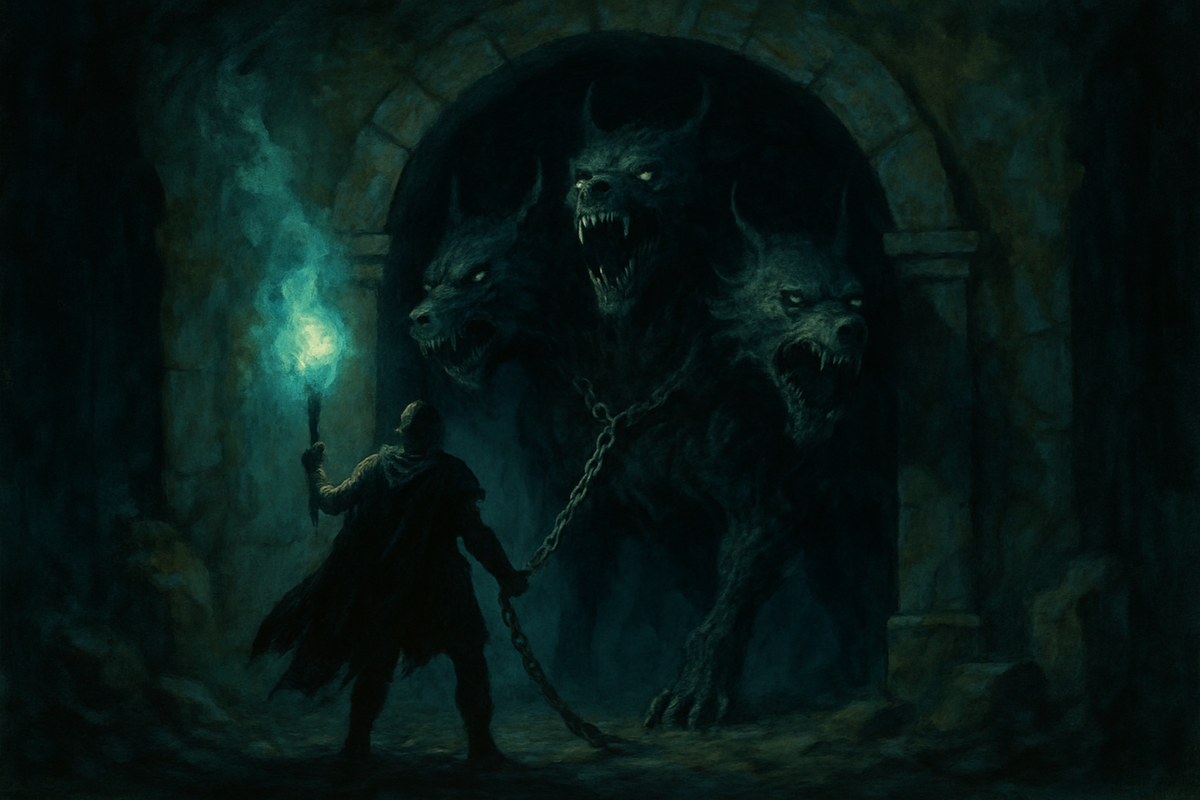
| 12 | Capture Cerberus | Facing death and returning transformed |
Notice the arc: the labors move from physical monsters (lion, hydra, boar) to tests of cunning and diplomacy (the mares, the belt), and finally to metaphysical thresholds — the garden at the edge of the world and the gates of the underworld itself. Heracles does not simply get stronger; he gets wiser.
In Greek religious thought, Heracles' journey mirrors a rite of passage from pollution to purification. His madness and the murder of his family represent miasma — a spiritual stain that could only be cleansed through service, sacrifice, and time, not through denial or self-pity. This is a distinctly Greek spiritual lesson: guilt is not erased, it is transformed through labor.
Later Stoic philosophers, particularly in Roman times, reinterpreted Heracles as a symbol of the rational soul disciplining the passions. The lion, the hydra, and the boar became allegories for anger, greed, and lust — beasts that live inside every person and must be labored against daily rather than defeated once and forgotten.
The Romans renamed him Hercules and elevated him into a symbol of civic virtue and empire — statues of Hercules Farnese-style musculature adorned gymnasiums and public baths as reminders that strength should serve the state. Centuries later, Renaissance humanists revived "Hercules at the Crossroads" as an emblem of moral choice between virtue and vice, a theme painted by Annibale Carracci and referenced by philosophers debating free will.
The Greek historian Herodotus complicated the tidy national hero story by reporting, in his Histories, that priests at Tyre worshipped a Heracles of their own — likely the Phoenician god Melqart — whom they claimed predated the Greek hero by more than two thousand years. Herodotus concluded that the Greeks had borrowed and reshaped an older Near Eastern figure of strength and endurance, a reminder that even the most "Greek" of heroes carried older Mediterranean roots beneath his familiar lion pelt.
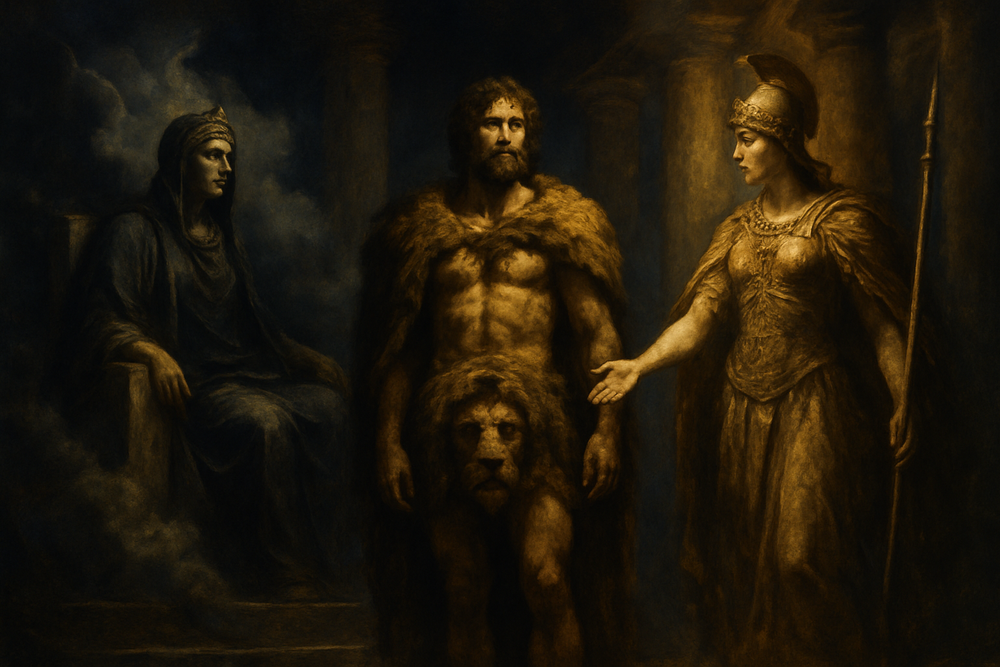
Heracles' story only makes sense in relation to the Olympians who both hindered and helped him. Hera remained his lifelong antagonist, yet Athena, goddess of strategic wisdom, repeatedly intervened to guide him through the labors' trickiest moments, from lending him bronze krotala to scare off the Stymphalian birds to escorting him safely out of the underworld. This contrast — a hostile goddess and a helpful one — reflects a core Greek belief: fate is shaped by which divine forces you manage to align with, not by strength alone.
Heracles' end was as tragic as his life. Poisoned unknowingly by a robe soaked in the blood of the centaur Nessus — a gift meant as revenge by his own wife Deianira, who had been deceived — Heracles suffered unbearable agony and chose to build his own funeral pyre on Mount Oeta. As the flames consumed his mortal body, Zeus brought him to Olympus, granting him true immortality and, in some versions, reconciling him with Hera at last through marriage to her daughter Hebe.
This ending matters spiritually: Heracles earns divinity not through birth but through completed suffering. The Greeks used him to answer a question every mortal quietly asks — can pain ever be redeemed? Their answer, embodied in Heracles' apotheosis, was yes, if the pain is carried through to the end rather than avoided.
You don't need to believe in Hydra-heads or Cretan bulls to find the labors useful. Modern readers, therapists, and even leadership coaches borrow the twelve-labors structure as a metaphor for personal growth after failure. Consider what the myth suggests you actually do when facing your own "labor":
In dream interpretation traditions influenced by Jungian archetypal psychology, a figure resembling Heracles — someone immensely strong yet burdened by an impossible task — often represents the dreamer's own confrontation with an inner "monster": addiction, grief, or a long-avoided responsibility. Dreaming of completing a labor-like task, such as clearing filth (echoing the Augean stables) or capturing a wild animal, is frequently read as a sign that the dreamer is close to resolving a long-standing internal conflict, provided the dream ends with the task finished rather than abandoned.
Heracles was ordered to serve King Eurystheus for twelve years as penance after Hera drove him mad and he killed his own wife and children. The Oracle of Delphi prescribed this service as the only path to purification, and Eurystheus chose the twelve tasks specifically to be humiliating or fatal.
Yes — Heracles is the original Greek name, while Hercules is the Latin form used by the Romans, who adopted and reshaped his myths to emphasize civic virtue and imperial strength. The core story of the Twelve Labors remains largely the same across both traditions, though Roman art and literature added their own symbolic emphasis.
Ancient sources most often single out capturing Cerberus, the three-headed guard dog of the underworld, as the ultimate test, since it required Heracles to journey into the realm of the dead and return alive. The Hydra is a close second, since each severed head grew two more, forcing Heracles to change his entire strategy mid-battle.
Hera despised Heracles because he was living proof of her husband Zeus's infidelity, and his very name — meaning "Glory of Hera" — was seen by some ancient commentators as an ironic taunt rather than an honor. Her hostility set the entire myth cycle in motion, from his madness to the Twelve Labors themselves.
Discover the true story of the Minotaur, Crete's bull-headed monster, its Labyrinth, Theseus's quest, and what the myth symbolizes…
Discover who the Sirens really were in Greek mythology, why their song was so deadly, and what these creatures symbolize in spirit…
Meet Eros, the Greek god of desire and romantic love: his myths, symbols, Roman twin Cupid, and what his story reveals about passi…