Animal Symbolism
Manta Ray Spirit Animal Meaning: Traits & Signs It's Yours
Manta ray spirit animal meaning: what it symbolizes, key personality traits, and signs it's guiding you right now.
 KnowMastery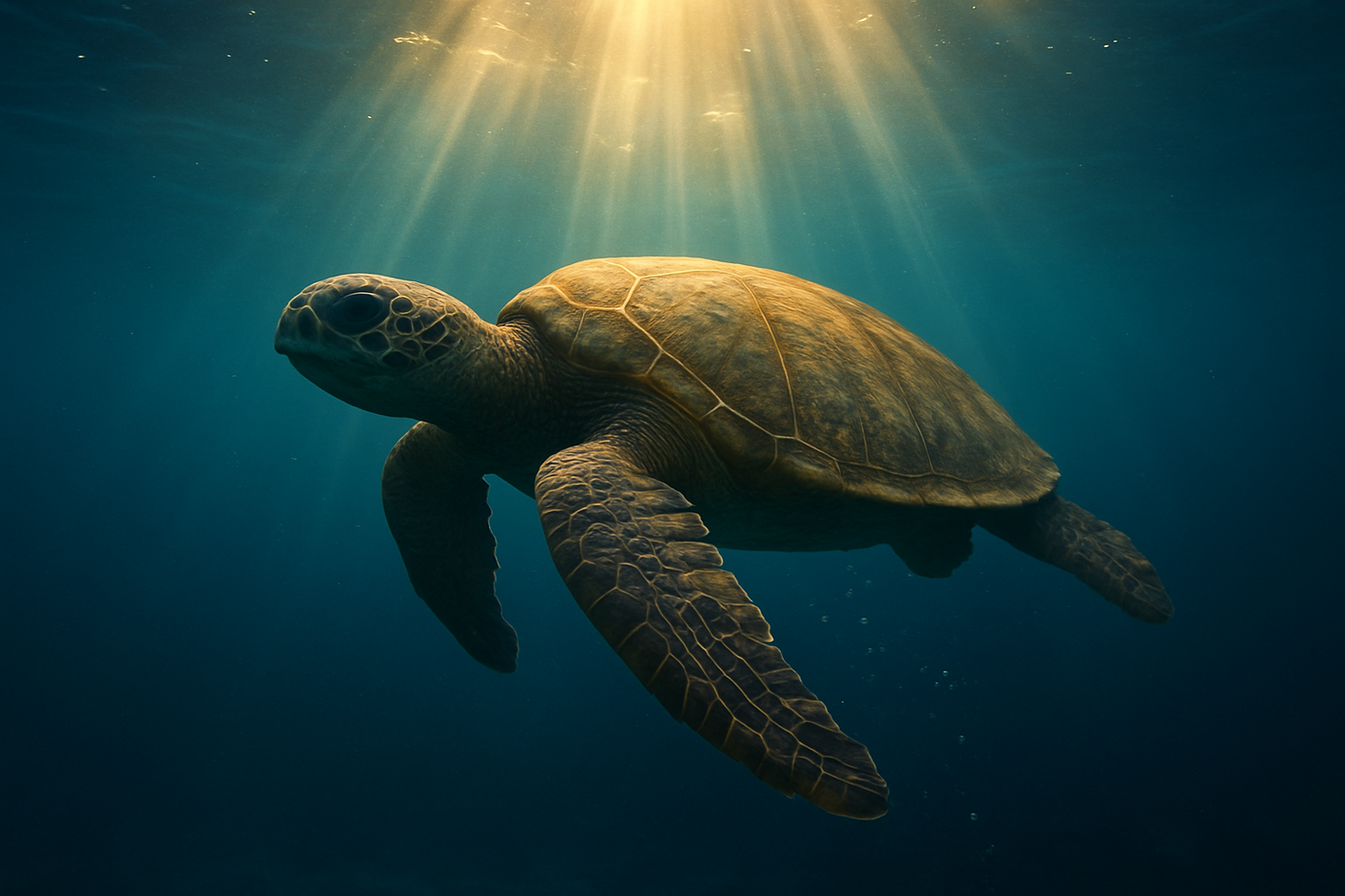
Sea turtles symbolize patience, wisdom, longevity, and divine timing, appearing as sacred guides in Polynesian, Hawaiian, Native American, and Asian traditions alike. Across centuries and civilizations, they’ve glided through myth and meaning like they do through water — with purpose, grace, and quiet strength.
Picture this: An ancient sailor, lost in the vast blue, spots a sea turtle swimming steadily beneath the surface. For him, it’s a sign — a cosmic reassurance that he is not alone, that he’s being guided. That simple image has traveled across time and cultures, rooting itself in stories, legends, and spiritual philosophies worldwide.
Spiritually, sea turtles symbolize patience, divine timing, and the deep wisdom of the soul’s journey.
They aren’t fast. But they always get where they need to go. And in that slow, methodical movement lies their deepest lesson: trust the path. Much like a hawk spirit animal teaches focus from above, the sea turtle teaches patience from below — a lesson in surrendering to the current rather than fighting it.
What do sea turtles mean spiritually?
Sea turtles spiritually represent patience, ancient wisdom, protection, and emotional grounding. They remind us to trust the flow of life and carry the symbolism of the soul’s calm journey through the waters of existence.
The Bible does not mention sea turtles directly, but Judeo-Christian tradition often draws on them as symbols of patience, God’s timing, and the order of creation. The King James translation of Leviticus 11:29 references the "tortoise" among creeping things, a word that later scholars have debated but that many devotional writers have connected to turtles broadly, framing them as reminders of humility and groundedness within creation.
More significantly, the sea turtle’s unhurried pace is frequently used in modern Christian teaching as a living metaphor for Ecclesiastes 3:1 — "To every thing there is a season, and a time to every purpose under the heaven." Just as the turtle emerges from the ocean on its own timeline, believers often interpret its presence as a nudge toward surrendering control and trusting God’s appointed timing rather than rushing ahead.
In Genesis 1, the fifth day of creation brings forth "every living creature that moveth" in the waters — a category theologians place sea turtles within, tying them to the very foundation of ordered, purposeful creation. For this reason, sea turtles are sometimes used in sermons and devotionals as gentle emblems of endurance, faithfulness, and the quiet assurance that slow progress is still progress.
From Polynesia to Africa, from Hawaii to China, from ancient Egypt to feudal Japan — the sea turtle has left its mark in every corner of cultural imagination.
In Polynesian lore, the turtle or honu is a navigator, often seen as a spirit guide for seafarers. It’s a sacred animal said to connect humans with the spirit world and guide them home across treacherous waters.
In Hawaii, sea turtles are revered as bringers of good luck and longevity. The story of Kauila, a turtle goddess, tells of her shapeshifting to protect children — merging guardian archetypes with oceanic wisdom. Many Hawaiian families also honor sea turtles as aumakua, ancestral spirit guardians believed to return in animal form to watch over living descendants.
Many Native American tribes see the turtle as a symbol of creation. In many Native American oral traditions—particularly among Northeastern Woodlands peoples such as the Lenape and Haudenosaunee (Iroquois)—a giant turtle is said to carry the earth on its back, which is why North America is sometimes called 'Turtle Island.' This "Turtle Island" motif emphasizes stability and support.
In ancient Chinese cosmology—embraced by Taoist and Confucian thought alike—the turtle's domed upper shell was seen to represent the heavens and its flat lower shell the earth. The turtle is seen as a cosmic mediator, one that bridges spiritual and material realms.
Ancient Egyptian symbolism was more complex: turtles were sometimes associated with darkness, the Nile’s flooding cycle, and the underworld, occasionally cast as an adversary of the sun god Ra in solar mythology. Yet turtle-shaped amulets have also been recovered from Egyptian burial sites, suggesting a parallel belief in the creature’s power to protect the soul during its journey through the afterlife.
Turtles feature less prominently in Celtic mythology than in other traditions, but druidic nature-symbolism often linked the shell’s pattern to lunar cycles and the Earth Mother, reinforcing the turtle as a quiet keeper of seasonal time and the slow, patient wisdom of the land.
In Japan, the turtle — paired with the crane — is one of the two great symbols of longevity. The Minogame, a mythical turtle with a long, trailing tail of seaweed, represents thousands of years of life and good fortune. The turtle also stars in the famous folktale of Urashima Tarō, a fisherman who rescues a turtle and is rewarded with a visit to the underwater Dragon Palace, Ryūgū-jō — a story still used today to teach lessons about gratitude, time, and the cost of forgotten promises.
| Culture | Symbolic Meaning |
|---|---|
| Polynesian | Spiritual navigation, protection, ancestry |
| Hawaiian | Good fortune, endurance, spiritual guidance |
| Native American | Creation, Earth, longevity |
| Chinese (Taoist) | Balance, cosmic order, immortality |
| Egyptian | Underworld guardianship, protection of the soul |
| Celtic | Earth Mother wisdom, lunar cycles, patience |
| Japanese | Longevity, gratitude, connection to the spirit world |
What does it mean if your spirit animal is a sea turtle?
It means you’re someone who walks the world with measured purpose. You prefer reflection over reaction, intuition over impulse. People with the turtle as a totem are often empaths, old souls, and natural healers — much like those who resonate with an owl totem for its quiet, watchful wisdom.
What is the meaning of a sea turtle totem?
A sea turtle totem symbolizes resilience, deep wisdom, and emotional strength. It indicates a personality grounded in intuition, with a mission to walk the Earth with gentleness and inner power.
Dreams featuring sea turtles often signify hidden potential, emotional resilience, and divine timing.

In the dream realm, a sea turtle doesn’t just swim — it glides with cosmic purpose. It may emerge from murky depths or crawl steadily toward the ocean shore. Both visuals are laden with symbolism, similar to how a jellyfish appearing in a dream often points to emotional sensitivity drifting just beneath the surface.
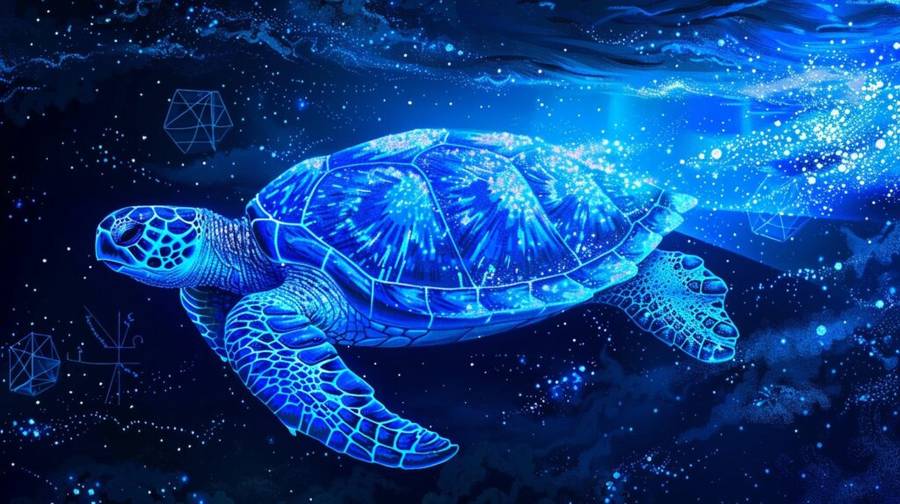
| Dream Scenario | Interpretation |
|---|---|
| Sea turtle swimming peacefully | Emotional healing and calmness in life |
| Sea turtle laying eggs | Birth of new ideas or nurturing a long-term goal |
| Sea turtle struggling on the sand | Feeling out of your element; needing spiritual grounding |
| Giant or ancient sea turtle | Connection with ancestral wisdom and spiritual guidance |
What does dreaming of a sea turtle mean?
A sea turtle in your dream often represents emotional resilience, long-term growth, and spiritual guidance. Depending on the scenario, it may point to healing, transformation, or intuitive progress in your waking life — much like the transformative symbolism carried by swans in dream lore.
Many people who encounter a sea turtle shortly after losing a loved one interpret it as a spirit messenger — a gentle sign that the soul of the departed is at peace and still watching over them. This belief echoes the Hawaiian concept of aumakua, ancestral guardians who return in animal form, and shares emotional territory with the widespread folklore that sees a crow appearing after a death as an omen or messenger between worlds.
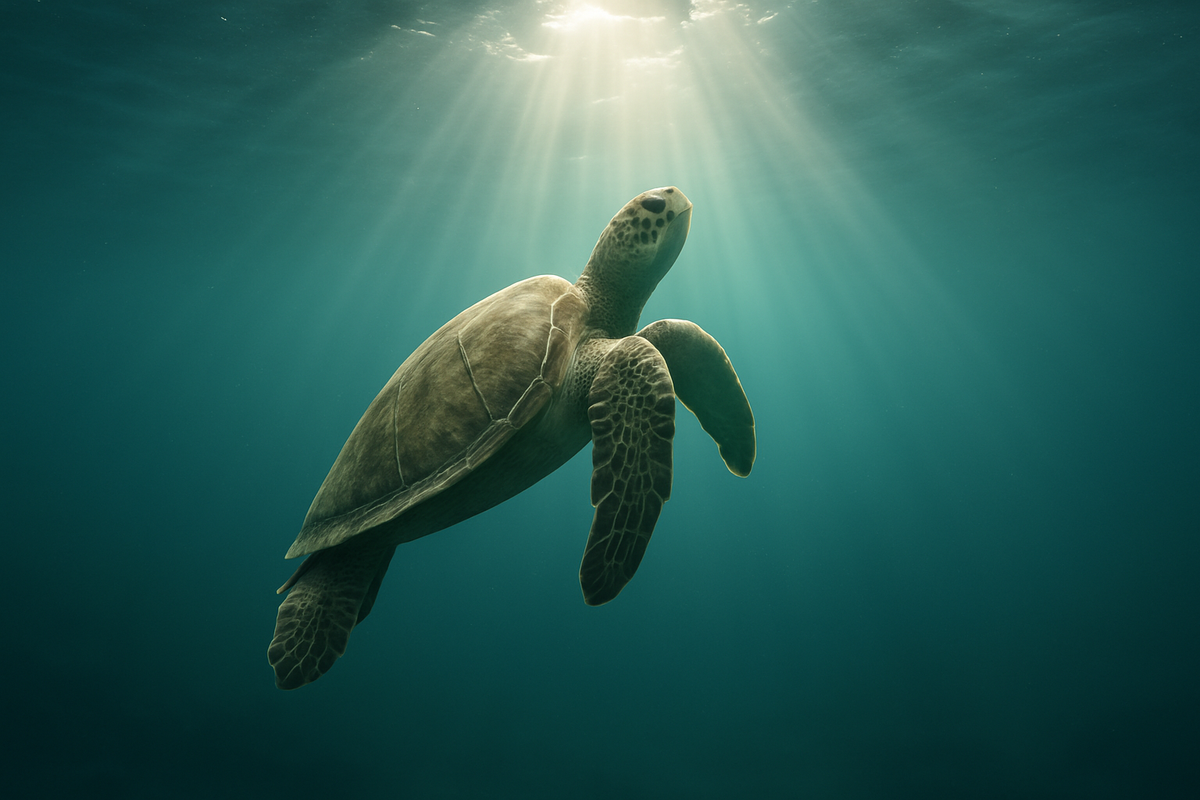
Grief researchers note that bereaved people often seek meaning-making signs in nature, and the sea turtle’s slow, deliberate movement lends itself naturally to feelings of calm and reassurance. Unlike a startling omen, the turtle’s unhurried glide feels gentle — which is likely why so many describe the encounter as comforting rather than frightening.
Common interpretations of a post-loss sea turtle sighting include:
Sea turtles and land tortoises are often confused, but their symbolism diverges in meaningful ways. Sea turtles are tied to emotional depth, intuition, and the subconscious (the ocean), while tortoises and land turtles are more closely associated with grounded stability, home, and steady endurance on solid earth.
| Aspect | Sea Turtle | Tortoise / Land Turtle |
|---|---|---|
| Primary Domain | Ocean, emotion, the subconscious | Earth, home, material stability |
| Core Symbolism | Intuition, spiritual navigation, divine timing | Perseverance, patience, steady progress |
| Famous Folklore | Hawaiian honu, Japanese Minogame | Aesop’s "The Tortoise and the Hare" |
| Common Modern Use | Ocean conservation, spiritual guidance tattoos | Wisdom sayings, "slow and steady" mottos |
Today, the sea turtle’s symbolism transcends myth — it has become a rallying icon for conservation and global stewardship.
In the age of climate change and habitat destruction, sea turtles have emerged as symbols of ecological balance. Organizations such as the National Wildlife Federation and NOAA Fisheries regularly cite sea turtle population trends as bellwethers of ocean health. Their decline is a warning bell. Their survival? A sign of collective responsibility.
Brands, NGOs, and even tattoos now invoke the turtle not just for aesthetic beauty, but as a badge of sustainability, strength, and soulful living.
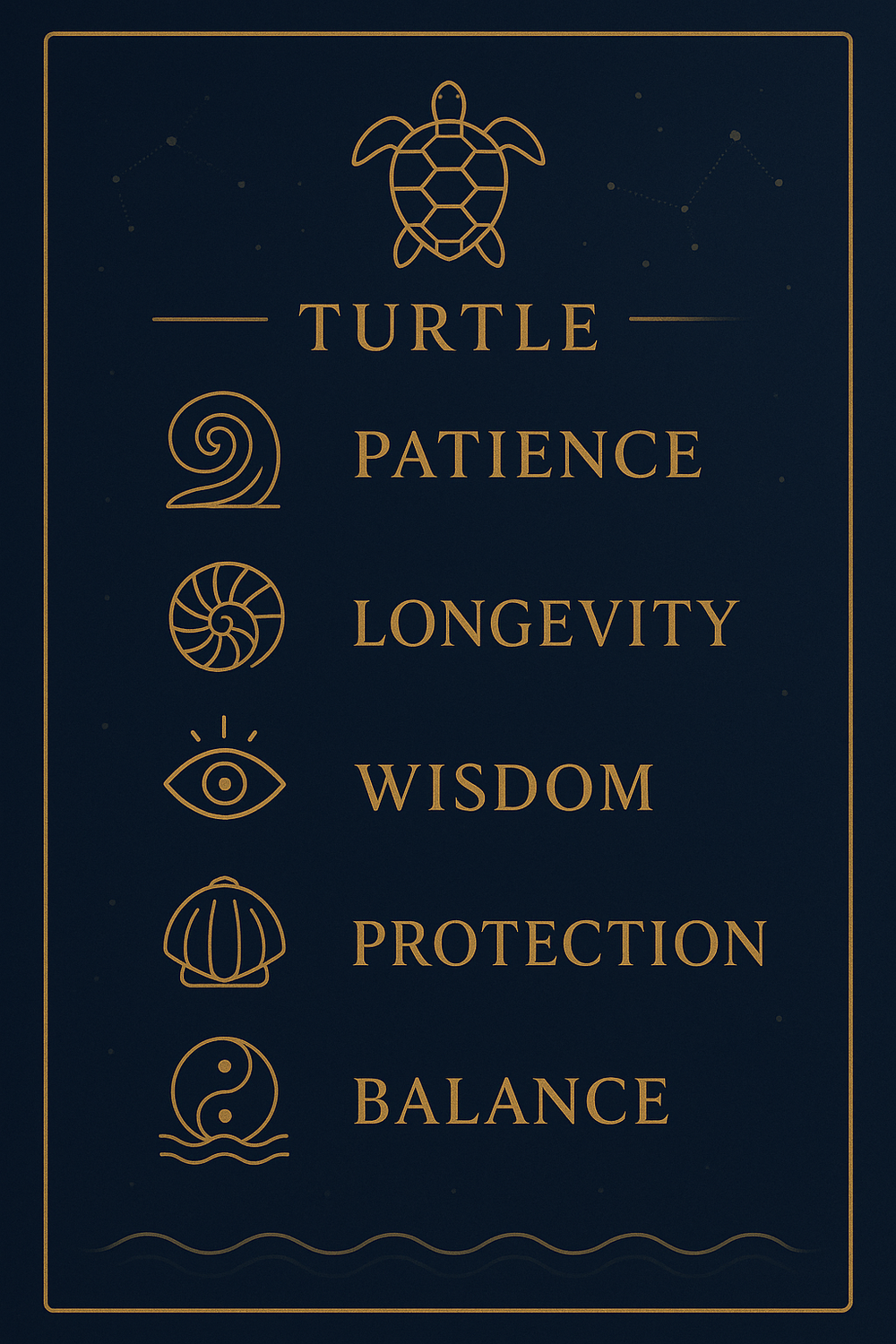
| Symbolic Theme | Sea Turtle Representation |
|---|---|
| Patience | Slow, deliberate movement |
| Longevity | Long lifespan and survival across epochs |
| Wisdom | Ancient presence and spiritual insight |
| Protection | Shell as a mobile sanctuary |
| Balance | Between land and sea, spirit and form |
Across coastlines and coral reefs, from ancient scrolls to modern inked skin, the sea turtle continues to glide — slow, quiet, watchful. But never aimless.
It carries with it more than a home. It bears a myth, a message, and a mirror: to look within, to stay the course, and to honor the tides of life.
So the next time you see a sea turtle — in waking life or dream — pause. It may just be your soul reminding you:
"You're right where you're meant to be."
Seeing a sea turtle in real life is considered a powerful spiritual omen. It often signifies good fortune, long-term success, and a reminder to slow down and trust the flow of life.
A sea turtle tattoo represents longevity, perseverance, and the deep connection between the human spirit and the ocean. It is also a symbol of protection and personal evolution.
In Hawaiian and other Polynesian traditions, the sea turtle (honu) is regarded as a symbol of good luck and divine favor, a belief echoed in Chinese and Japanese traditions that likewise link turtles to longevity and good fortune. Encountering one is believed to mark positive change or spiritual awakening.
Absolutely. Due to their ancient lineage, slow movements, and long lives, sea turtles are widely seen as emblems of ancestral wisdom and life experience.
Yes, and a powerful one at that. As a spirit animal, the sea turtle guides individuals toward emotional healing, balance, and an intuitive, introspective life path.
The Bible does not name sea turtles specifically, but the KJV's mention of a "tortoise" in Leviticus 11:29 and the broader creation account in Genesis have led many believers to view turtles as symbols of patience and God's timing. Their slow, steady movement is often used devotionally to illustrate Ecclesiastes 3:1's teaching that everything has its appointed season.
Many interpret a sea turtle sighting after a death as a spirit messenger or a sign that a loved one's soul is at peace and still watching over them. This belief mirrors the Hawaiian aumakua tradition, where ancestral guardians return in animal form to comfort and protect the living.
Green sea turtles, named for the greenish hue of their fat rather than their shell, are most often associated with growth, renewal, and Hawaiian good-luck traditions tied to the honu. Loggerhead turtles, known for their powerful jaws and long migratory journeys, are more commonly linked to endurance, resilience, and finding one's way home against long odds.
Manta ray spirit animal meaning: what it symbolizes, key personality traits, and signs it's guiding you right now.
What does a peacock symbolize spiritually? Explore its meaning in dreams, feather colors, love, mythology, and everyday sightings.

What if the next time you encountered a skunk, it wasn’t just bad luck—but a cosmic message wrapped in black and white fur? Skunks…