History
Who Loves the Sun (2006)
Introduction “Who Loves the Sun” is a modest Canadian dramedy that takes its audience on a journey of emotions, revelations, and c…
 KnowMastery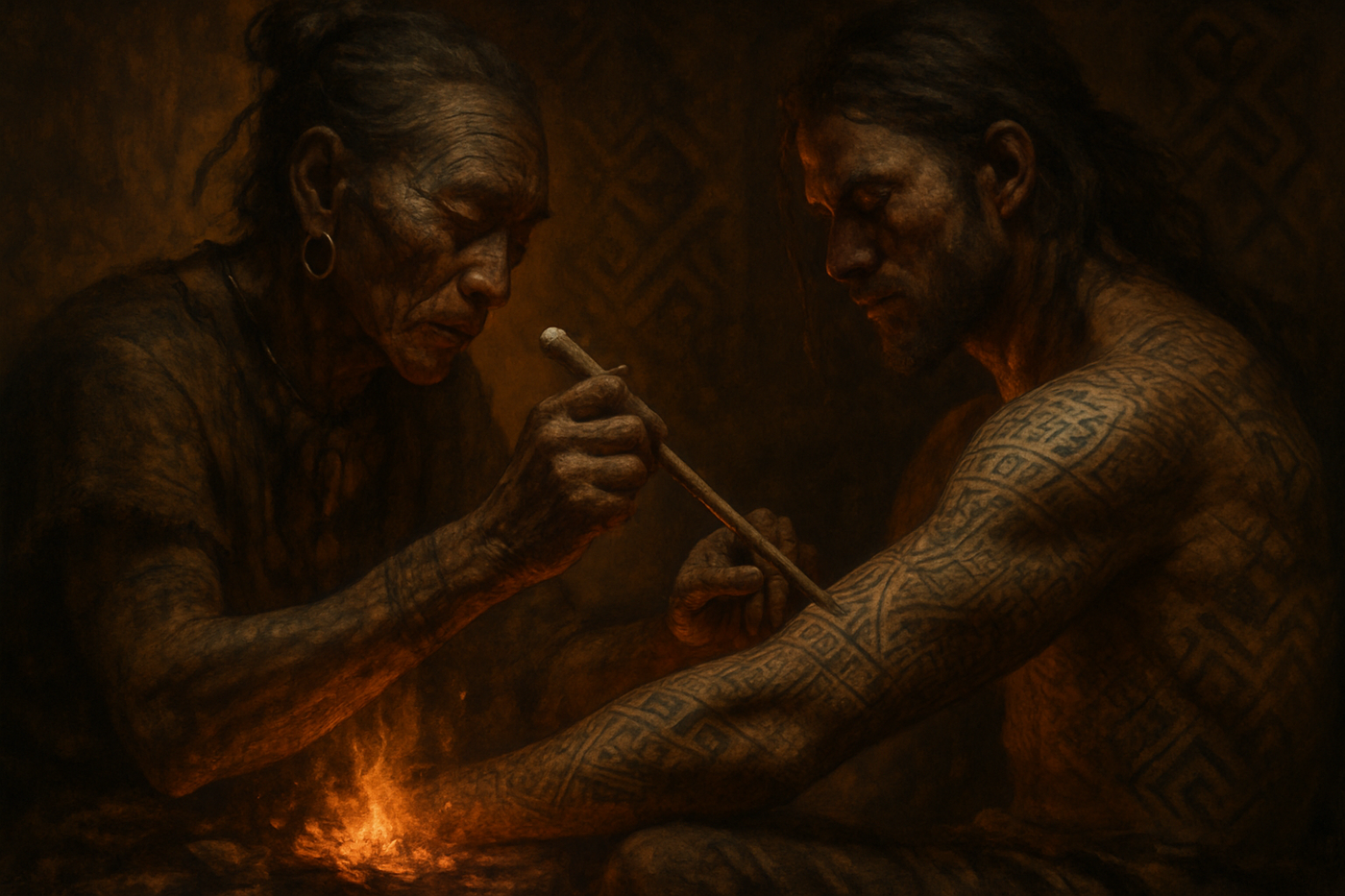
Tattoos are permanent marks made by inserting pigment beneath the skin, and their history stretches back over 5,000 years across nearly every inhabited continent. Long before tattoos became a mainstream fashion statement, they served as spiritual armor, rites of passage, marks of status, and maps of identity. From the mummified skin of Ötzi the Iceman to the sacred hand-tapped designs of Polynesian chiefs, tattooing has always been about far more than decoration - it has been a language written directly onto the body.
Close your eyes and imagine a needle-sharp bone tool tapping ink into skin by firelight, the low murmur of chanting marking each painful stroke as a passage into adulthood. Imagine a sailor in the 1700s, far from home, choosing a swallow or an anchor to carry a piece of his story across the ocean. Imagine a grieving mother inking her child's name over her heart.
Tattoos have always lived at this intersection - pain and beauty, ritual and rebellion, memory and identity. This article traces that story from the ice-bound tombs of prehistory to the tattoo parlors of today.
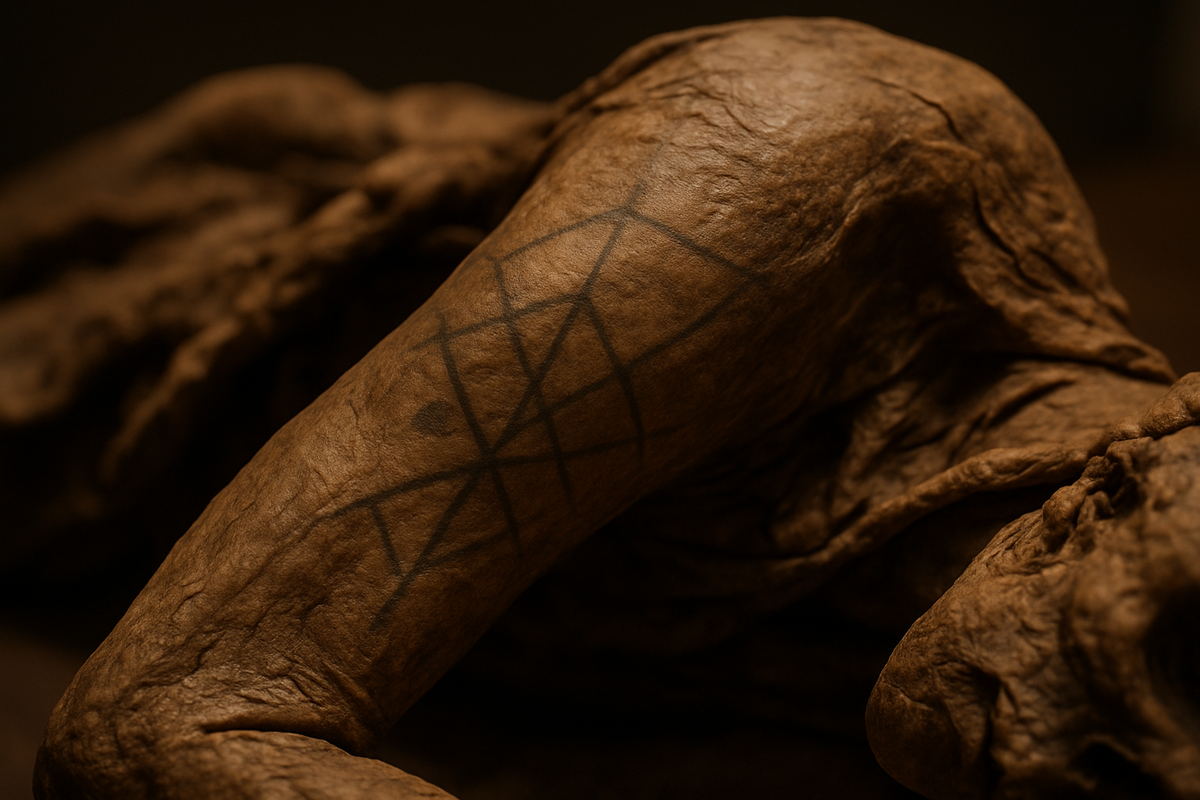
The earliest confirmed evidence of tattooing comes from Ötzi the Iceman, a 5,300-year-old mummy discovered in the Alps in 1991, whose body bears 61 tattoos made of soot rubbed into small incisions. Located over joints and along the spine, researchers believe these marks were therapeutic - an ancient form of acupuncture meant to relieve chronic pain, not decoration in the modern sense.
Similar evidence appears in ancient Egypt, where mummies dating to around 2000 BCE, including the priestess Amunet, show geometric tattoos of dots and lines believed to be linked to fertility rituals and protection during pregnancy and childbirth. These findings prove tattooing was never a single invention from one culture - it arose independently among peoples separated by oceans and mountain ranges, each assigning it their own sacred meaning.
The English word "tattoo" derives from the Samoan word tatau, describing the sound of the traditional tapping tool striking the skin. In Polynesian cultures - Samoa, Tahiti, and the Marquesas Islands - tattoos called tatau and moko were not optional adornment but essential markers of genealogy, rank, and spiritual protection. The Māori of New Zealand developed ta moko, intricate facial and body carvings using chisels rather than needles, with each spiral telling the story of a person's ancestry, achievements, and tribal status. Removing or hiding a moko was considered a profound insult to one's lineage.
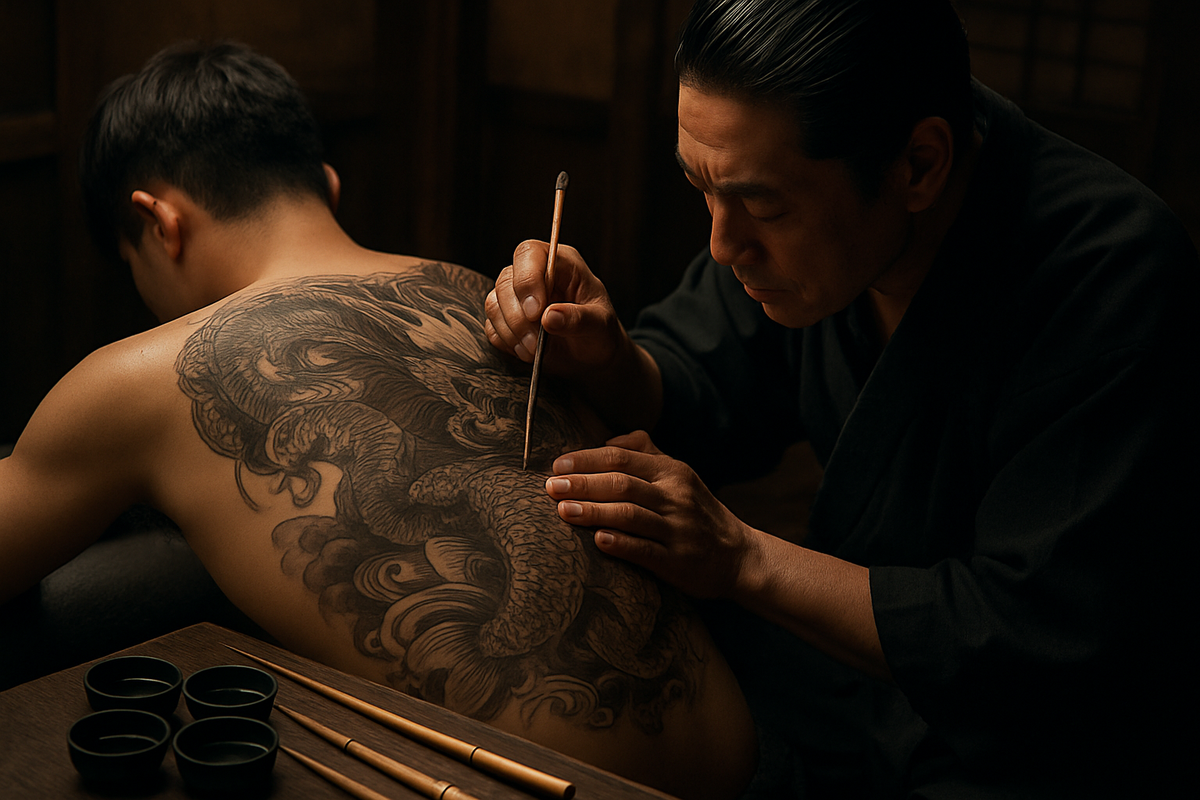
In Japan, tattooing has swung between reverence and shame for centuries. During the Jōmon period, clay figurines suggest ritual tattooing existed as early as 10,000 BCE, and the indigenous Ainu people of northern Japan tattooed women's lips and hands as marks of maturity and protection. By the Edo period, elaborate full-body irezumi - dragons, koi fish, and folk heroes rendered in bold color - became associated with firefighters, laborers, and eventually the Yakuza, giving tattoos a criminal stigma that persists in parts of Japanese society today, where many bathhouses still ban visibly tattooed guests.
In Thailand and Cambodia, Buddhist monks have practiced sak yant for centuries - tattoos hand-tapped with a sharpened bamboo rod and inscribed with Pali script and animal spirits like the tiger or Hanuman the monkey god. Unlike Western tattoos chosen purely for personal meaning, sak yant designs are prescribed by the monk based on what protection or virtue the wearer needs, and the tattoo is considered incomplete without an accompanying blessing that activates its power.
Beyond Amunet's fertility marks, tattoos have been found on Nubian mummies and referenced in Greek and Roman texts, where the practice was sometimes used to mark slaves and criminals - a punitive use that contrasts sharply with the honorific tattoos of Polynesia and Thailand. This duality, tattoo as punishment versus tattoo as honor, recurs throughout history and reveals how the same act can carry opposite meanings depending on who holds the needle and who controls the narrative.
Across cultures, tattoos have consistently served several core spiritual functions:
This layered symbolism connects tattoos to broader traditions of bodily adornment explored in the history of makeup, where paint and pigment were similarly used to signal status, protection, and transformation rather than mere beauty.
European exposure to tattooing expanded dramatically after Captain James Cook's Pacific voyages in the 1770s, when sailors returned home with Polynesian-style tattoos and popularized the practice among Western seafarers. Throughout the 1800s and early 1900s, tattoos remained associated with sailors, circus performers, and social outsiders - a far cry from their sacred origins.
The invention of the electric tattoo machine by Samuel O'Reilly in 1891, adapted from Thomas Edison's engraving pen, made tattooing faster and more accessible, fueling the growth of tattoo parlors in port cities like New York and London. Even so, tattoos carried heavy stigma in Western society well into the 20th century, associated with prisoners, bikers, and the working class.
Beginning in the 1970s and accelerating through the 1990s and 2000s, tattoos underwent a dramatic cultural rehabilitation. Celebrities, athletes, and artists embraced tattooing as fine art, and reality television shows brought tattoo culture into living rooms worldwide. Today, tattoos function less as tribal or punitive markers and more as deeply personal storytelling - a wearable diary of grief, love, faith, and identity.
| Culture | Traditional Name | Primary Meaning | Method |
|---|---|---|---|
| Māori (New Zealand) | Ta Moko | Genealogy, rank, identity | Chisel carving (uhi) |
| Samoan | Tatau | Rite of passage, status | Hand-tapping |
| Japanese | Irezumi | Folklore, protection, later stigma | Tebori (hand-poke) |
| Thai/Khmer | Sak Yant | Blessing, protection, virtue | Bamboo rod tapping |
| Ancient Egyptian | N/A | Fertility, protection | Puncture with soot |
| Western Sailors (18th-19th c.) | N/A | Memory, superstition, brotherhood | Hand-poke, later machine |
In dream symbolism, tattoos often represent permanence, commitment, or a truth the dreamer wants made visible. Dreaming of receiving a new tattoo can suggest a desire to mark a turning point or claim ownership over your identity, while dreaming of an unwanted or unfamiliar tattoo may reflect anxiety about how others perceive you. A dream about removing a tattoo often points to regret or the wish to shed an old version of yourself, echoing how many ancient cultures viewed tattoos as irreversible spiritual contracts.
Understanding tattoo history can shape how thoughtfully you approach your own ink. Consider these steps before getting a tattoo with personal or symbolic weight:
Just as the history of jewelry reveals objects worn for protection and status, and the history of perfumes shows scent used in sacred ritual, tattoos remind us that the body itself has always been a canvas for meaning, memory, and belief.
The oldest confirmed tattoos belong to Ötzi the Iceman, a mummy dated to roughly 3300 BCE found in the Alps, bearing 61 simple line tattoos likely used for pain relief. Ancient Egyptian mummies, including the priestess Amunet from around 2000 BCE, also carry some of the earliest documented tattoos.
Sailors adopted tattooing after exposure to Polynesian cultures during voyages like Captain Cook's expeditions, using tattoos as superstitious protection, records of travel, and symbols of brotherhood at sea. Popular designs included swallows for safe return, anchors for stability, and nautical stars for guidance.
Spiritually, tattoos have symbolized protection, rite of passage, healing, and social status across cultures from Polynesia and Thailand to North Africa. Many traditions viewed tattooing as a sacred, permanent covenant between the individual, their community, and the spirit world, activated in places like Thailand through a monk's blessing.
In Japan, tattoos became linked to criminality after the Edo period associated irezumi with the Yakuza, a stigma that persists in some public spaces today. In the West, tattoos were associated with sailors, prisoners, and circus performers throughout the 1800s and much of the 1900s, only gaining mainstream acceptance in recent decades.
Introduction “Who Loves the Sun” is a modest Canadian dramedy that takes its audience on a journey of emotions, revelations, and c…
Where engagement rings began, why diamonds took over, and what the ring on your finger really means across history and culture.

A full timeline of mirror history—from 6000 BCE obsidian to Venetian glass—plus the myths, superstitions, and dream meanings behin…