Greek Mythology
Orpheus and Eurydice: Myth, Story, Ending & Symbolism
The full myth of Orpheus and Eurydice, its ancient sources, ending, and what the tragic backward glance symbolizes about grief and…
 KnowMastery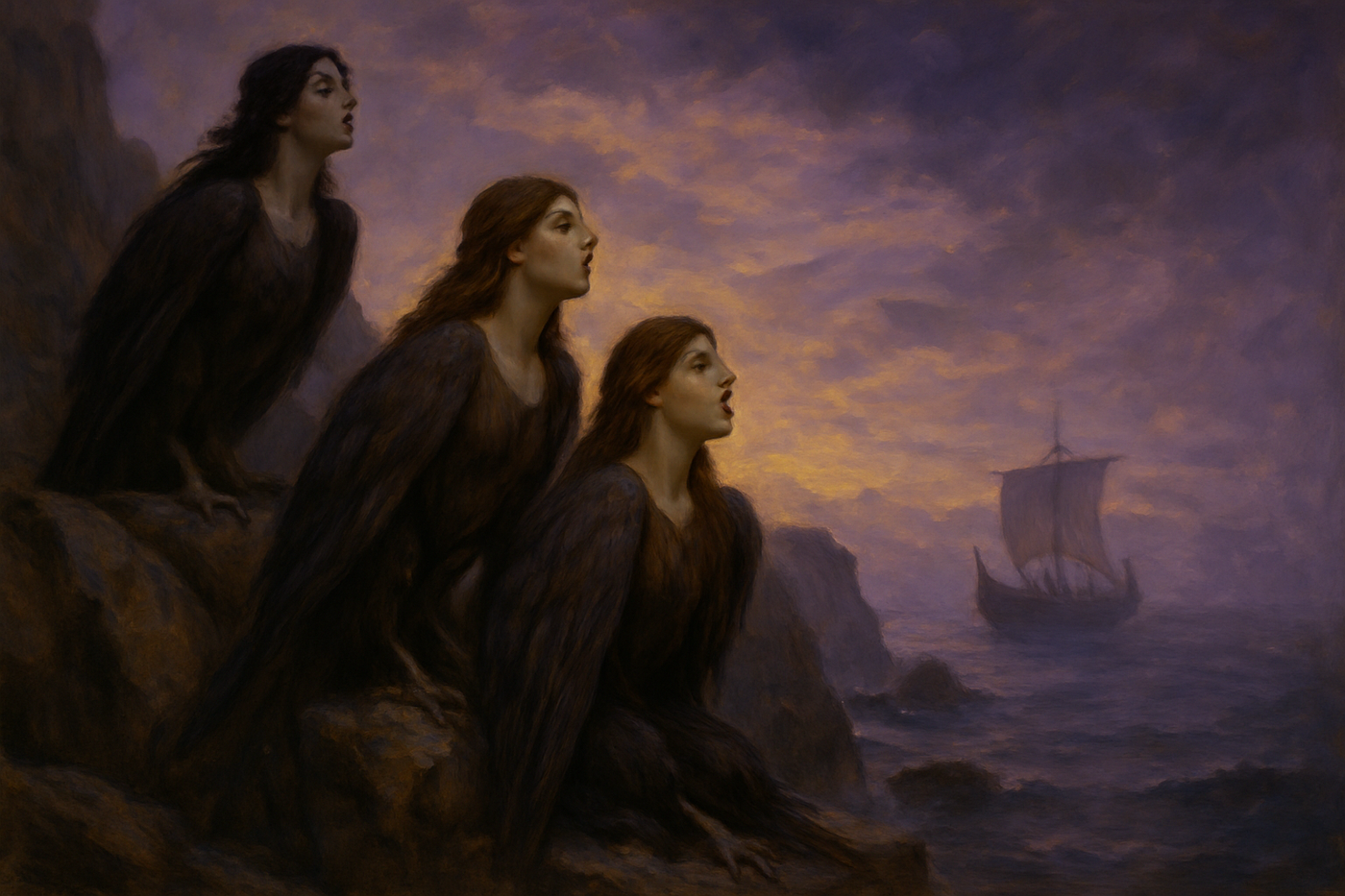
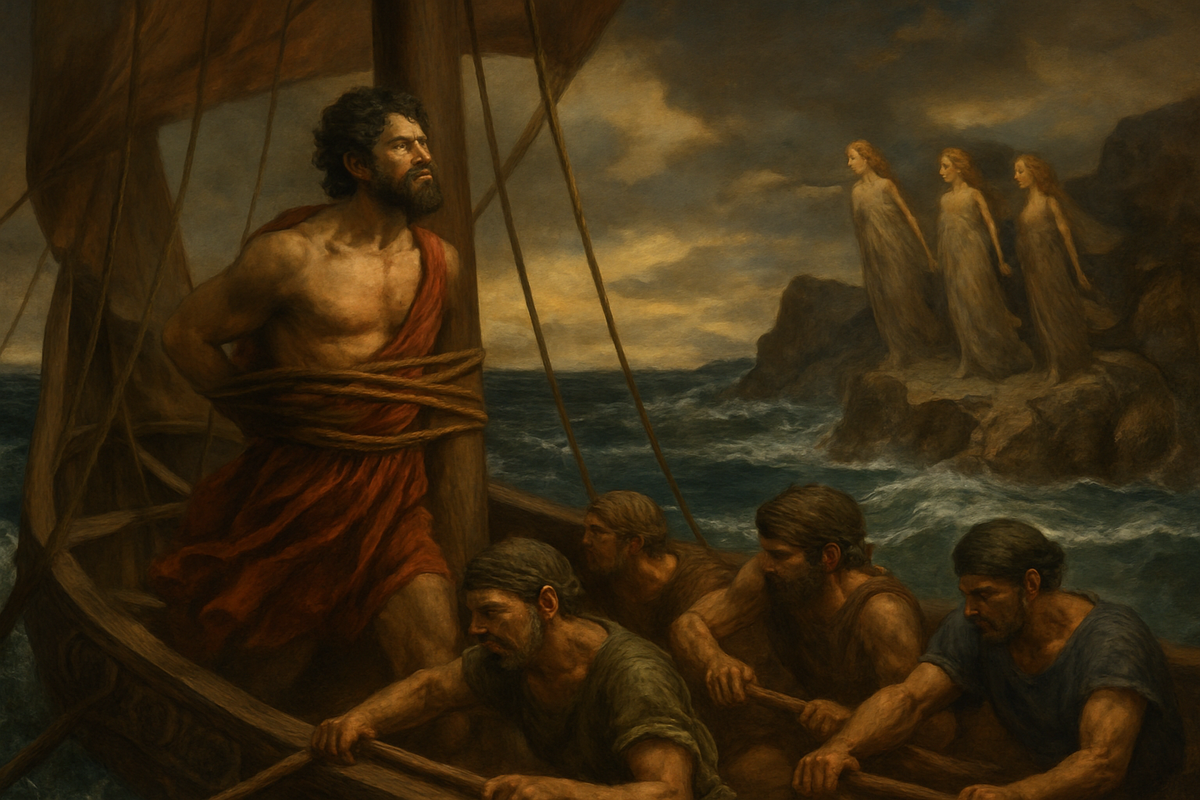
Sirens are dangerous creatures in Greek mythology, originally depicted as part-woman, part-bird beings whose songs lured sailors to their deaths. Unlike the fish-tailed mermaids of modern imagination, the original Sirens had feathers, talons, and haunting voices rather than fins and scales. They appear most famously in Homer's Odyssey, where Odysseus survives their song only by binding himself to his ship's mast while his crew rows past with their ears sealed in wax.
Imagine drifting across a glassy, windless sea when a melody rises from a nearby island—sweet, personal, impossible to ignore. It seems to know your name, your secret longings, the exact words you've always wanted to hear. Sailors who followed that voice never returned.
That is the terrifying genius of the Siren myth: it is not a monster with claws that frightens you into fleeing, but a beautiful sound that convinces you to walk willingly toward your own destruction. Few figures in Greek mythology capture the danger of temptation as vividly as the Sirens.
| Category | Details |
|---|---|
| Origin | Greek mythology; earliest known from Homer's Odyssey (8th century BCE) |
| Parentage | Usually daughters of the river god Achelous and a Muse (accounts vary) |
| Number | Homer implies two; later writers usually name three |
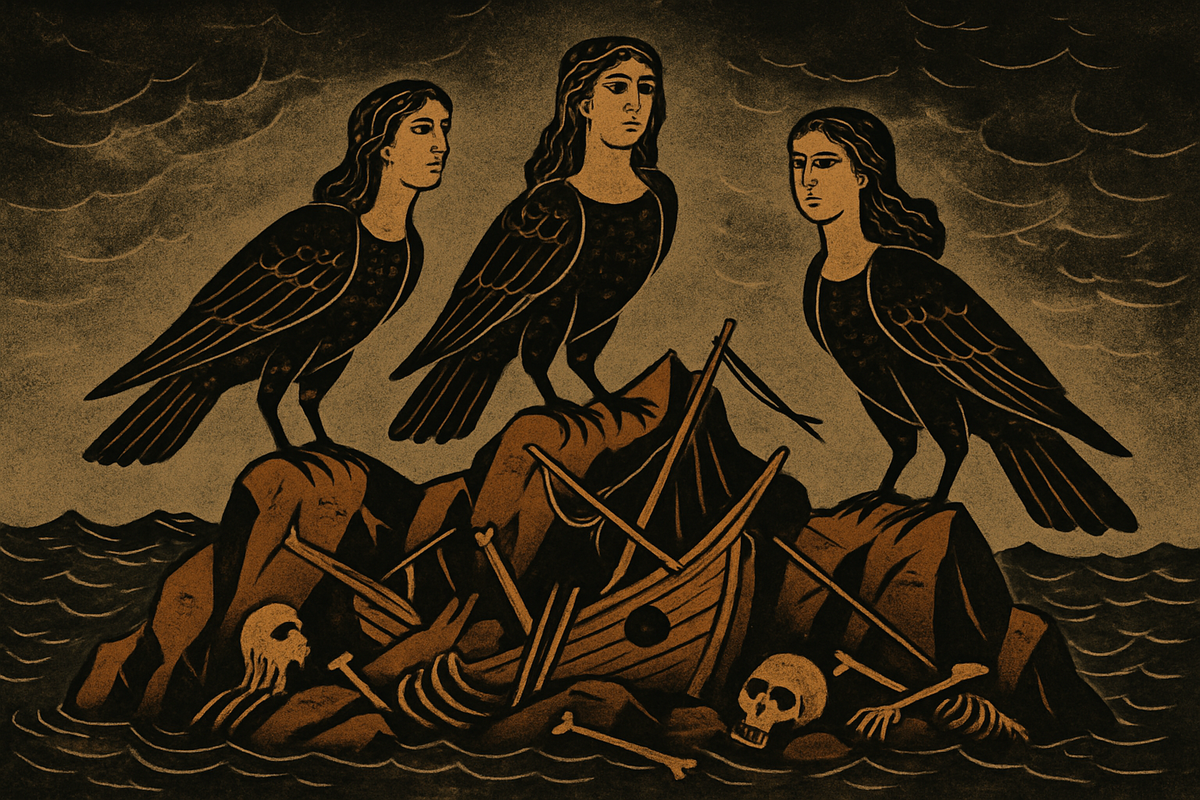
| Appearance | Woman's head and torso with a bird's body, wings, and talons (not a fish tail) |
| Famous Myth | Odysseus binds himself to the mast to survive their song |
| Symbolism | Temptation, forbidden knowledge, grief, and self-destruction |
In the earliest Greek sources, Sirens were not mermaids at all but bird-women, often shown on ancient black-figure pottery with a woman's head and torso attached to a bird's body, wings, and talons. They were said to live on a rocky island—sometimes called Anthemoessa, the "flowery island"—surrounded by the bones and rotting flesh of sailors who had wrecked upon its shores.
Their parentage varies by source. In one influential ancient tradition, recorded by Apollodorus and echoed by Apollonius Rhodius, the Sirens were daughters of the river god Achelous and a Muse (Melpomene in the Epitome, Terpsichore in the Argonautica), though other ancient writers instead named their mother as Sterope, Calliope, or Gaea. This lineage explains their supernatural gift for music: they were literally born of divine song and sacred water. The number of Sirens differs across texts, too. Homer never names the Sirens, though the dual grammatical form he uses for them is generally read as implying there were only two in his account; it was later writers who raised their number to three and supplied names such as Parthenope ("maiden-voiced"), Ligeia ("clear-toned"), and Leucosia.
Across centuries, the Sirens have carried symbolic weight far beyond their original myth:
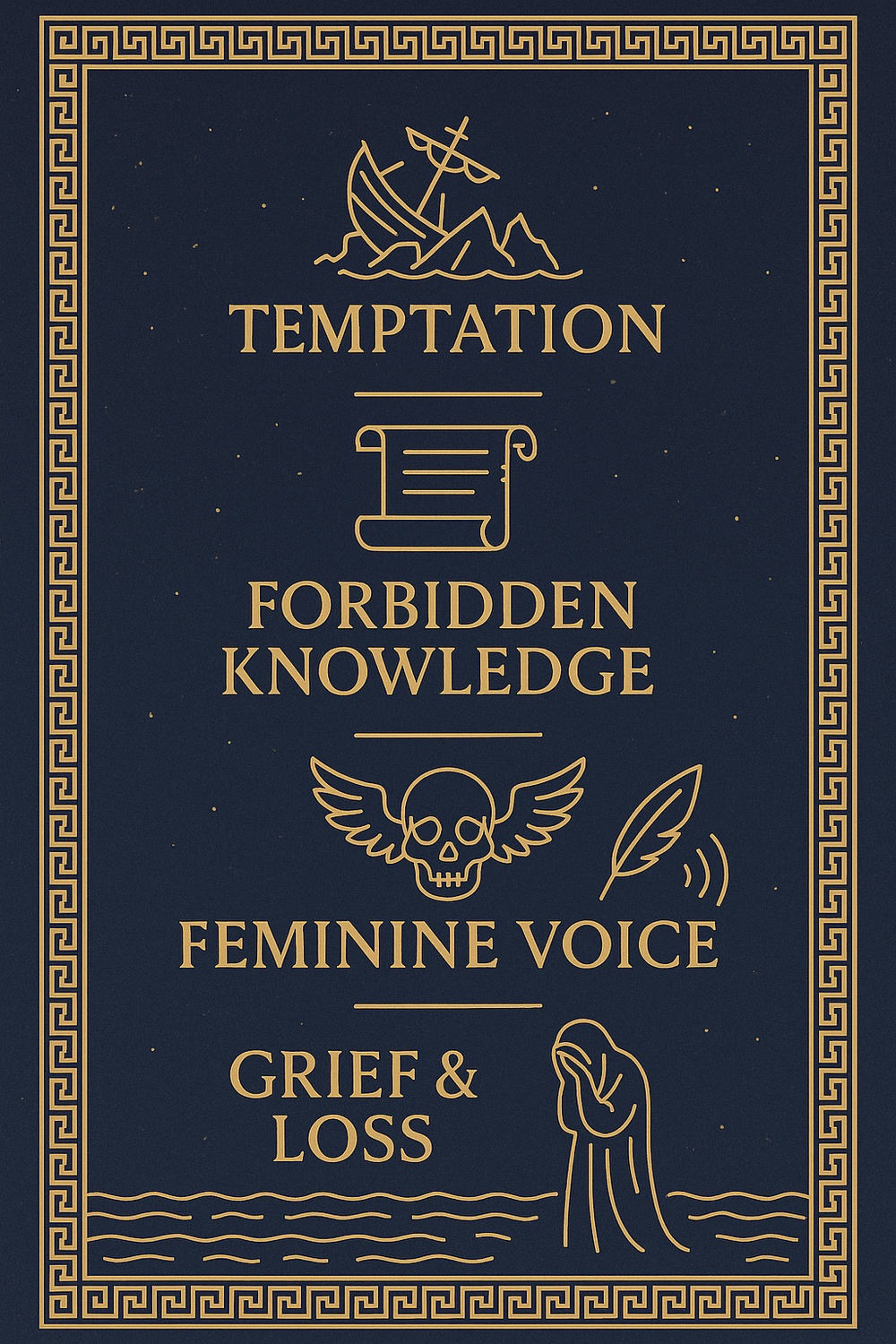
In short, the Sirens function as a warning that the most dangerous temptations are the ones tailored exactly to what we already want.
According to several ancient accounts, the Sirens were once handmaidens of Demeter's daughter Persephone. When Persephone was abducted by Hades, the grieving goddess transformed her attendants into bird-women, cursing—or gifting—them with wings to search the world for their lost mistress. Unable to find her, they settled on their island and turned their sorrow into song.
This origin story reframes the Sirens not simply as villains but as tragic figures shaped by loss and divine punishment. Their music, then, may represent grief so overwhelming it becomes dangerous to anyone who hears it—an idea that resonates with how ancient Greeks understood emotion as something with real, physical power.
The most enduring account comes from Homer's Odyssey, Book 12. The sorceress Circe warns Odysseus that no man who hears the Sirens' song and approaches them ever returns home, for they sit in a meadow heaped with the bones of the dead. She instructs him to plug his crew's ears with beeswax and, if he himself wishes to hear the song, to have his men bind him tightly to the mast and refuse any order to be freed.
Odysseus follows her advice exactly. As the ship passes the island, the Sirens sing directly to him, promising knowledge of all things that happen on earth—flattering his greatest weakness, his hunger for wisdom and fame. He strains against the ropes, begging to be released, but his loyal crew only tighten them further until the island fades from view.
This scene is often read as an allegory: the Sirens don't tempt Odysseus with random pleasure, but with the exact thing he values most. The myth suggests that true danger lies not in generic vice but in temptation perfectly tailored to our personal desires.
Odysseus survives not by refusing to listen, but by removing his own ability to act on what he hears.
A second major encounter appears in the story of Jason and the Argonauts. When their ship approaches the Sirens' island, the musician Orpheus—famed for a lyre so powerful it could move stones, a gift some traditions trace back to Apollo, the god of music and poetry—plays his own music, drowning out the Sirens' voices with something even more beautiful. Only one Argonaut, Butes, is affected enough to leap overboard, though he is rescued by Aphrodite and carried to safety in Sicily.
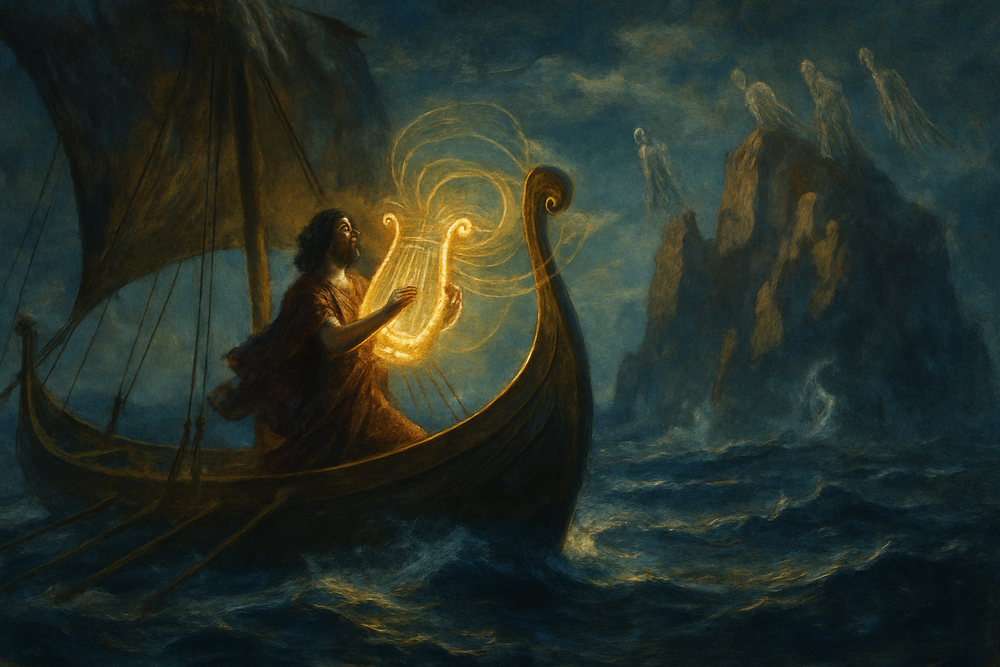
This version offers a different lesson than Odysseus's story: rather than physical restraint, the antidote to dangerous temptation can be a superior, purer art. Where Odysseus survives through discipline and bondage, Jason's crew survives through counter-creation—meeting seduction with something greater.
Where Odysseus needed ropes, Orpheus needed only a better song.
Modern pop culture often merges Sirens with mermaids, but the two originate from very different traditions. The table below clarifies the distinctions.
| Feature | Greek Sirens | Mermaids (later folklore) |
|---|---|---|
| Origin | Ancient Greek mythology | Medieval European and various maritime folklore |
| Appearance | Woman's head/torso, bird body and wings | Woman's upper body, fish tail |
| Habitat | Rocky island in the sea | Open ocean, underwater kingdoms |
| Method of Danger | Song that lures sailors to shipwreck | Varies—song, drowning, or bargains |
| Symbolic Meaning | Temptation, grief, forbidden knowledge | Love, mystery, transformation |
Over time, especially by the medieval and Renaissance periods, artists began depicting Sirens with fish tails instead of bird bodies, gradually blending the two figures into the single image most people recognize today.
Dreaming of Sirens is often interpreted as a warning from the subconscious about a tempting situation—a relationship, opportunity, or desire—that looks beautiful on the surface but may lead to harm. Depending on the dream's tone, common interpretations include:
The Sirens remain relevant far beyond ancient shipwrecks. Their myth offers practical psychological guidance for modern life:
Whether read as monster, mourner, or metaphor, the Sirens endure because their warning never stops applying.
The Sirens' image evolved dramatically after antiquity. The Roman poet Ovid mentions them in the Metamorphoses, largely preserving the Greek bird-woman form, but two later traditions reshaped them into something quite different.
By the early Middle Ages, Christian writers repurposed the Sirens for a new moral lesson. The Physiologus, an influential Greek text translated and expanded across medieval Europe, grouped Sirens with mermaid-like creatures and used them to warn against the seductive pull of worldly pleasure and sin—a moral reading quite distinct from Homer's focus on personal fate and forbidden knowledge. Medieval bestiaries built on this, illustrating Sirens luring the unwary soul away from salvation with a beautiful voice.
Renaissance and Victorian painters, including John William Waterhouse, later portrayed Sirens as hauntingly beautiful women perched on cliffs, emphasizing seduction over the earlier bird-monster imagery and cementing the mermaid-like look most people picture today. The word "siren" survives in everyday language—describing both emergency alarms and irresistibly attractive people—a linguistic echo of the myth's enduring power.
The broader world of Greek gods and their attendant spirits shows how myths like the Sirens often intersect with major deities—Demeter's grief, Persephone's abduction, and even Poseidon's dominion over the seas where these creatures lurked, tying the Sirens into the wider fabric of Greek cosmology.
In the earliest Greek sources, Sirens were depicted as part-woman, part-bird creatures, with a woman's head and torso attached to bird wings and talons. The fish-tailed, mermaid-like image most people picture today developed much later, during the medieval and Renaissance periods.
Homer never gives an exact number, but the grammatical form he uses for the Sirens implies there were two in his version of the story. Later Greek and Roman writers expanded this to three, giving them names such as Parthenope, Ligeia, and Leucosia.
Sirens originated in Greek mythology as part-bird, part-woman creatures who lured sailors with song, while mermaids come from later European folklore and are depicted with fish tails instead of wings and talons. The two figures merged visually over time, especially during the Renaissance, which is why modern culture often confuses them.
Sirens are mythological beings with no basis in zoology or history; they exist only in ancient Greek stories, art, and later folklore. Some scholars believe the myth may have originated from sailors misinterpreting bird calls, ocean acoustics, or the genuine dangers of rocky coastlines and currents.
The Sirens' song worked because it promised each listener exactly what they most desired—for Odysseus, it was complete knowledge and glory. This personalized temptation, combined with an irresistibly beautiful melody, made rational resistance nearly impossible without physical restraint or a stronger distraction.
Odysseus survived by following Circe's advice: he had his crew plug their ears with beeswax so they couldn't hear the song, and he had himself tightly bound to the ship's mast so he could listen safely without being able to steer the ship toward the island.
Sirens most commonly symbolize temptation, forbidden knowledge, and self-destruction, representing desires so powerful that pursuing them leads to ruin. Additional interpretations connect them to grief, death, and the underworld, particularly through their ties to Persephone's abduction and their bone-strewn island.
The full myth of Orpheus and Eurydice, its ancient sources, ending, and what the tragic backward glance symbolizes about grief and…
Who was Prometheus? Explore the Titan's myth, punishment, fire symbolism, tattoo meaning, and what he teaches us about progress an…
Who is Eros? Discover the Greek god of love and desire—his myths, symbols, spiritual meaning, and how to invoke his passionate ene…