Symbols
Candle Symbolism Meaning: Light, Protection & Color Guide
What candles symbolize across faiths and folklore—protection, grief, prayer—plus what flame color, smoke, and wax dripping really …
 KnowMastery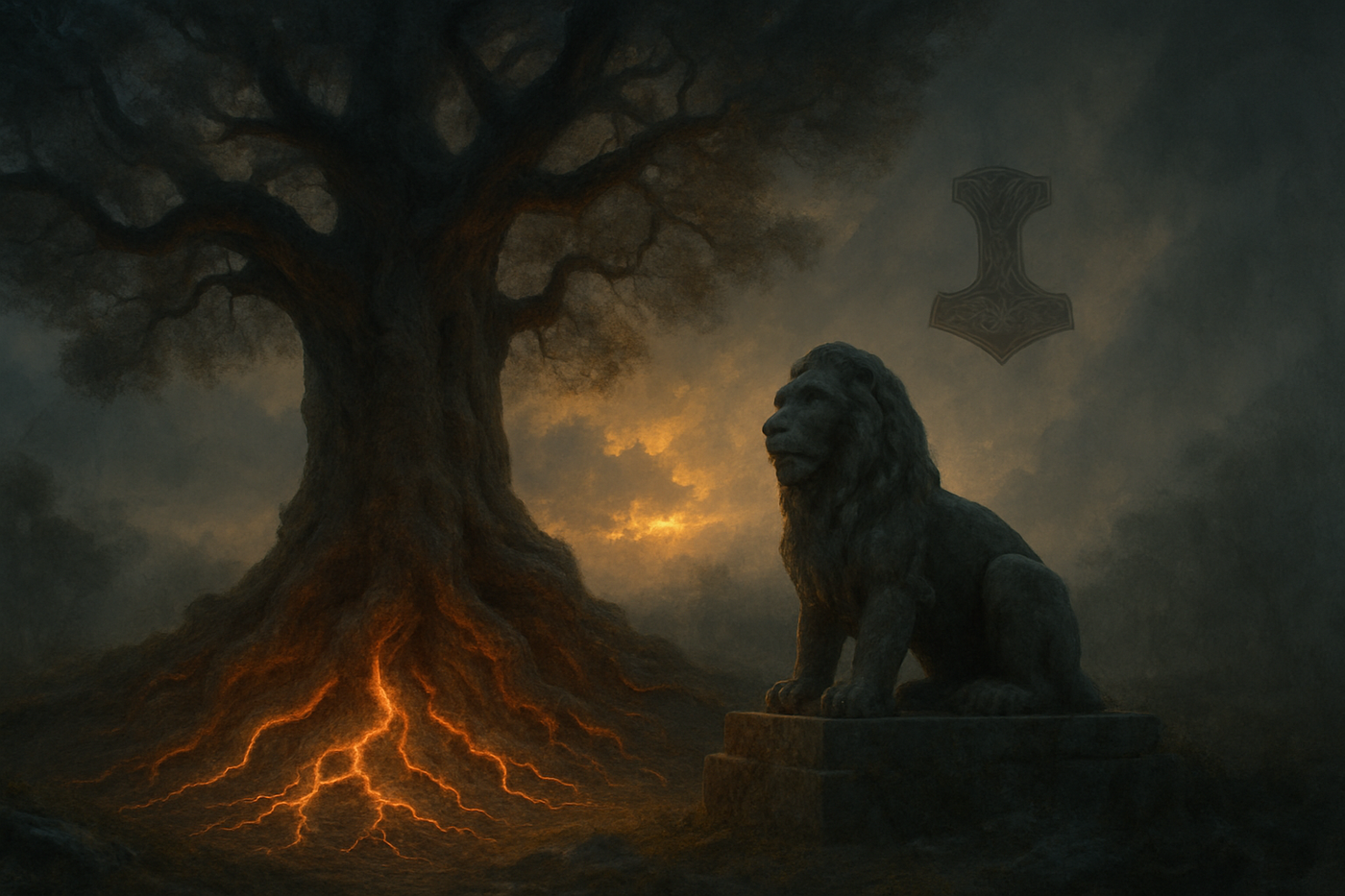
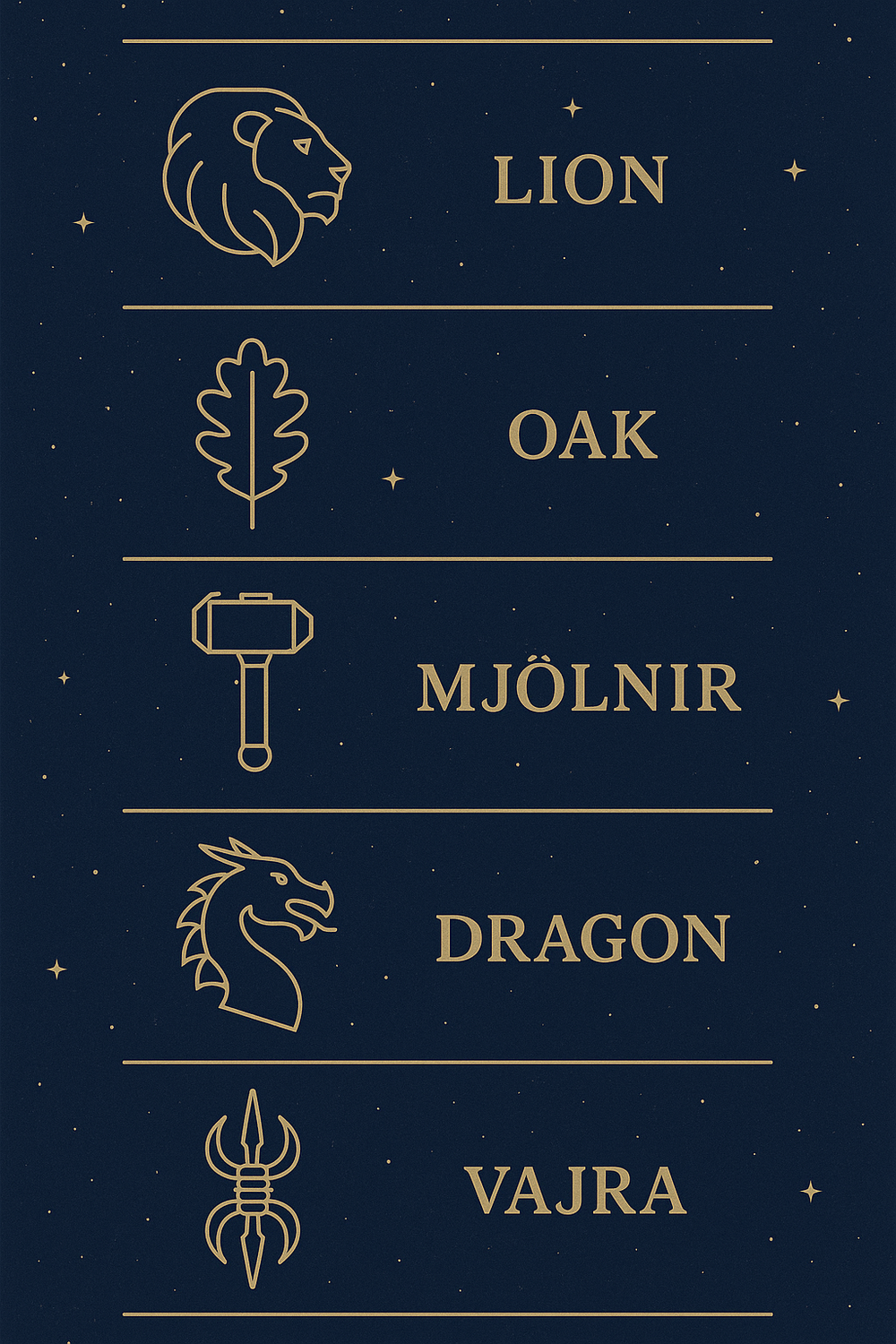
Symbols of strength are cross-cultural emblems—like the lion, oak tree, and Thor's hammer—that represent courage, resilience, and endurance. Cultures across the world have used animals, plants, objects, and mythological figures for thousands of years to embody these qualities, each rooted in a specific mythology and worn, carved, or displayed as a talisman meant to summon inner fortitude during hardship. The lion, the oak tree, the bear, Mjölnir, the Chinese dragon, the Tibetan vajra, the cross, and the yin yang are among the most widely recognized versions. Though the shapes differ from continent to continent, the underlying message is nearly identical: strength is something you access again and again, not something you're simply born with once and keep forever.
There is a reason a grieving widow in Norway once carved a tiny hammer into her doorframe, and a reason a Ghanaian chief still wears a lion carved into his stool of office. Strength, unlike wealth or beauty, cannot be handed down or bought — it has to be found, over and over, in the dark. So people everywhere reached for the same instinct: to fix that feeling into a shape they could carry.
That is what these symbols really are. Not decoration, but memory devices for the human spirit — reminders, carved into wood, inked into skin, or stitched into cloth, that you have survived before and you will again.
At their core, symbols of strength encode a culture's answer to a universal question: how do we survive what threatens to break us? Some traditions locate strength in the body — a lion's roar, a bear's claw. Others locate it in endurance — a tree that bends in the storm but does not snap, an anchor that holds a ship steady against the current, much like the steadfast loyalty explored in the anchor's symbolism. Still others frame strength as spiritual armor, something invoked through prayer, ritual, or protective charm rather than muscle.
This is why strength symbolism overlaps so heavily with protection symbolism. A talisman meant to give you courage often doubles as a shield against harm, in the same way the Hamsa hand both wards off the evil eye and instills confidence in the wearer.
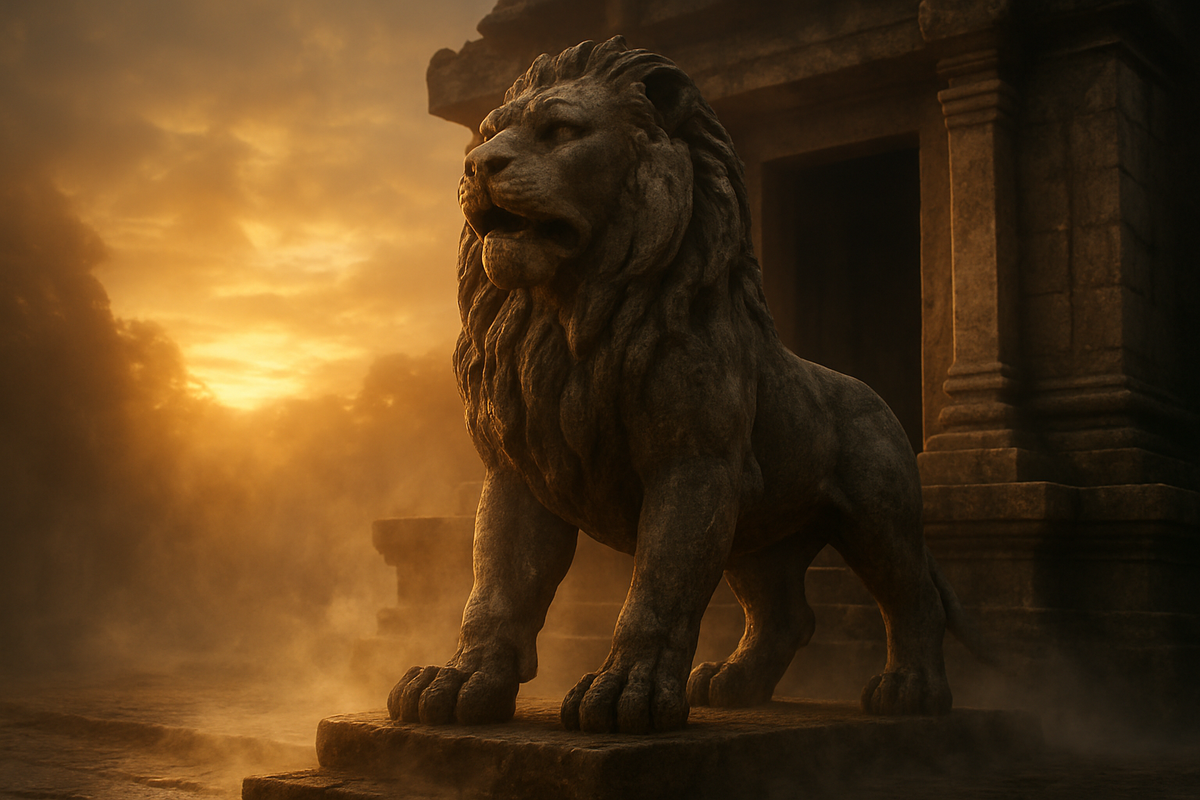
Few animals carry as much symbolic weight as the lion. In Ancient Egypt, the fierce goddess Sekhmet was depicted with a lioness's head to represent both destructive power and the strength to protect the pharaoh. Among the Ashanti people of Ghana, the lion (gyata) appears in Adinkra symbolism as a mark of authority and bravery reserved for chiefs. In medieval European heraldry, the rampant lion became the single most common charge on a knight's coat of arms, signaling valor in battle above all else.
The Celtic Druids considered the oak (duir, the root of the word "door") a sacred axis connecting earth and sky, chosen because its deep roots let it withstand storms that toppled lesser trees. The Norse associated the oak with Thor, god of thunder, believing lightning was drawn to oaks precisely because the tree could survive the strike. Because its roots run deeper and wider than any other tree in the forest, the oak also became a natural symbol of family strength — a visual shorthand for a lineage that draws stability from generations buried in the same ground. This idea of strength as rooted endurance rather than brute force echoes the resilience symbolism found in the Tree of Life across many world religions.
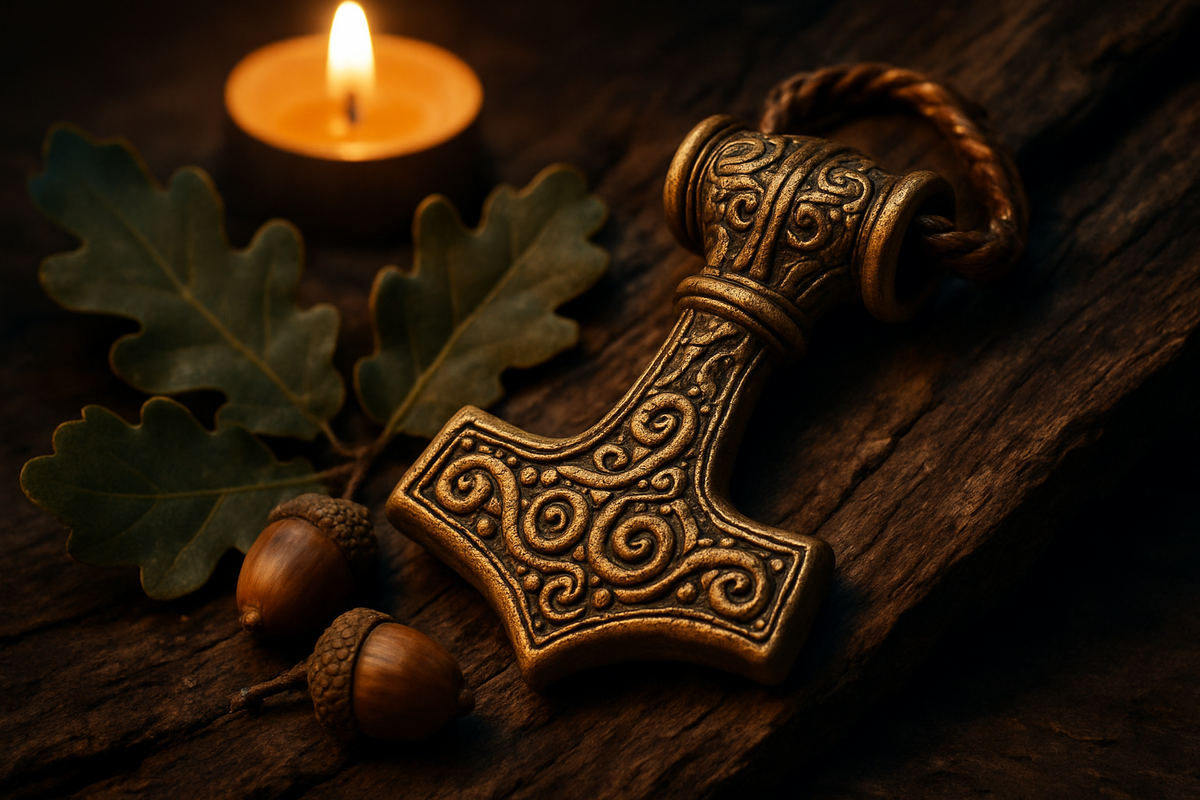
Thor's hammer, Mjölnir, was worn as a pendant by Vikings not merely as a war charm but as a blessing for protection, fertility, and the strength to face the unknown. Archaeologists have identified roughly fifty silver Mjölnir pendants, concentrated mainly in Denmark, south-eastern Sweden, and southern Norway, with a scatter of further examples found as far afield as Iceland, England, and Poland.
Unlike the fire-breathing menace of European folklore, the Chinese dragon (long) is a benevolent force of imperial power, wisdom, and unstoppable vitality. Emperors used the dragon as their personal emblem, reserving the five-clawed version exclusively for the throne, and to this day the dragon dance performed at Lunar New Year is meant to summon strength and good fortune for the coming year.
The Finnish national epic Kalevala calls the bear "the pride of the forest," and ancient Sámi and Finnish hunters performed rituals apologizing to a slain bear out of respect for its strength. Many Native American nations, including the Cherokee and Anishinaabe, saw the bear as a clan totem representing physical power paired with protective, maternal instinct — a duality also present in objects meant to guard the vulnerable, like the dream catcher hung above a child's bed. Because the bear defends its cubs without hesitation, many of these same nations also invoked it specifically as a symbol of family strength, carved onto totem poles to mark which clan a household belonged to and to bless that lineage with the same fierce protectiveness.
The vajra, meaning "thunderbolt" or "diamond," symbolizes a strength that cannot be destroyed — the indestructible clarity of enlightened mind. Tibetan monks use the vajra in ritual alongside the bell (ghanta), pairing masculine strength with feminine wisdom in a balance familiar from other complementary-opposite philosophies. In later Puranic tradition, Indra's vajra is said to have been forged from the bones of the sage Dadhichi, who sacrificed himself so the gods could slay the drought-demon Vritra, who had trapped the world's waters - though the earliest Vedic hymns instead credit the divine craftsman Tvashtar with forging the thunderbolt, with Dadhichi's role added in later legend.
Named for the demigod known for his twelve labors, the Hercules knot (a symmetrical double-loop knot) was engraved on Greek and Roman wedding jewelry and worn as an amulet believed to knit wounds and grant the strength of Hercules himself to the bearer.
In Christian tradition, strength is not the absence of suffering but the capacity to endure it without losing faith — and no symbol carries that idea more directly than the cross. What began as a Roman instrument of execution was transformed by the crucifixion narrative into the ultimate emblem of endurance: strength expressed not through victory in battle, but through willingly bearing pain for a greater purpose. That reversal — weakness revealed as the deepest form of strength — is part of why the symbol spread so widely and took on so many regional forms, from the plain Latin cross to the ornate Celtic and Orthodox crosses still carved into headstones and doorways today.
Catholic devotional practice built an entire visual language around this same theme of strength through suffering, pairing the cross with other emblems of steadfast faith. Anyone exploring the broader iconography behind rosaries, sacred hearts, and saints' medals will find the fullest context in a guide to Catholic symbols, many of which echo this idea that spiritual endurance is its own kind of fortitude.
Not every culture locates strength in force or endurance alone; Taoist philosophy locates it in equilibrium. The yin yang symbol represents two seemingly opposed forces — dark and light, soft and hard, passive and active — held together in a single unbroken circle, each containing a seed of the other. Read as a strength symbol, it argues that true resilience isn't about overpowering your opposite but integrating it: a person, a marriage, or a community becomes strongest not by eliminating tension but by holding contradictory forces in balance, a concept explored more fully in the full yin yang meaning.
| Symbol | Culture / Origin | Core Meaning |
|---|---|---|
| Lion | Egypt, West Africa, Medieval Europe | Authority, courage, protective power |
| Oak Tree | Celtic, Norse | Rooted endurance, family strength |
| Mjölnir (Hammer) | Norse / Viking Scandinavia | Divine strength, protection in battle |
| Dragon | China | Imperial power, vitality, good fortune |
| Bear | Finland, Siberia, Native America | Physical power, clan/family protection |
| Vajra | Tibetan / Hindu Buddhism | Indestructible spiritual strength |
| Hercules Knot | Ancient Greece & Rome | Healing, marital bond, heroic strength |
| Cross | Christianity | Strength through suffering and faith |
| Yin Yang | Taoist China | Resilience through balance and unity |
Across nearly every tradition, strength symbols share a common spiritual thread: real strength is rarely about winning a fight. It's about enduring, protecting, and staying rooted when everything urges you to collapse.
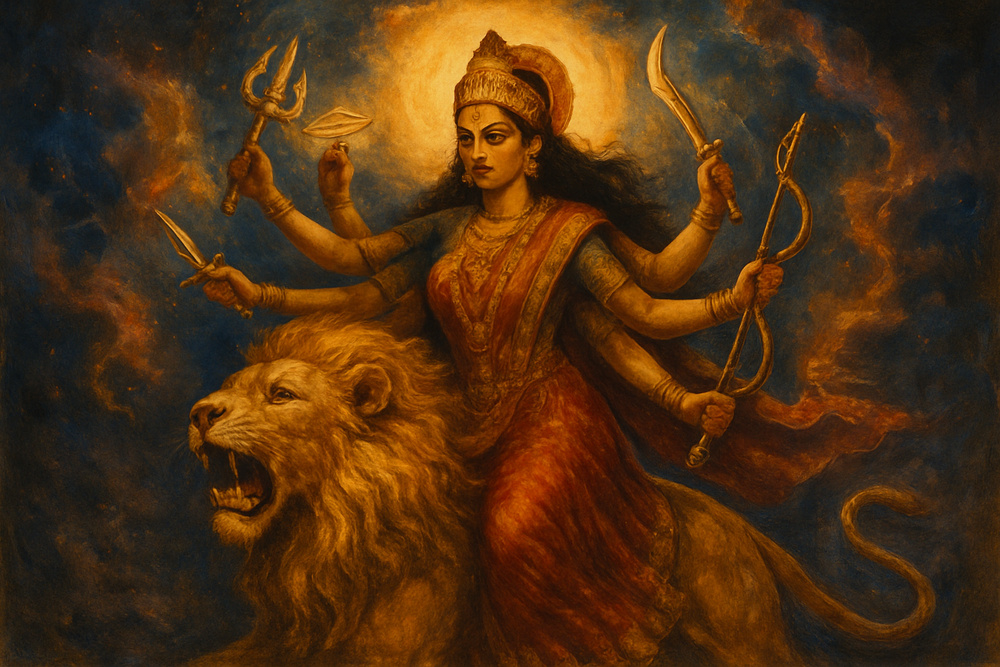
Hindu mythology adds another layer to this idea through the goddess Durga, who rides a lion into battle against the buffalo demon Mahishasura. She is not portrayed as physically the strongest being in the cosmos — she is armed by other gods, each lending her their own weapon — yet she is the one who wins, because her strength comes from righteous purpose rather than raw power alone. This distinction between borrowed power and moral resolve shows up again and again across cultures: strength symbols rarely celebrate force for its own sake, only force placed in service of something worth protecting.
Dreaming of strength symbols often surfaces during periods of stress, transition, or self-doubt, when the subconscious reaches for reassurance. Common interpretations include:
These symbols were never meant to sit in museums — they were tools, worn and used. Here are practical ways people incorporate them today:
Strength rarely stands alone as a theme — it borders unity, faith, loyalty, and commitment in most of the traditions above. For deeper reading on those connected threads, explore the yin yang meaning, the many types of crosses, the wider world of Catholic symbols, the enduring bond behind the Claddagh ring, and the quiet endurance represented by the purity ring.
The lion holds that title more broadly than any other animal, appearing as a strength symbol in Ancient Egypt, West African Adinkra traditions, and European heraldry alike. Its dominance, courage, and protective instinct made it a natural choice for rulers and warriors across unrelated cultures with no direct contact.
There is no single "strongest" spiritual symbol since meaning depends on context, but Thor's hammer (Mjölnir) and the Tibetan vajra are both considered exceptionally potent because they represent strength that is simultaneously physical and divinely indestructible. Choosing one usually comes down to which tradition and story feels personally meaningful to you.
The oak tree is the most widely recognized tree symbol of strength, honored by Celtic Druids and Norse mythology alike for its deep roots and ability to survive lightning strikes and storms. Its endurance-based symbolism closely parallels the broader resilience themes found in Tree of Life mythology across multiple world religions.
Dreaming about strength symbols like lions, bears, or hammers typically reflects your subconscious preparing you to face a real-life challenge or reclaim confidence you've lost. The specific symbol matters — a bear often points to protective instincts, while a lion points to reclaiming personal authority.
The Hercules knot and the anchor are two of the oldest symbols of loyalty, historically engraved on wedding jewelry and worn as amulets to represent a bond that holds firm under strain. The Claddagh ring belongs to this same family of symbolism, with its clasped hands and crowned heart representing love, friendship, and loyalty bound together — you can read the full breakdown in the Claddagh ring meaning.
Mjölnir, Thor's hammer, was among the most feared war symbols of the Viking Age, worn into battle as both weapon-blessing and protective charm. The rampant lion served a similar purpose in medieval heraldry, signaling a warrior's valor on the battlefield — a broader survey of these martial emblems can be found in the guide to symbols of war.
The oak tree is often read as a family-strength symbol because its deep, wide roots mirror the way a lineage draws stability from generations rooted in the same ground. Many Native American and Siberian cultures used the bear the same way, carving it onto totem poles as a clan symbol representing the fierce, protective strength a family extends over its members.
What candles symbolize across faiths and folklore—protection, grief, prayer—plus what flame color, smoke, and wax dripping really …
What do cherry blossoms symbolize? Explore sakura's meaning in Japan, China & the West—impermanence, renewal, love, and dream inte…
A jellyfish in your dream points to hidden emotions, intuition, and vulnerability. Discover what different jellyfish dream scenari…