
Animal Symbolism
Manta Ray Spirit Animal Meaning: Traits & Signs It's Yours
Manta ray spirit animal meaning: what it symbolizes, key personality traits, and signs it's guiding you right now.
 KnowMastery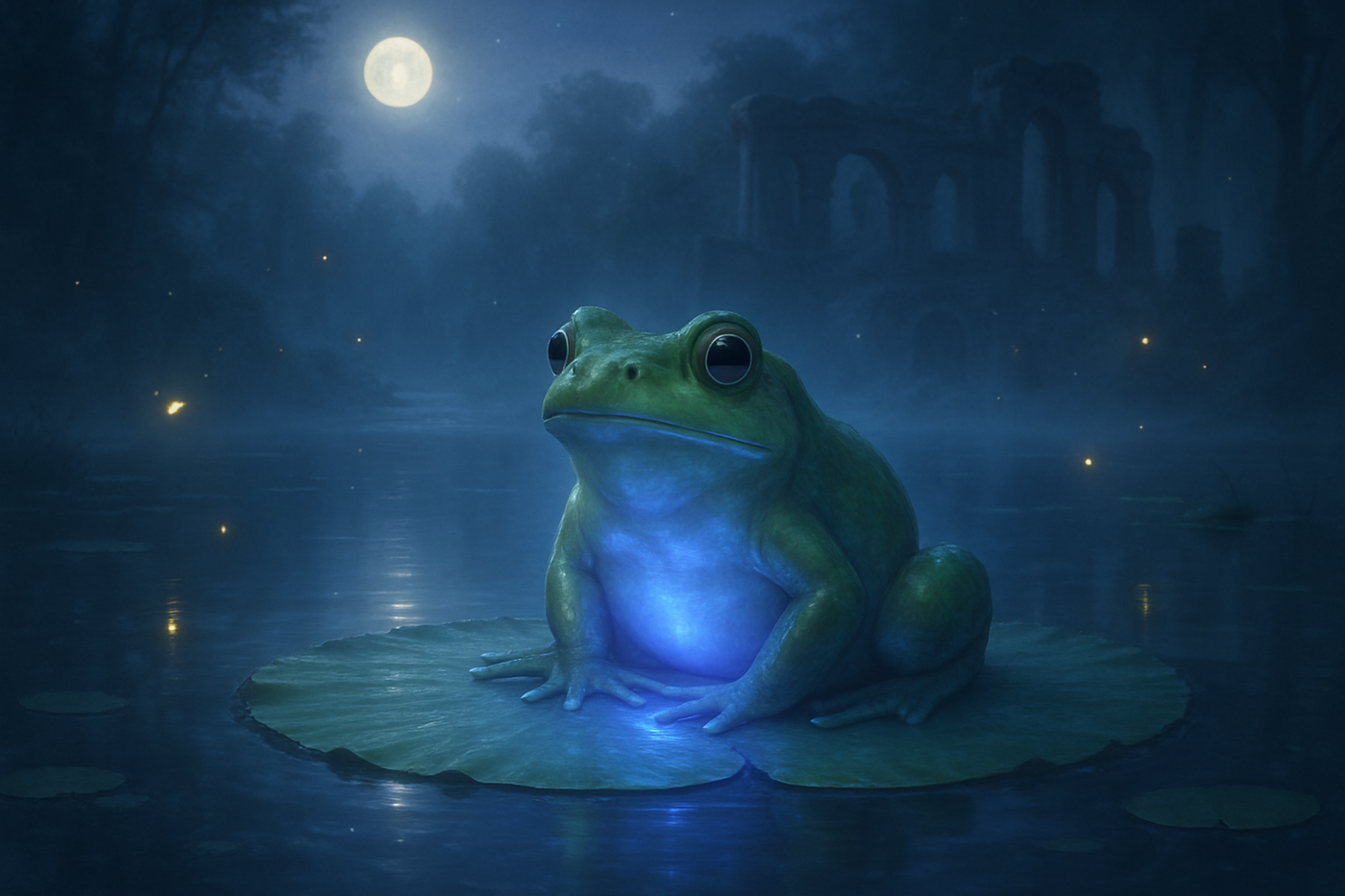
Frogs symbolize transformation, emotional cleansing, fertility, and good luck across nearly every culture on Earth. Because they move between water and land and undergo a complete metamorphosis from tadpole to adult, frogs represent the ability to release old emotional patterns, adapt to change, and step into a renewed phase of life. Seeing one is often read as a gentle omen that a positive shift is already underway.
There is something almost magical about the moment a frog crosses your path. One second the garden is silent, and the next, a small green body leaps from the shadows and vanishes into the grass, leaving you strangely alert, as if you just brushed against something older than memory.
Maybe you heard the low chorus of frogs calling after a summer rain and felt an inexplicable calm settle over you. Or perhaps a frog turned up in a dream, sitting quietly on a lily pad while you stood frozen, unsure whether to speak to it or simply watch. These small, strange encounters tend to linger because on some instinctive level, we sense they mean something.
Frogs have haunted human imagination for thousands of years precisely because they refuse to belong to just one element. They are born in water, breathe air, and walk on land—an amphibious identity that ancient peoples read as a living metaphor for the soul's own journey between the seen and unseen worlds.
At its core, frog symbolism centers on three intertwined themes: transformation, emotional cleansing, and abundance. Because a frog's life cycle literally requires it to dissolve one body plan and grow another, it has become one of nature's clearest emblems of metamorphosis—the idea that we, too, can shed an old identity and step into something unrecognizable from where we started.
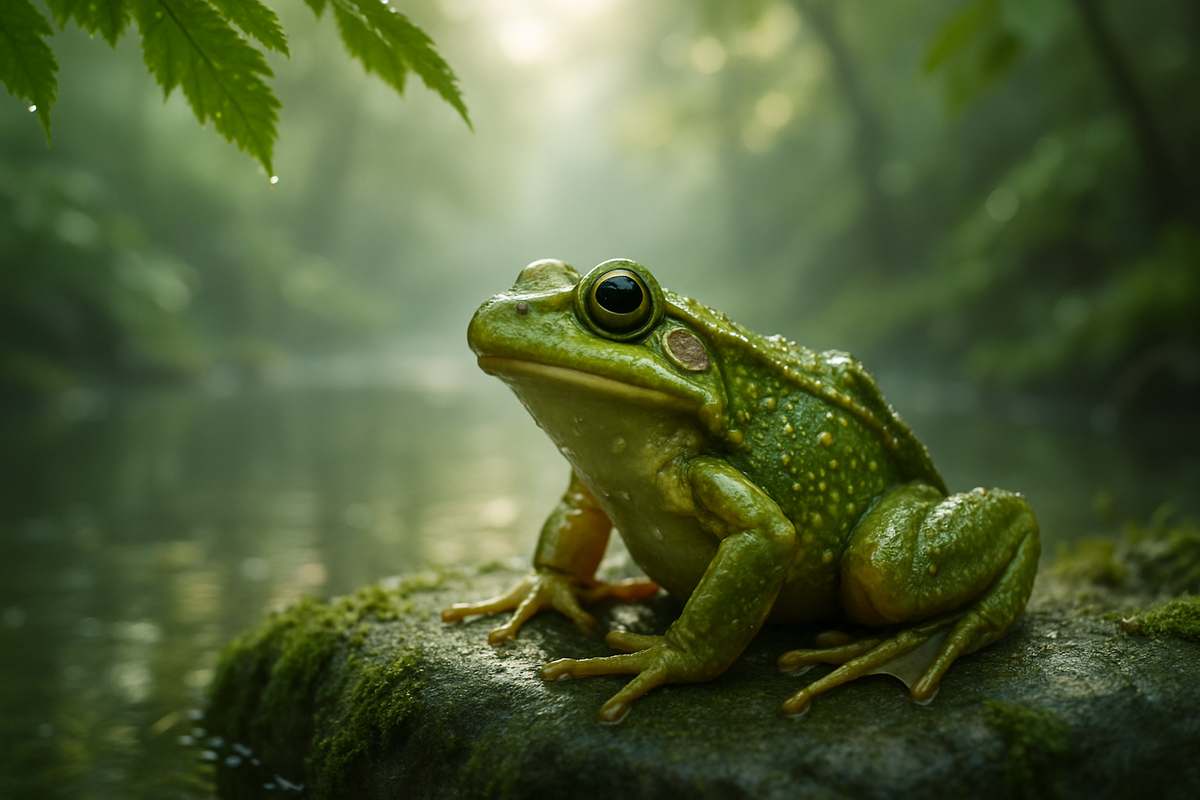
What makes frog symbolism so rich is how consistently different, unconnected civilizations arrived at similar conclusions about this small creature—usually independently, through direct observation of its behavior in nature.
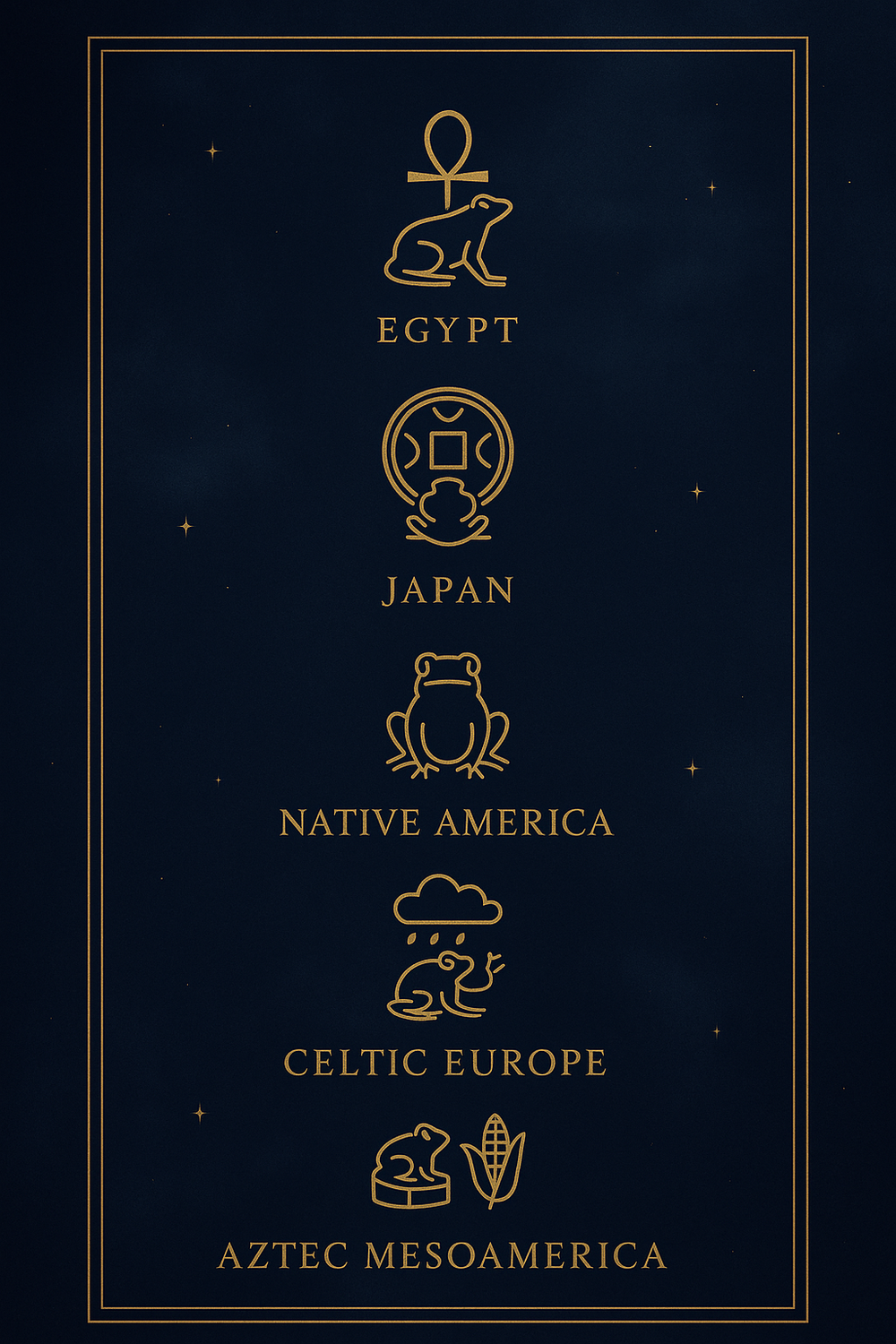
In Ancient Egypt, the frog was sacred to Heqet, the frog-headed goddess of fertility, childbirth, and resurrection. Egyptians noticed that frogs appeared en masse each year alongside the flooding of the Nile, which brought fertile silt to the fields. This connection cemented the frog as a symbol of life emerging from the waters, and Heqet was often invoked by midwives to protect women during labor. Frog amulets were placed in tombs to symbolize rebirth into the afterlife.
In Chinese tradition, the three-legged toad or frog known as Jin Chan is one of the most recognizable symbols of wealth in Feng Shui. Legend says Jin Chan was once a greedy spirit transformed into a toad as punishment, later becoming a bringer of fortune to those who treated it kindly. Statues of Jin Chan, typically shown with a coin in its mouth, are still placed near business entrances today to attract prosperity and financial luck.
Many Indigenous nations of North America, including the Hopi and Zuni of the Southwest, associated frogs with rain and the renewal of the earth after drought. Frog imagery appears on pottery, kachina figures, and petroglyphs as a call for rainfall and a symbol of the water's life-giving power. In some Pacific Northwest cultures, the frog is honored as a clan crest representing communication between the spirit world and the physical world.
In Japan, the frog—kaeru—is a beloved good-luck charm because the word is a homophone for "to return." Travelers historically carried frog charms hoping money, health, or a loved one would safely come back, and small frog figurines are still tucked into wallets today for the same reason. Matsuo Bashō wrote a famous haiku about a frog leaping into an old pond, which some Zen-influenced readers interpret as evoking a moment of sudden enlightenment, though this is one interpretation among several rather than a settled meaning.
In Celtic and later European folk belief, frogs were sometimes seen as guardians of wells and sacred springs, tied to healing waters and the feminine mysteries of the earth. Medieval folklore also linked frogs to weather prediction—their croaking before a storm was taken as a natural omen, much the way people once watched crows for behavioral signs of coming change.
Aztecs envisioned the earth deity Tlaltecuhtli as a toad-like monster, while priests honoring the water goddess Chalchiuhtlicue and the rain god Tlaloc imitated the croaking of frogs in rituals meant to bring on the rainy season. Frogs were seen as intermediaries who could summon the life-giving rains needed for maize cultivation, reinforcing their role as symbols of agricultural abundance and survival.
The specific circumstances of a frog encounter—including its color or where you see it—can shift the nuance of its message. Here is a general framework many spiritual traditions and modern intuitives use:
| Frog Color or Context | Symbolic Meaning |
|---|---|
| Green frog | Growth, healing, harmony with nature |
| Brown frog | Grounding, stability, practical transformation |
| White or albino frog | Spiritual purity, rare blessings, divine messages |
| Golden or yellow frog | Wealth, joy, sudden good fortune |
| Frog in the house | Protection, incoming abundance, a sign to cleanse stagnant energy |
| Dead frog | The end of a difficult cycle or emotional release |
| Frog chorus at night | A call to express your truth or trust your intuition |
Finding a frog inside your home tends to stop people in their tracks, and understandably so—it feels different from spotting one in the garden or by a pond. Across most folk traditions, a frog indoors is read as a good sign rather than something to fear, though the exact meaning depends on the details of the encounter.
In Chinese and broader East Asian household folklore, a frog that wanders indoors is considered a messenger of incoming wealth, much like the money frog Jin Chan is deliberately invited into homes and shops. The reasoning is practical as well as symbolic: frogs are drawn to damp, insect-rich environments, so their presence was historically associated with fertile land and a thriving household rather than misfortune.
That said, some interpretive traditions treat an indoor frog sighting as a nudge rather than pure celebration—a sign that stagnant energy has built up somewhere in your living space or your emotional life and needs to be released before the promised abundance can fully arrive. If a frog in your house feels unsettling rather than charming, it may be worth decluttering, airing out a room, or addressing an emotional issue you've been avoiding.
Practically speaking, the kindest response is to gently relocate the frog outdoors rather than harm it, since most traditions agree that mistreating the animal reverses its luck. Spiritually, treat the moment as an invitation: acknowledge whatever change or opportunity feels like it's approaching, and consider it encouragement rather than an alarm.
Dreaming of frogs typically points to emotional transition happening beneath the surface of your waking life. Because dreams often use water as a symbol for the subconscious, a frog moving between land and pond suggests you are processing feelings you haven't fully brought into conscious awareness yet.
If the frog feels like a recurring presence in your life—showing up in dreams, conversations, or physical sightings—it may be functioning as a totem or spirit guide. People with frog as a spirit animal are often described as emotionally intuitive, adaptable, and unusually resilient during periods of upheaval, much like the hummingbird's association with joy during difficult transitions. Frog medicine, as it's sometimes called in shamanic traditions, teaches you to trust the natural rhythm of endings and beginnings rather than resisting them.

Those who resonate with frog energy tend to be highly sensitive to emotional undercurrents in a room, similar to how spider symbolism is often connected to patience and quiet observation before acting.
A frog sighting or repeated dream isn't just a curiosity—it's typically read as an invitation to act. Here is practical guidance for working with the symbolism rather than letting it pass unnoticed:
Frogs share their reputation as change-bringers with other creatures in the animal symbolism world, though each carries a distinct flavor. Where the owl's wisdom represents transformation through hidden knowledge, and the crow signals transformation through confronting endings, the frog's transformation is gentler—rooted in emotional cleansing and the natural, unforced passage of time. Understanding these distinctions can help you interpret which specific kind of change a symbolic animal encounter is pointing toward.
A frog crossing your path is traditionally seen as a sign that emotional or personal transformation is beginning, often tied to releasing something old to make room for new growth. Many folk traditions also interpret it as a small omen of good luck or unexpected fortune arriving soon.
Yes, in most traditions, especially Chinese Feng Shui and Japanese folk custom, seeing a frog is considered a positive omen linked to prosperity, protection, and safe return. A frog near your home is often interpreted as a sign that abundance or good news is on its way.
In the Bible, frogs are most famously referenced in the plagues of Egypt, where they symbolized divine judgment and upheaval rather than positive transformation. Some later Christian interpretive traditions have also connected the frog's movement between water and land with themes of spiritual cleansing and purification.
Dreaming about a frog usually reflects emotional processing happening beneath the surface, especially around change you may be avoiding in waking life. The specific dream details, such as catching, chasing, or hearing a frog, add nuance about whether you're gaining control, facing sudden change, or being called to speak an emotional truth.
A frog tattoo typically represents personal transformation, resilience, and the wearer's ability to move gracefully between different phases or emotional states of life. It's a popular choice for people marking a major life change, recovery, or rebirth, and is often paired with lily pads, water, or moon imagery to emphasize renewal.
Hearing a frog chorus at night is widely interpreted as a call to trust your intuition and speak an emotional truth you may have been holding back. Because frogs are most vocal after dark and after rain, this encounter is often read as a gentle nudge that clarity or release is close at hand, even if things feel unresolved right now.
In the context of romantic or twin flame symbolism, a frog appearing repeatedly is often interpreted as a sign that a relationship is entering a transformative stage rather than ending. It can suggest that both people involved are being asked to shed old emotional patterns before the connection can settle into a more authentic, cleansed form.
Not quite—while toads and frogs are closely related and their symbolism overlaps heavily around luck, transformation, and prosperity, toads are more often tied specifically to wealth folklore, such as the Chinese money toad Jin Chan, while frogs lean more toward emotional cleansing and renewal. In casual spiritual interpretation the two are frequently used interchangeably, so context and cultural source matter more than the biological distinction.
Manta ray spirit animal meaning: what it symbolizes, key personality traits, and signs it's guiding you right now.
What do moths really symbolize? Explore the spiritual meaning of moths—transformation, intuition, and hidden light—across myth, dr…
What does an octopus symbolize spiritually? Explore its meaning in dreams, tattoos, myth, and as a totem animal of adaptability an…