Animal Symbolism
Dove Symbolism and Meaning: Peace, Love & Spirit
What dove symbolism really means, from peace and the Holy Spirit to love, loss, and dreams across cultures.
 KnowMastery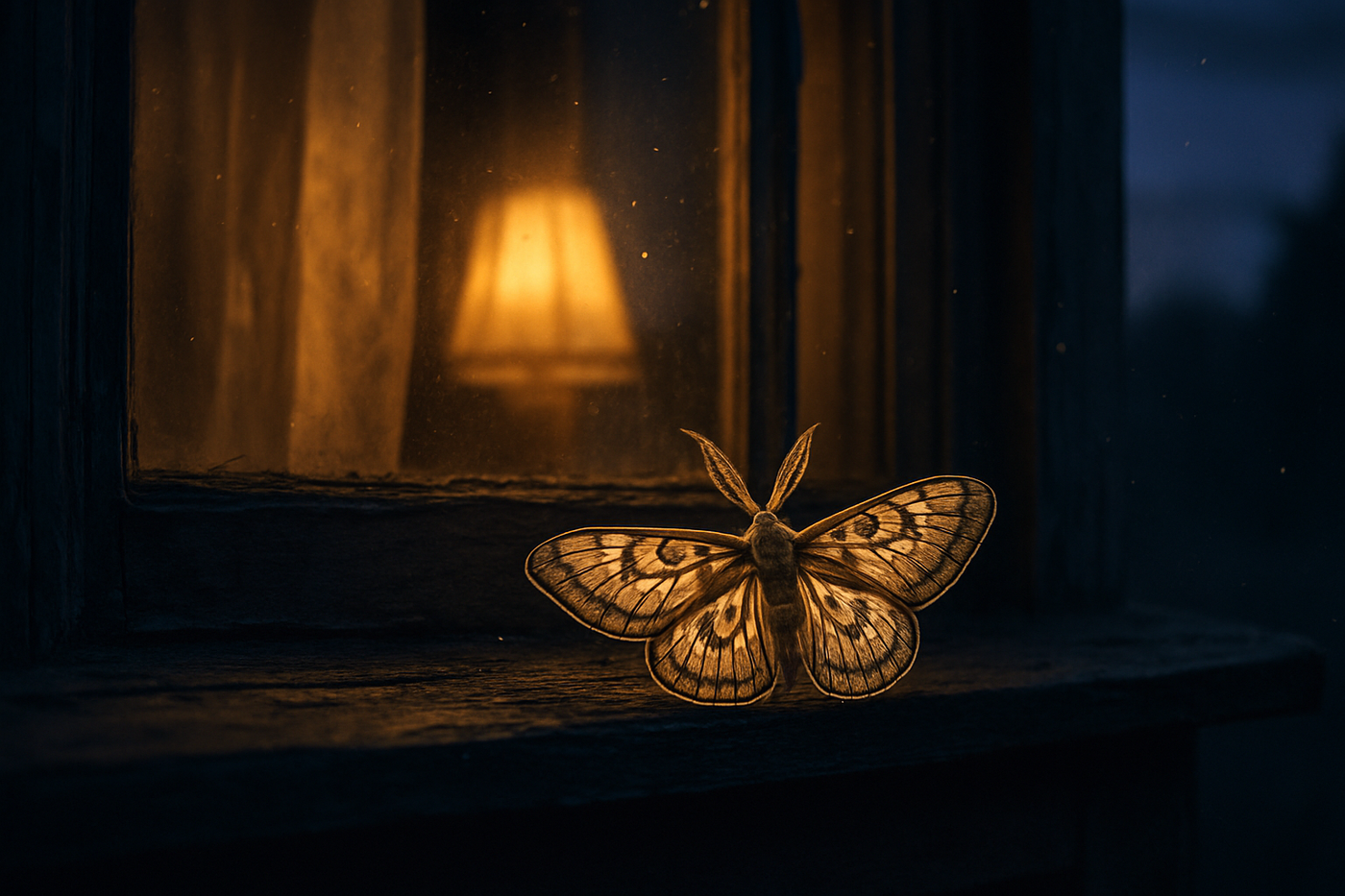
A moth appearing in your home, garden, or dreams is widely regarded as a spiritual sign of transformation, intuition, and the pull toward hidden truths. Because moths are drawn to light yet thrive in darkness, they symbolize the soul's journey toward awareness even when the path feels uncertain. Many spiritual traditions see the moth as a gentle messenger urging you to trust inner guidance, release what no longer serves you, and move toward growth despite fear.
There's something quietly haunting about a moth's arrival. It doesn't announce itself with color or song the way a hummingbird does—it simply appears, dust-winged and silent, fluttering against your window at the exact moment you needed a sign.
Maybe it happened during a sleepless night, or in the days after a loss, or right when you were wrestling with a decision you couldn't quite make. The moth doesn't demand attention. It waits in the shadows, and that's precisely why so many people believe it carries a message worth listening to.
This guide explores the full spiritual meaning of moths—drawing on mythology, folklore, dream interpretation, and practical spiritual guidance—so you can understand exactly why this humble creature keeps crossing your path.
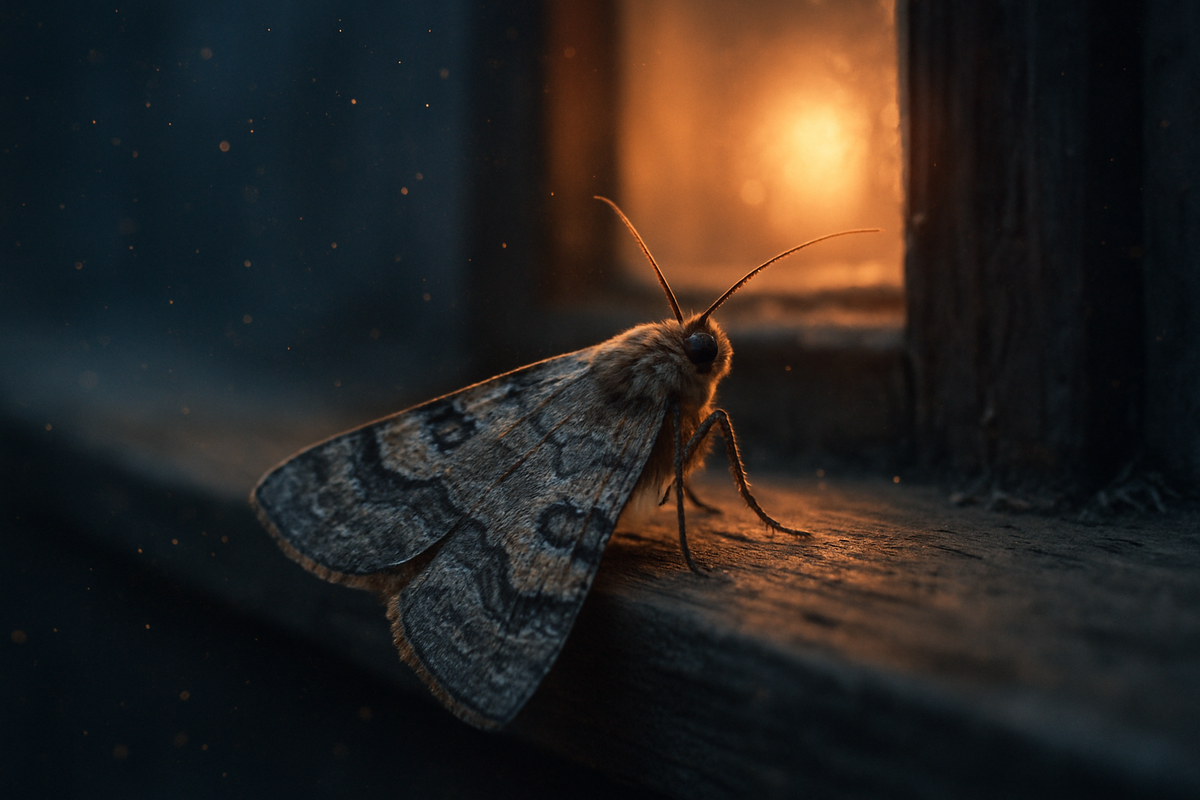
Moths are nocturnal cousins of the butterfly, and their symbolism grows directly from that difference. While butterflies represent joy found in the light, moths represent the deeper, quieter transformation that happens when no one is watching.
Moth symbolism is far from universal—different cultures have interpreted this creature in strikingly different ways, from omens of death to symbols of the soul itself.
Several Indigenous North American peoples treat the moth with caution. In Navajo tradition, the moth's erratic, fire-seeking behavior is linked in storytelling to the "butterfly people," who are said to have gone wild after breaking the incest taboo, giving rise to the affliction known as iich'aa, or "moth madness." Some Plains and Southeastern traditions, including Lakota and Cherokee storytelling, take a gentler view, describing moths as spirit guides who move between the physical and spirit worlds under cover of night—much like the owl's nocturnal symbolism of hidden wisdom.
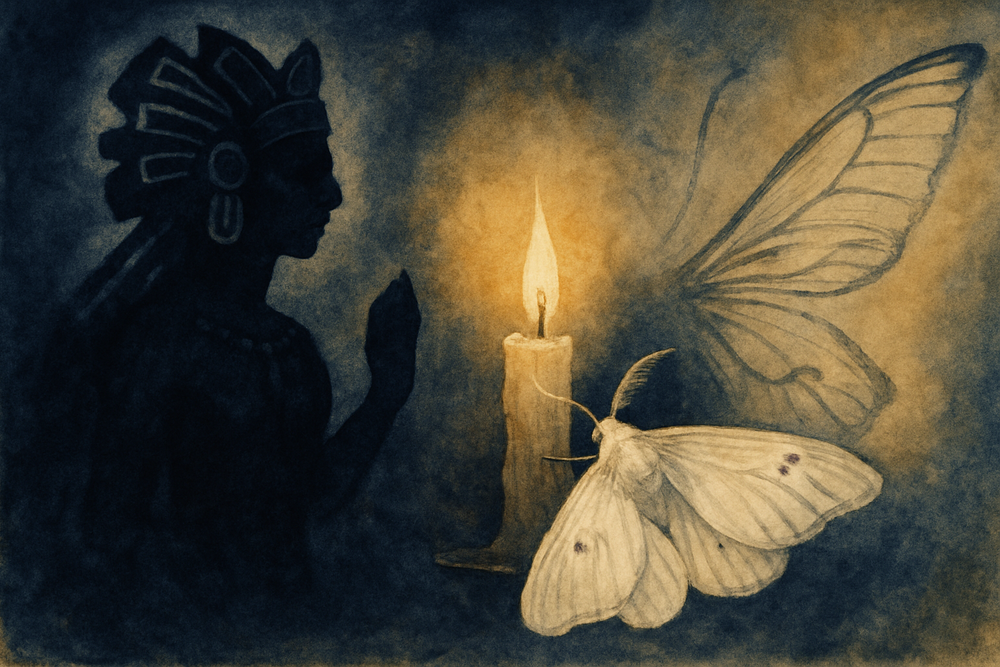
Itzpapalotl's name is usually translated as "obsidian butterfly," though some scholars argue "clawed butterfly" is the more accurate rendering, and she is depicted as a skeletal warrior goddess who takes the form of a butterfly, with an associated moth species linked to her cult. In Aztec mythology, Itzpapalotl ruled over Tamoanchan, the paradise garden associated with the souls of infants who died young, rather than specifically the souls of women who died in childbirth -- that role belonged to a related group of spirits, the Cihuateteo.
In parts of Chinese folklore, a white moth entering the home is believed to represent the soul of a deceased ancestor returning to check on the living. Rather than being feared, this visit is often treated with respect—a sign that a loved one's spirit remains close and watchful.
The ancient Greek word psyche means both "soul" and "butterfly/moth," and the myth of Psyche and Eros directly ties winged insects to the human soul's journey through trials toward divine love. Moths, as psyche's nocturnal counterpart, came to represent the soul's quiet, often painful growth in darkness before reaching transformation.
The belief that a moth signals an approaching death appears in several folk traditions -- including Celtic/Welsh lore, where a moth circling a candle was said to mean a soul was passing -- as well as in Latin American and Southeast Asian folklore; the phrase "like a moth to a flame" is documented in English literature since Shakespeare's time, though the underlying image of a moth drawn to its own destruction also appears earlier in Persian Sufi poetry, so its origin cannot be traced to a single English or Irish source. Victorian mourning customs sometimes included moth imagery in jewelry as a memento mori, a reminder of life's fragility.
In Christian teaching, moths appear in the Bible as symbols of decay and the impermanence of earthly treasures—Matthew 6:19-20 warns against storing up wealth "where moth and rust destroy," contrasting worldly possessions with eternal spiritual value.
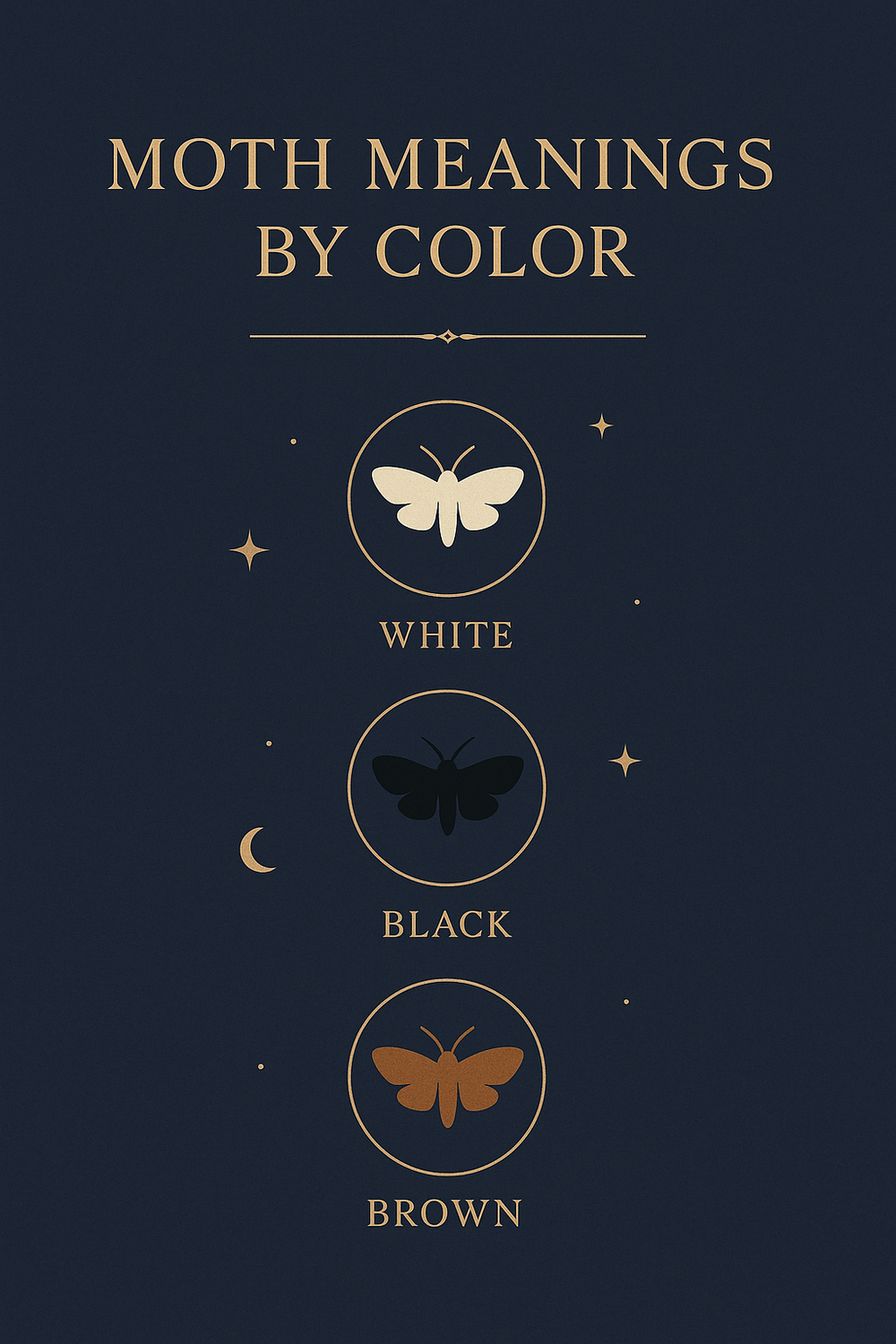
The specific moth you encounter can shift the meaning of the message. Below is a quick-reference guide.
| Moth Type/Color | Spiritual Meaning |
|---|---|
| White Moth | Visitation from a deceased loved one; purity, peace, spiritual protection |
| Black Moth | Deep transformation, confronting the shadow self, powerful change ahead |
| Brown Moth | Grounding, practicality, stability during a period of change |
| Yellow or Gold Moth | Optimism arriving after a dark season; renewed clarity and hope |
| Luna Moth | Rebirth, feminine intuition, connection to lunar and dream energy |
| Death's-head Hawkmoth | Endings, mortality, radical life transitions (popularized in folklore and film) |
| Moth at your window | A message trying to reach you; pay attention to your intuition now |
People who resonate with the moth as a totem or spirit animal are often highly sensitive, intuitive, and drawn to introspection. They may feel most alive at dusk or during quiet hours, and they often sense emotional undercurrents before anyone speaks a word aloud. If the moth feels like your guide, it may be encouraging you to:
This is similar in spirit to how the hummingbird symbolizes joy and presence in the daylight world—the moth offers the nighttime counterpart, teaching resilience and quiet faith rather than outward vibrancy.
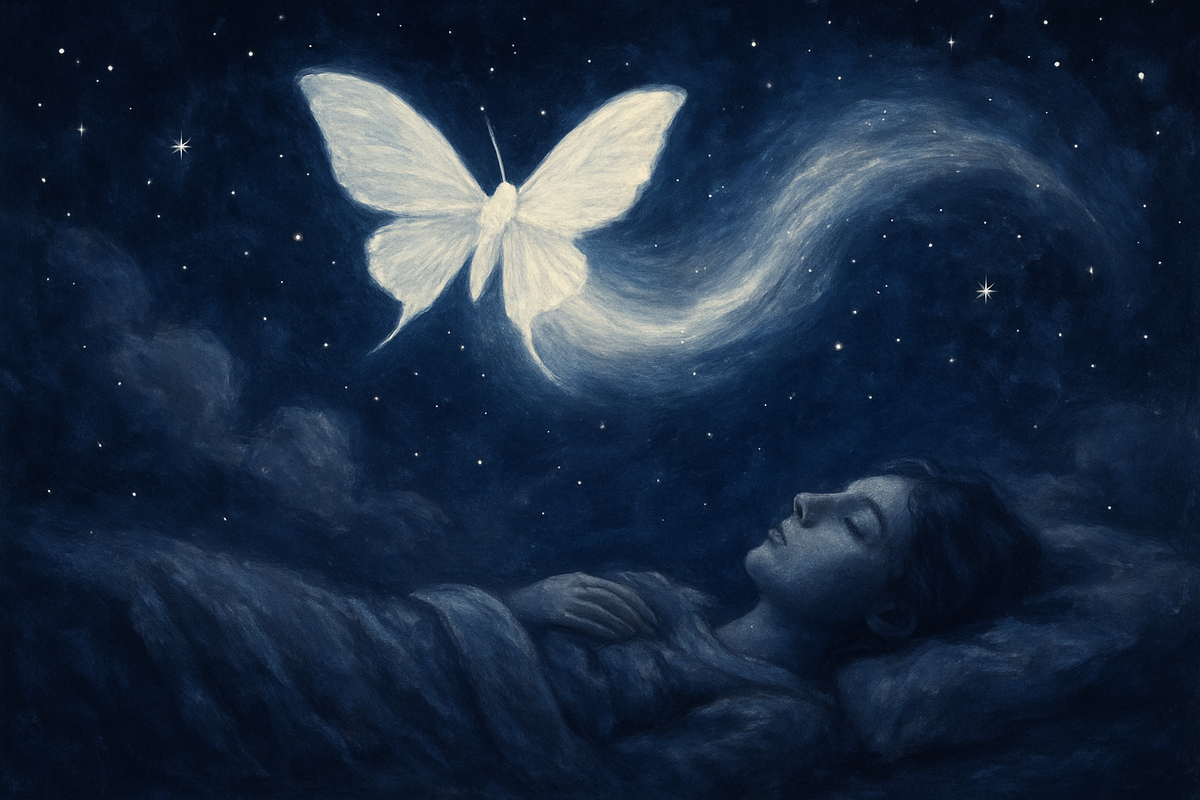
Dreaming of moths often reflects something stirring beneath the surface of your waking life. Common dream scenarios include:
While often grouped together, moths and butterflies carry distinct symbolic weight:
Encountering a moth is an invitation, not a demand. Here's how to respond spiritually:
Just as encountering a crow can signal a shift toward deeper awareness, or a grasshopper may nudge you toward leaping forward, the moth's message is ultimately about trust—trusting the process of change even when you can't yet see where it leads.
A moth entering your home is often interpreted as a spiritual visitation, particularly from a deceased loved one checking in on you, or as a sign that important inner change is underway. In many folk traditions, especially Chinese folklore, a white moth indoors is treated as a gentle, welcome sign rather than something to fear.
Moths are generally neutral messengers rather than strictly good or bad omens—their meaning depends on context, color, and your intuition in the moment. A calm moth resting nearby is usually seen as reassuring, while a moth destroying fabric may symbolize decay or neglect that needs your attention.
Dreaming of moths typically points to hidden emotions, intuitive nudges, or transformation happening beneath the surface of your waking life. The specific meaning shifts based on the dream's details, such as whether the moth is flying toward light, swarming, emerging from a cocoon, or already dead.
Butterflies represent visible, celebrated transformation that unfolds in daylight, while moths symbolize the quiet, private inner work that happens before change becomes obvious to others. Both represent metamorphosis, but the moth's nocturnal nature ties it more closely to intuition, introspection, and the unseen parts of the soul's journey.
What dove symbolism really means, from peace and the Holy Spirit to love, loss, and dreams across cultures.
Discover what dragonflies symbolize spiritually - transformation, self-realization, and light - across cultures, dreams, and daily…

What do elephants symbolize? Explore their spiritual meaning across Hindu, Buddhist, and African traditions, dreams, and daily lif…