Animal Symbolism
Moth Symbolism: Spiritual Meaning & Significance
What do moths really symbolize? Explore the spiritual meaning of moths—transformation, intuition, and hidden light—across myth, dr…
 KnowMastery
Seeing a snake spiritually means transformation, renewal, or a hidden truth demanding your attention. Because snakes shed their skin, they symbolize release, healing, and rebirth across nearly every culture on Earth. As a dream symbol or waking omen, the exact meaning shifts with the snake's color, behavior, and whether it appears in daily life or while you sleep.
There's a reason your pulse quickens the moment you spot one — coiled in the grass, gliding silently across a path, or slithering through a dream you can't quite shake off. Something ancient in us reacts before we even think.
That reaction is older than language itself. Long before humans built temples or wrote scripture, we watched snakes disappear underground and re-emerge, shed a dead layer of themselves, and move without limbs in a way that felt almost supernatural. It's no wonder they became one of the oldest and most contradictory symbols on Earth — feared as poison, worshipped as medicine, cursed as a deceiver, and honored as a goddess.
If a snake has recently crossed your path — physically or in a dream — this guide walks through what it may be trying to tell you.
Every snake encounter tends to circle back to a handful of core themes: transformation (releasing an outdated identity or habit), healing (the body or spirit restoring itself), danger (a warning about something unseen), wisdom (intuition and hidden knowledge surfacing), sexuality (raw, primal life force), and rebirth (the end of one chapter, the start of another). Jump to the section that matches your encounter:
A snake crossing your path — literally, on a walk, a trail, or even in your driveway — is traditionally read as a sign that change is close and that you're being asked to pay attention to something you've been avoiding. It's less a warning and more an invitation: the snake appears when the old version of a situation is ending and a new one is about to begin.
The snake's speed and mood matter. A calm snake that moves away slowly is generally interpreted as reassurance — the transition ahead, while unsettling, will resolve in your favor if you don't resist it. A snake that lunges, hisses, or seems agitated is more often read as a nudge to confront a conflict or deception head-on rather than sidestepping it again. Either way, most traditions agree on one thing: it's rarely a coincidence when a snake shows up more than once in a short window of time.
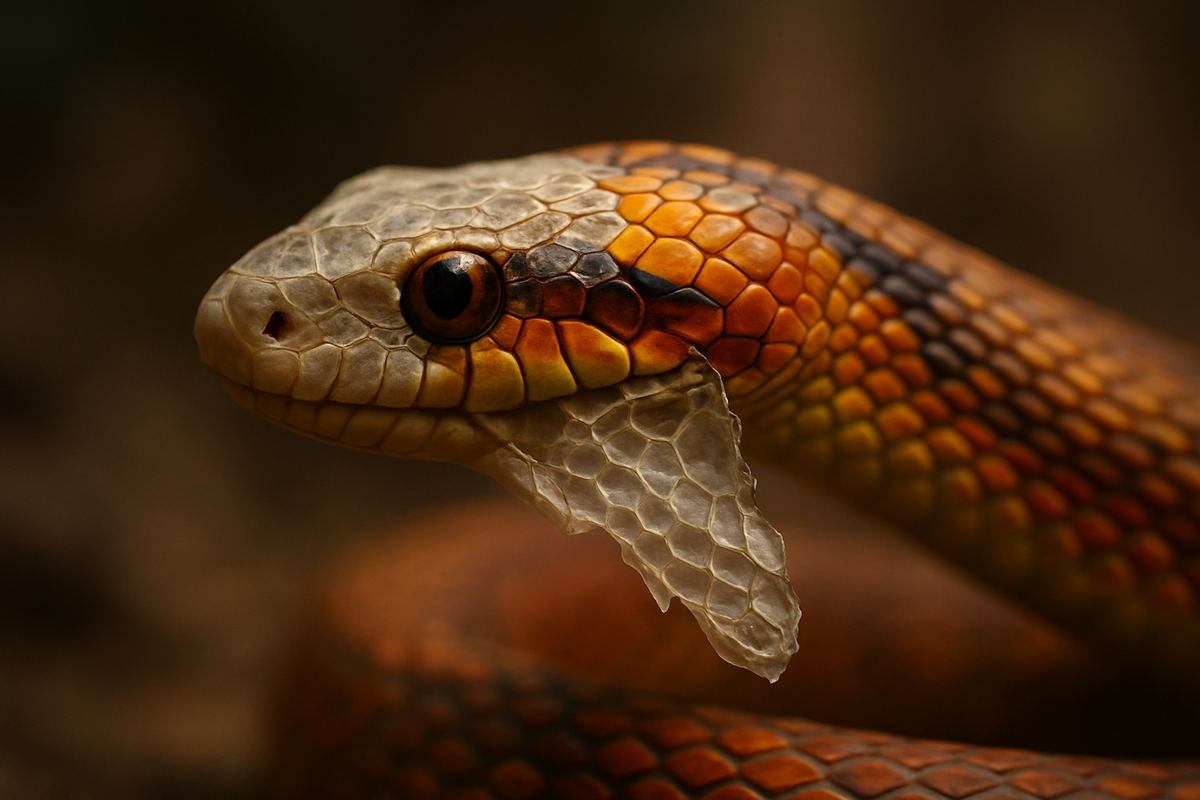
At its root, the snake is a symbol of transformation through shedding. Every time a snake outgrows its skin, it sheds the old layer entirely and reveals a newer, brighter version underneath. Spiritually, this is read as a message: something in your life — an identity, a relationship, a belief — has become too small, and it's time to release it so you can grow, much like the renewal imagery found in other graceful, transformation-linked creatures.
Because snakes live close to the earth, retreat into darkness, and reappear renewed, they're also tied to the underworld, the subconscious mind, and the kind of hidden knowledge associated with quiet, watchful creatures of the night. Encountering one often points to something buried — a fear, a truth, or an instinct — asking to be acknowledged rather than avoided.
Almost every ancient civilization gave the snake meaning — and the interpretations range from sacred to sinister, sometimes within the same culture.

In Egyptian mythology, the cobra-goddess Wadjet appeared on the crowns of pharaohs as the uraeus, a protective symbol meant to spit fire at enemies of the throne. Far from evil, the snake here represented sovereign power and divine protection.
Asclepius's staff, wound with a single serpent, is distinct from the two-snake, winged caduceus of Hermes, though the caduceus is often mistakenly used today as a medical symbol in its place. Snakes were kept in his healing temples because their skin-shedding was seen as literal proof of the body's power to renew itself.
In Hindu and yogic tradition, spiritual energy is described as a coiled serpent, kundalini, resting at the base of the spine. Through meditation, this serpent energy is said to rise upward through the chakras, awakening higher consciousness — making the snake a symbol of dormant spiritual potential.
In the Book of Genesis, the serpent in the Garden of Eden tempts Eve to eat the forbidden fruit, forever linking the snake with deception, sin, and the loss of innocence in Western religious thought. This is one of the few major traditions where the snake is framed almost entirely negatively.
Among the Hopi people, snake dances were performed as prayers for rain, connecting the serpent to fertility of the land and the cycles of nature rather than fear or sin. Priests handled live snakes during the ceremony and released them afterward as messengers carrying the prayers underground to the spirits of rain.
In the Chinese zodiac, those born in the Year of the Snake are considered intelligent, intuitive, and quietly strategic. Rather than fearing the snake, Chinese folklore treats it as a symbol of deep thinking and calculated patience — the snake achieves its goals through observation, not brute force.
| Culture | Primary Snake Meaning |
|---|---|
| Ancient Egypt | Protection, royal authority |
| Ancient Greece | Healing, medicine, renewal |
| Hinduism | Spiritual awakening (kundalini) |
| Judeo-Christian | Temptation, deception |
| Hopi (Indigenous American) | Fertility, rain, life cycles |
| Chinese Zodiac | Wisdom, cunning, strategic intuition |
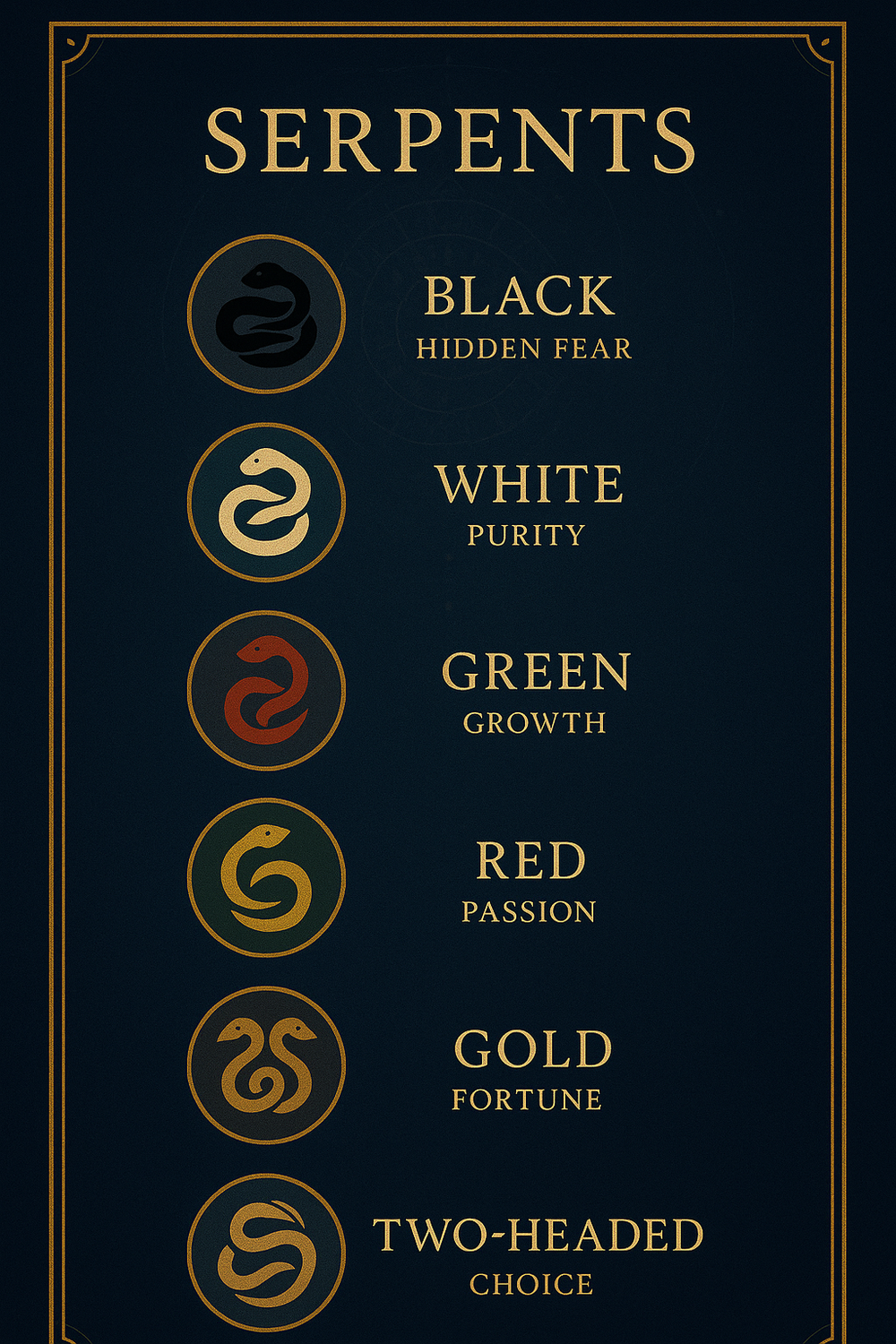
The specific snake you encounter can sharpen the message. Just as scorpion symbolism shifts depending on whether the creature appears as a threat or a protector, a snake's color and species matter.
Not every meaningful encounter happens in a dream. Finding a snake inside your home while you're fully awake is one of the more unsettling real-world versions of this symbol, and it's typically read differently than a snake appearing in sleep. Because the home represents your inner sense of safety, a waking encounter often signals that an issue you thought was resolved — a boundary, a secret, or an unresolved conflict — has quietly re-entered your life and now needs direct attention rather than avoidance.
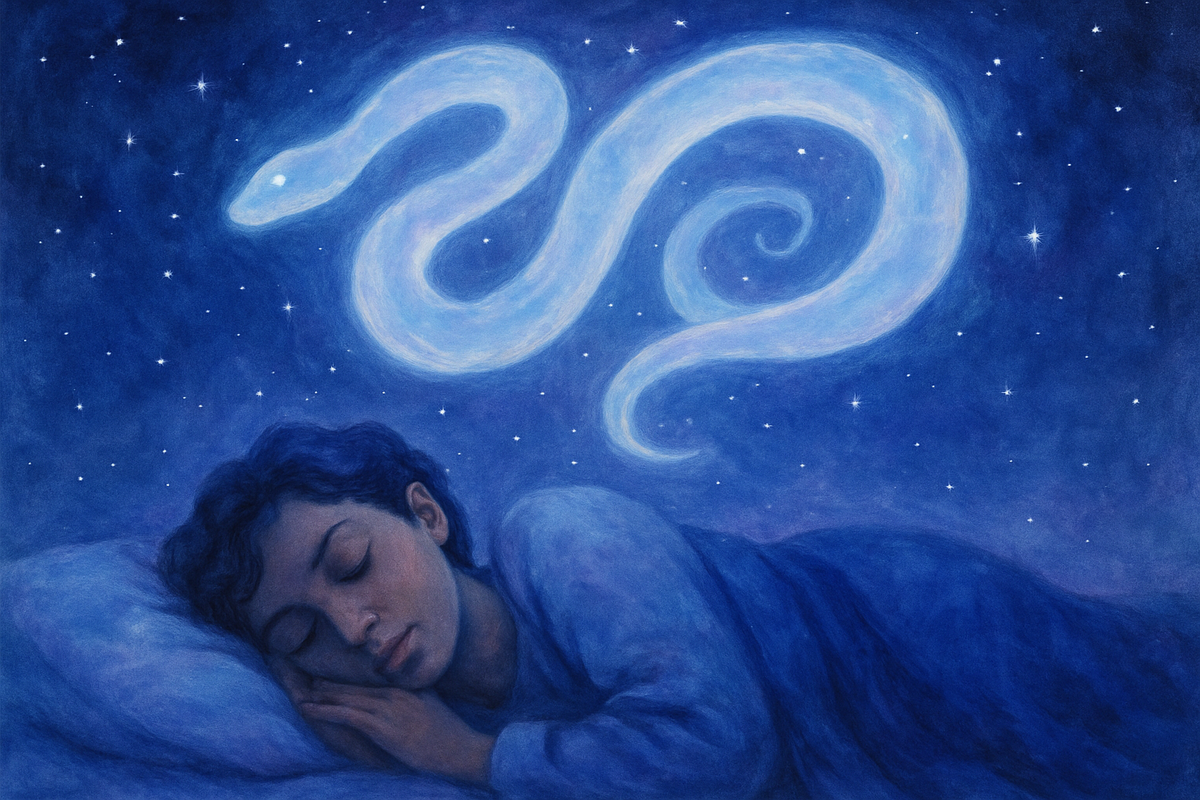
Dreaming of a snake is one of the most common — and most misunderstood — dream symbols. Context matters more than the snake itself: the setting, your emotional reaction, and what the snake is doing all change the interpretation.
Much like how spider spiritual meaning often points to patience and the threads we're weaving in our own lives, snake dreams usually reflect an internal process rather than a literal external threat. Try to recall the snake's color and behavior — a calm snake in a dream tends to signal acceptance, while an aggressive one usually points to resistance you're still fighting.
Neither, exactly. A snake sighting is rarely a simple "good" or "bad" sign — it's a mirror. It tends to appear during periods of change, asking you to look honestly at what needs to be released. Much like a crow sighting is often read as an omen tied to transition rather than doom, a snake crossing your path is best understood as an invitation to pay attention, not a curse.
That said, some traditions do treat certain encounters as warnings — a snake in your dreams biting you, or one appearing suddenly indoors, is often interpreted as a nudge to address a deception or health issue before it worsens.
The clearest way to read an encounter is to weigh the snake's behavior against the setting it appears in:
| Scenario | Common Interpretation |
|---|---|
| Calm snake, moving away (waking life) | Reassurance — change is coming, but it resolves in your favor |
| Aggressive snake, lunging or hissing (waking life) | A nudge to confront a conflict or deception directly |
| Calm snake in a dream | Acceptance of a transformation already underway |
| Aggressive snake or bite in a dream | Resistance to a truth or lesson you're still avoiding |
If the snake is your spirit animal, you likely have a natural gift for transformation — you adapt to change quickly and aren't afraid to leave behind versions of yourself that no longer serve you. You may also have strong intuition, similar to those who resonate with the sharp perception of hawk symbolism, sensing what others miss beneath the surface.

People with a snake totem often go through repeated cycles of reinvention — career changes, relationship shifts, or spiritual awakenings — and tend to come out of each one wiser and more resilient. If snake energy feels familiar to you, it's worth noticing which season of your life keeps repeating: the shedding, the vulnerability right after, or the growth that follows.
Rather than reacting with fear, treat the encounter as a prompt for reflection.
It can be — snakes are strongly associated with healing, renewal, and growth in traditions like ancient Greek medicine and Hindu kundalini practice. Whether it feels "good" usually depends on your emotional reaction and the context in which it appears, so trust your instinct over a generic rulebook.
In several traditions, yes — a calm snake, especially a golden or green one, is often read as a sign of coming abundance, wealth, or a fortunate turning point. An agitated or striking snake, however, is usually treated as a caution rather than luck, so the animal's behavior matters as much as the sighting itself.
A yellow snake is generally interpreted as a mix of caution and optimism, suggesting it's safe to move forward with a plan as long as you stay alert to details you might otherwise overlook. An orange snake tends to symbolize returning creativity and confidence, often appearing after a difficult stretch as a sign that motivation and momentum are building again.
A waking encounter is typically read as a message about something external and immediate — a decision, a relationship, or a truth resurfacing in your actual environment. A dream snake, by contrast, is usually treated as a symbol of internal processing, reflecting a transformation, fear, or realization happening within you rather than around you.
In the Bible, the serpent in the Garden of Eden represents temptation and deception, having convinced Eve to eat the forbidden fruit. This has made the snake one of the primary symbols of sin and moral testing in Judeo-Christian tradition, even though other passages use serpent imagery for healing, as with the bronze serpent Moses raised in the wilderness.
A snake bite in a dream typically symbolizes a sudden, unavoidable truth or realization entering your awareness. It often points to a situation you've been avoiding that is now demanding immediate attention, and the location of the bite on your body can hint at exactly what area of life is affected.
A snake spirit animal points to a natural gift for transformation, adaptability, and reading situations others miss. People who feel a pull toward snake energy tend to move through major life changes — careers, relationships, beliefs — with less resistance than most, treating each ending as preparation for something better.
A snake that keeps returning or lingers instead of fleeing is often interpreted as a sign that whatever it represents — a hidden truth, an overdue change, or a lesson you've been avoiding — hasn't been fully addressed yet. Rather than a threat, many traditions read a persistent snake as a patient reminder that will keep showing up until you actually deal with what it's pointing to.
Two snakes together, or a single two-headed snake, are usually read as symbols of duality — a major decision, a divided loyalty, or two paths pulling you in different directions at once. This imagery also appears in healing symbolism, most notably the caduceus, where two intertwined serpents represent balance between opposing forces, such as sickness and cure, or the past and the future.
What do moths really symbolize? Explore the spiritual meaning of moths—transformation, intuition, and hidden light—across myth, dr…

Discover what otters symbolize spiritually—joy, playfulness, feminine energy, and community—across cultures, dreams, and totem ani…

What the manta ray spirit animal really means: grace, freedom, intuition, and real stories from Hawaii to Indonesia.