The history of shoes spans over 8,000 years, from woven plant-fiber sandals worn in ancient Oregon to 3D-printed smart sneakers engineered today. Footwear began as simple protection against rough terrain and extreme climates, but it quickly evolved into a marker of status, ritual, and identity across nearly every civilization. This article traces that cultural and symbolic journey — from Egyptian tomb offerings and Roman military sandals to stiletto heels and biodegradable sneakers — exploring not just what shoes looked like, but what they meant.
Looking for a quick reference? See our Shoe History Timeline for a fast, milestone-by-milestone rundown. This article goes deeper into the cultural meaning and symbolism behind each era.
The Origins of Footwear
The oldest surviving physical shoes are sagebrush-bark sandals found at Fort Rock Cave in Oregon, dated to roughly 8,500–7,200 BCE, though indirect skeletal evidence suggests people may have used footwear as far back as 40,000 years ago. These sandals, made from plant fibers and animal hides, were primarily utilitarian and intended to meet the basic needs of survival rather than fashion or status.
The evolution of footwear through six defining eras.
Key Styles of Ancient Footwear
Ancient Egypt: Egyptians were among the first to develop sandals. Worn by pharaohs and the elite, their sandals were made from woven reeds or leather. While commoners typically went barefoot, wealthier Egyptians had sandals adorned with precious metals and gems — a status marker not unlike the way crowns signaled rank and power. Egyptian tombs often depicted shoes as symbolic offerings, placed alongside items believed to please gods and guardian beings in the afterlife.
Mesopotamia: In the ancient city-states of Mesopotamia, shoes were made from simple leather wraps or fabric, designed for functionality in a harsh environment. The meshesh, a style of sandal worn by both men and women, was highly durable and practical for agricultural work.
Ancient Greece: In Greece, shoes became a symbol of status and citizenship. Most shoes, such as the crepida (leather sandals), were simple, with thin leather soles that protected feet from rough surfaces. Wealthier citizens, however, wore boots and sandals dyed in vivid colors.
Ancient Rome: Romans wore shoes based on function, but social status was also reflected in their footwear. The caligae, heavy-duty sandals worn by Roman soldiers, were built for long marches, while upper-class citizens wore more ornate styles like the soleae or calceus, often dyed in bold colors such as red. Roman footwear was advanced for the time, with multiple layers of leather and hobnails to increase durability.
Medieval Footwear (5th – 15th Century)
The Middle Ages brought a mix of practicality and social symbolism to footwear. Shoes were handmade by local cobblers, using techniques that reflected both the needs of the working class and the fashion preferences of the elite.
Key Styles of Medieval Footwear
Turnshoes: Worn from the 10th to 14th centuries, these leather shoes were crafted by stitching the upper part to the sole inside out, then turning them right-side out. They were simple, flat shoes worn by common people and were highly practical for farming and manual labor.
Poulaines: From the 12th century onwards, poulaines became a popular style for nobility. These shoes featured an elongated, pointed toe — often so exaggerated that they had to be stuffed with moss or wool to maintain their shape. The length of the toe often signified the wearer's rank, much like other exaggerated fashion markers of the period.
Clog Soles: To navigate muddy streets, medieval Europeans began adding wooden soles or clogs to their shoes, raising the foot above the filth of the roads. These overshoes, called pattens, were worn over softer leather shoes, protecting them from damage.
The Renaissance and Early Modern Period (15th – 18th Century)
The Renaissance marked a period of refinement and artistry, and shoes became an expression of wealth, social standing, and craftsmanship. As European fashion became more elaborate, so did footwear.
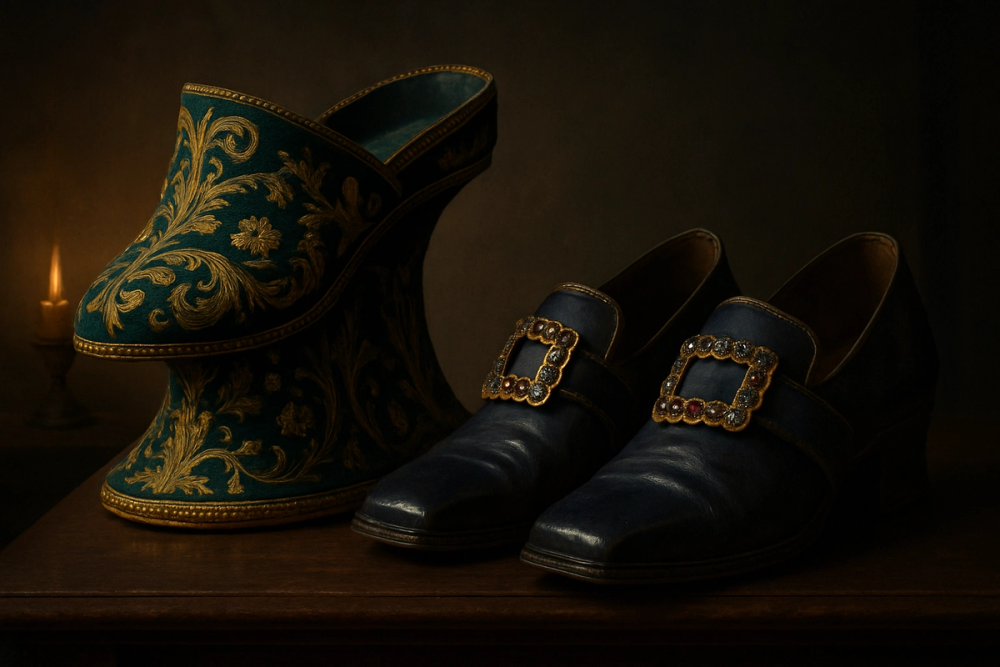
Chopines and square-toed shoes reflected the artistry and status of Renaissance fashion.
Key Styles of Renaissance Footwear
Chopines: Originating in Venice, chopines were platform shoes worn by women to elevate their status — both literally and figuratively. Some chopines reached heights of up to 20 inches. They were often covered in rich fabrics like silk or velvet and decorated with the same kind of elaborate ornamentation seen in Renaissance jewelry and cameo work, though they required assistance to walk in.
Square-Toed Shoes: By the 16th century, square-toed shoes became popular among European nobility. The boxy toe shape contrasted with the pointed poulaines of the previous era and was often adorned with intricate embroidery or jewels.
Heels for Men: By the 17th century, heels had become a significant element of men's fashion, especially among the aristocracy. Louis XIV of France is closely associated with red heels as a symbol of wealth and power, restricting their wear at court to noblemen in the early 1670s, although the red heel style was reportedly first introduced by his predecessor, Louis XIII. Heels were initially practical, designed for riding stirrups, but soon evolved into an essential part of court attire.
Shoes and Symbolism
Across nearly every era covered above, footwear has done more than protect feet — it has communicated rank, ritual, and identity. Egyptian sandals buried in tombs served as offerings for the afterlife. Poulaines stretched toward the sky to announce noble status. Louis XIV's red heels functioned almost like a uniform, instantly identifying who belonged at court. This pattern mirrors other adornment traditions throughout history, from cosmetics used to signal beauty and social standing to jewelry and crowns worn to project authority. Shoes, in other words, have long been wearable symbols — small objects carrying outsized cultural weight.
The Industrial Revolution and the Rise of Mass Production (18th – 19th Century)
The Industrial Revolution in the late 18th century transformed footwear production. Shoes, once handcrafted by local artisans, could now be mass-produced thanks to new machinery, making them more affordable and available to a broader population.
Key Innovations of the Industrial Era
Standardization of Shoe Sizes: The mass production of shoes led to the standardization of sizes, allowing manufacturers to produce shoes more efficiently. This eliminated the need for custom-fitting every pair of shoes.
The Invention of the Sewing Machine: In 1846, Elias Howe invented the first practical sewing machine, which was quickly adopted by the footwear industry. The sewing machine allowed for faster and stronger stitching, revolutionizing shoe manufacturing.
Right and Left Foot Design: Until the mid-1800s, shoes were typically made without distinction between the left and right foot. Left- and right-specific shoes did not become the industry standard in the United States until around the time of the Civil War in the 1850s–60s, rather than as early as 1818 in Philadelphia.
The 20th Century: The Rise of Fashion and Functionality
The 20th century witnessed a dramatic shift in shoe design, driven by fashion trends, technological advancements, and the growing demand for footwear that served both aesthetic and practical purposes. As consumer culture exploded, shoes became a key symbol of personal style.
Key Innovations of 20th-Century Footwear
The Oxford Shoe: In the 1920s, the Oxford became a staple for both men and women. This lace-up style featured clean lines and low heels, perfectly suited to the sleek, modern fashions of the Jazz Age.
Stiletto Heels: In the 1950s, the introduction of stiletto heels by designer Roger Vivier for Christian Dior changed women's fashion. The sharp, high heel became an icon of femininity and elegance, often paired with evening gowns or cocktail dresses.
Platform Shoes and Counterculture: The 1970s saw the revival of platform shoes, which were adopted by both men and women as part of the countercultural movement. These chunky, often brightly colored shoes symbolized rebellion against traditional fashion norms.
Sneakers and Athletic Footwear: The 1980s marked the rise of sneaker culture, driven by brands like Nike, Adidas, and Reebok. Air Jordans, first released in 1985, revolutionized the sneaker market, making athletic shoes a fashion statement in their own right.
The Modern Era: Technology, Sustainability, and Personalization
The 21st century has seen rapid advancements in shoe technology, focusing on comfort, performance, and sustainability. Modern footwear is no longer just about protection or fashion — it's about innovation, ethics, and customization.
Key Innovations of Modern Footwear
Sustainable Footwear: With growing concerns about climate change and environmental impact, shoe manufacturers are increasingly turning to sustainable materials. Brands like Allbirds and Veja have popularized eco-friendly shoes made from recycled plastic, organic cotton, and natural fibers.
3D-Printed Shoes: The rise of 3D printing has allowed for the creation of custom-fit shoes designed to match an individual's foot shape perfectly. Companies like Adidas have embraced this technology to produce high-performance running shoes with minimal waste.
Specialized Athletic Footwear: Advances in sports science have led to the development of shoes tailored to specific athletic needs. Running shoes now come with high-tech cushioning systems, while basketball shoes are designed to enhance vertical leaps and provide ankle support. Brands are also developing footwear that integrates wearable technology, tracking performance metrics like steps, distance, and speed.
The Future of Footwear
As technology continues to evolve, the future of footwear is set to become even more innovative. From smart shoes that track your health data to biodegradable sneakers that break down after use, the possibilities are limitless. The next frontier in shoe design will likely focus on personal health, sustainability, and new ways to blend fashion with function.
Key Predicted Innovations in Future Footwear
Smart Shoes: With the integration of wearable technology, shoes may soon be able to monitor health metrics such as gait, posture, and even blood pressure. Companies are already experimenting with shoes that offer real-time feedback to athletes and those undergoing rehabilitation.
Eco-Friendly Innovations: The push for sustainability will likely lead to more innovations in biodegradable and recyclable materials. Future shoes could be designed to disassemble easily for recycling or be made entirely from plant-based materials.
Customization Through AI: Advanced AI and scanning technologies may allow consumers to design their own shoes, ensuring a perfect fit tailored to their unique needs. This trend is likely to be driven by a growing demand for personalized products in fashion and performance footwear.
Shoe History at a Glance
Era
Key Style
Material
Symbolism
Ancient Egypt
Woven sandals
Reeds, leather, precious metals
Status, afterlife offerings
Ancient Rome
Caligae, calceus
Layered leather, hobnails
Military rank, citizenship
Medieval
Poulaines, pattens
Leather, wood
Nobility, protection from filth
Renaissance
Chopines, square-toes
Silk, velvet, cork
Wealth, elevation of status
Industrial
Standardized factory shoes
Machine-stitched leather
Accessibility, mass production
Modern
Sneakers, smart shoes
Recycled fibers, 3D-printed polymers
Identity, performance, sustainability
Conclusion
From ancient times to the modern day, the history of shoes is a testament to human creativity and adaptability. What began as simple foot protection has evolved into a global industry that blends art, science, and technology. As shoes continue to evolve, they will remain not just functional items, but a reflection of our culture, values, and aspirations. Whether you're looking for high fashion, sustainability, or athletic performance, the future of shoes holds exciting possibilities for everyone.
FAQ
Are heels considered shoes?
Yes, heels are a category of shoe defined by an elevated heel section that raises the back of the foot above the toes. They have appeared throughout history in many forms, from 17th-century court heels worn by European noblemen to modern stiletto heels, and they remain classified as footwear regardless of height or gender association.
What is the oldest known shoe?
The oldest surviving physical shoes are sagebrush-bark sandals discovered at Fort Rock Cave in Oregon, dated to approximately 8,500–7,200 BCE. Indirect evidence, such as changes in foot bone structure found in skeletal remains, suggests humans may have worn some form of footwear as early as 40,000 years ago, even though no shoes from that period have survived.
Who invented shoes?
No single person invented shoes; footwear developed independently across many early human cultures as a practical response to rough terrain, cold climates, and rugged environments. Early shoes were made from readily available materials like plant fibers, bark, and animal hides, evolving gradually into the sandals, boots, and turnshoes seen in later ancient and medieval civilizations.
When were left and right shoes invented?
For most of history, shoes were made symmetrically, with no distinction between the left and right foot. Left- and right-specific shoes didn't become standard in mass manufacturing until around the time of the American Civil War in the 1850s–60s, when improved production techniques made it practical to shape shoes to each foot individually.

 KnowMastery