
Animal Symbolism
Skunk Spiritual Meaning: The Surprising Power Behind the Stink
What if the next time you encountered a skunk, it wasn’t just bad luck—but a cosmic message wrapped in black and white fur? Skunks…
 KnowMastery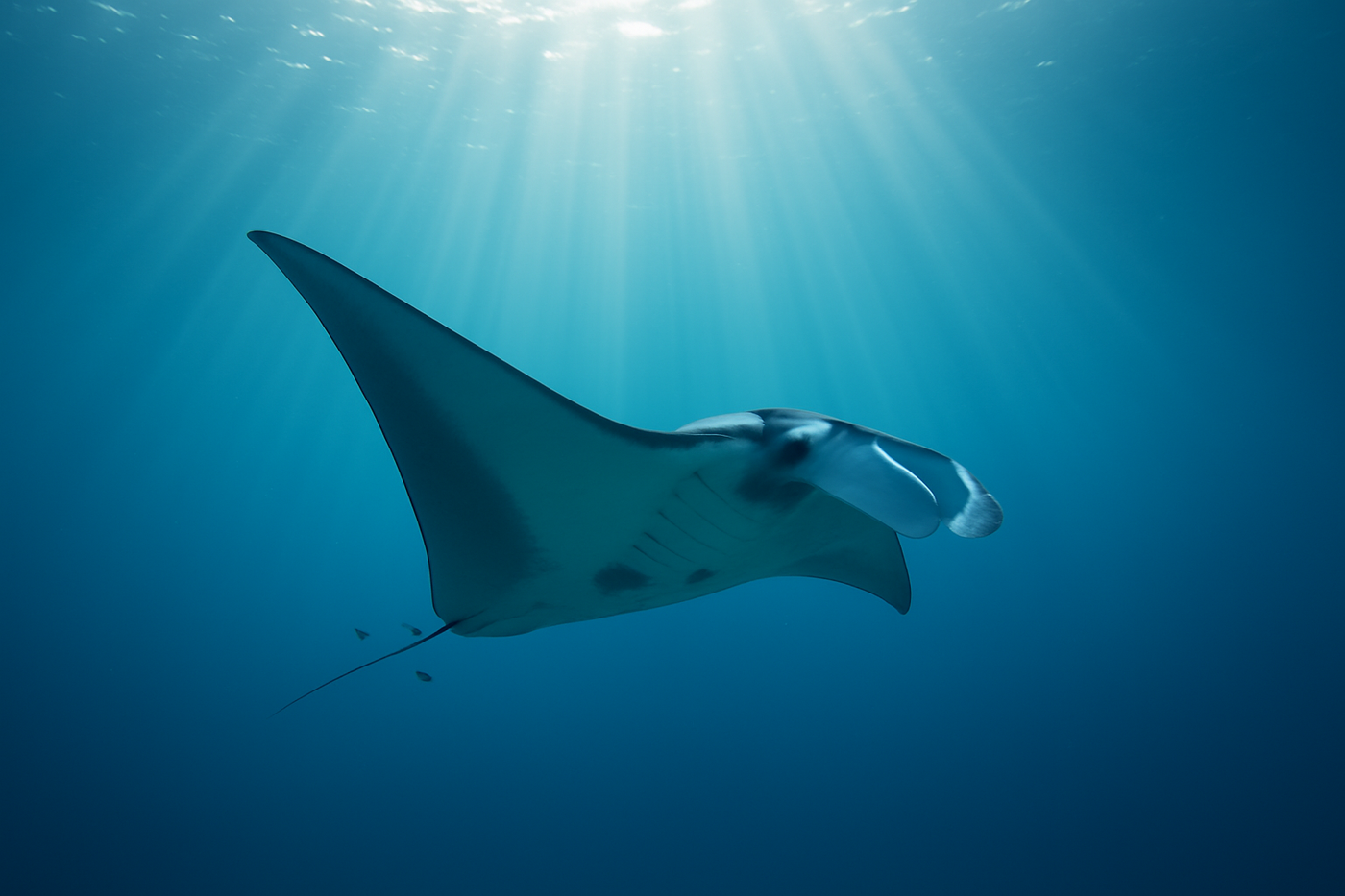
The manta ray spirit animal represents grace under pressure, freedom from fear, and a calm trust in life's currents. Unlike sharks, mantas have no stinger and no aggression, they glide through open water using patience and rhythm instead of force. When this creature shows up as a spirit guide, it usually means you're being asked to move through a hard season with softness rather than force, and to let intuition steer instead of panic.
There is something quietly humbling about watching a manta ray move. Its wingspan can stretch wider than a small boat, yet it never seems to rush. It tilts its fins and the ocean carries it forward.
People who feel drawn to the manta ray often describe the same thing: a wish to stop fighting the current of their own life. They are tired of forcing outcomes. The manta doesn't fight the water, it reads it, adjusts, and flows. That image carries real weight for anyone who has spent years white knuckling through stress.
In diving communities, folklore, and modern spiritual writing, the manta ray keeps showing up as a symbol of calm strength: movement without effort and awareness without aggression. It is not a predator in the usual sense. Its size alone could be intimidating, yet it feeds mostly on plankton and poses no threat to humans. That gap between enormous physical presence and gentle nature is where most of its symbolism starts.
Manta rays travel in open water far from the seafloor, so they are also linked to independence and self direction. They are not bottom dwellers hiding in reef crevices. They choose open blue water, which lines up with the idea of choosing your own path instead of blending into a group.
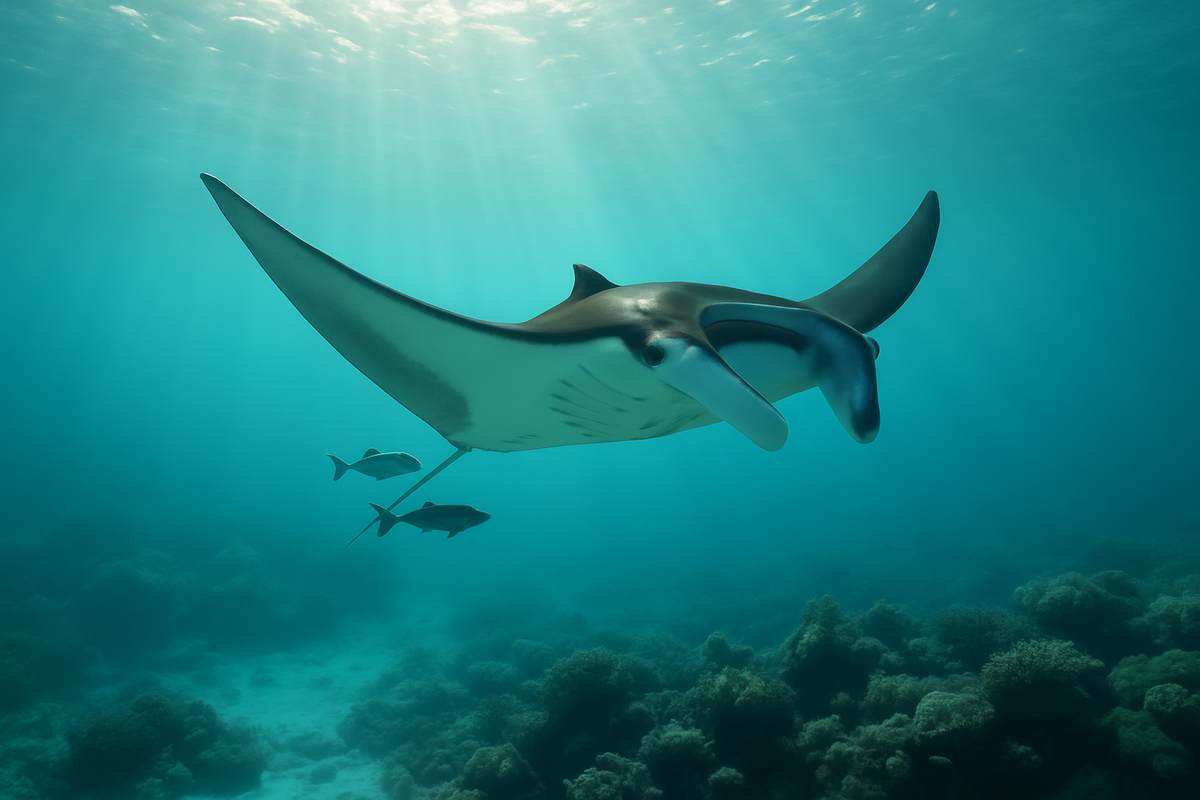
The manta ray's swimming style, slow wing beats with no wasted motion, is often read as a lesson in doing more with less. Spiritually, the manta asks you to stop muscling through problems and instead find the smallest, most efficient movement that gets you where you need to go. This is close to how swan symbolism points to grace during personal transformation, though the manta's grace is tied specifically to moving through deep, unknown water rather than emerging into something new.
Manta rays are migratory. They travel long distances following plankton blooms and warm currents instead of staying anchored to one reef. As a spirit animal, this migratory habit points to release, letting go of people, places, or old identities that no longer fit. If the manta keeps appearing in your life, it may be nudging you to release a grudge, a job, or a belief you have outgrown.
The manta ray is often linked to feminine, receptive energy because it feeds in patterns tied to lunar tides and never behaves aggressively toward other species. That pairs it symbolically with intuition and emotional depth, in the same family of meaning as owl symbolism, which centers on quiet inner knowing rather than loud outward action.
In Hawaiian, the manta ray is called hāhālua, which translates roughly to "two breaths," a reference to the two cephalic lobes near its mouth that look like small horns. Traditional Hawaiian belief includes the concept of ʻaumākua, family guardian spirits that take animal form, most famously sharks, but also rays in coastal families with strong ties to specific waters. Seeing a manta near shore was sometimes read as a visit from an ancestor checking on the living.
On Yap, one of the Federated States of Micronesia, manta rays gather seasonally in specific channels. Local communities have long treated these gathering sites as important, sometimes limiting fishing or disturbance in those waters out of respect for the animals. The manta's predictable return to the same channels each year fed into local storytelling about the ray as a keeper of place, tied to the rhythm of the reef rather than a wandering stranger.
Around Raja Ampat and Nusa Penida in Indonesia, fishing communities have historically treated manta ray cleaning stations, spots where mantas gather to have parasites removed by smaller fish, as protected zones. The practice isn't always framed in strictly religious terms, but leaving these gathering spots undisturbed reflects a coastal instinct to protect the manta rather than hunt it, a different treatment than many other large marine species get in the same waters.
People who claim the manta ray as a totem tend to share a specific set of traits. The table below breaks down what those traits usually look like day to day.
| Trait | What It Looks Like |
|---|---|
| Calm under pressure | Stays level headed during chaos instead of reacting instantly |
| Independent movement | Comfortable making decisions alone, without needing group approval |
| Emotional depth | Feels things intensely but rarely shows it on the surface |
| Non confrontational strength | Handles conflict by moving around it rather than through it |
| Seasonal change | Comfortable relocating, restarting, or shifting direction in life |
Dreaming of a manta ray usually points to something happening under the surface of your waking life, an emotion or decision you haven't fully looked at yet. The specific scene in the dream changes the meaning:
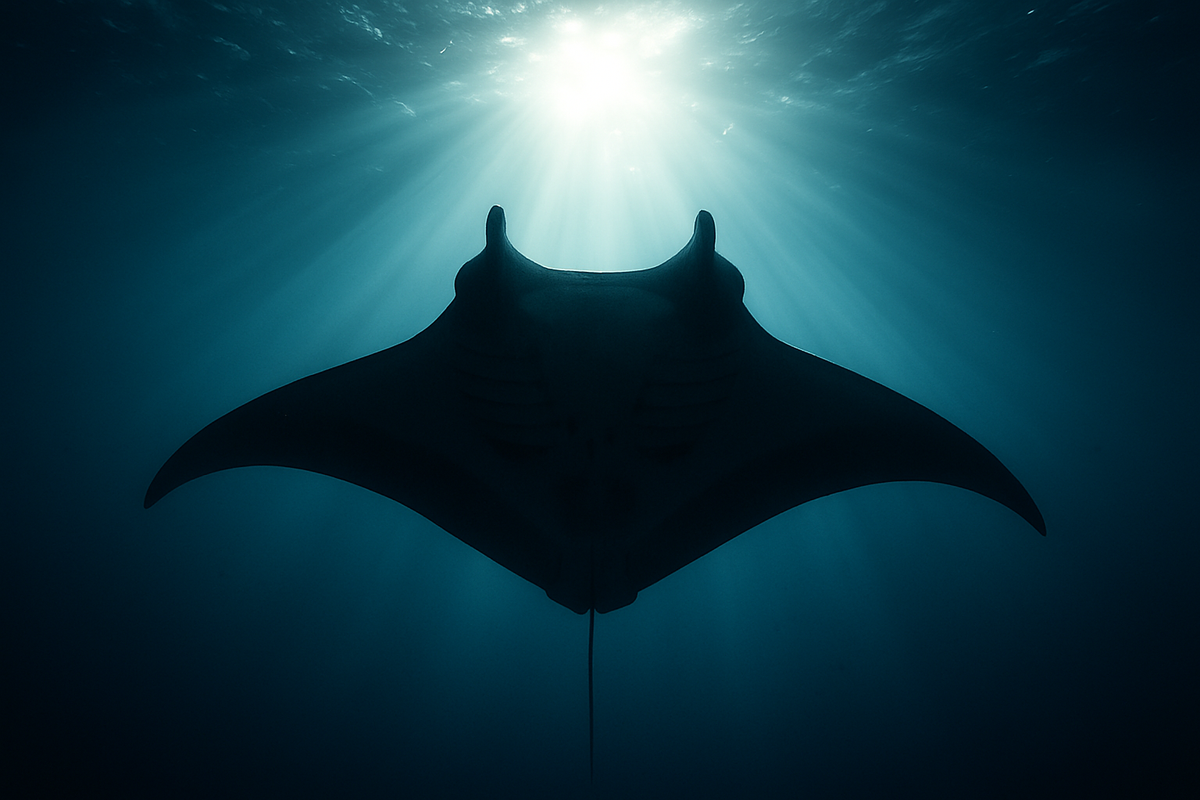
Some people feel an instant pull toward this creature without knowing why. A few signals people report:
If the manta ray keeps showing up in your dreams, thoughts, or daily life, there are direct ways to work with that energy instead of just noting it.
Before reacting to stress, pause the way a manta pauses before adjusting its fins. Give yourself even ten seconds before responding to conflict or bad news.
Pick something small first: an old email thread, a grudge, a piece of clothing tied to a version of you that no longer fits. The manta teaches release through small, repeated practice, not one dramatic gesture.
This doesn't require an ocean. A lake, a bath, or even sitting near a fountain can help settle the nervous system the way divers describe feeling near mantas: calmer, slower, more present. This kind of grounding pairs well with the lighter, joy focused energy found in hummingbird spiritual meaning, balancing stillness with moments of real lightness.
It usually points to something beneath the surface of your waking life that needs attention, often an emotion or decision you have been avoiding. The specific dream scene, whether calm or frightening, shapes the exact interpretation.
Yes, the manta ray is generally seen as a positive and gentle spirit animal, tied to grace, freedom, and non aggressive strength rather than danger or warning. It reads closer to guides like swan symbolism than to fear based totems.
In Hawaiian tradition, manta rays are called hāhālua and are sometimes connected to the concept of ʻaumākua, family guardian spirits that can take animal form. A manta appearing near shore has historically been read by some families as a visit from an ancestor.
Manta rays rely on sensing subtle changes in current and water pressure rather than aggressive hunting, which mirrors the human idea of trusting quiet inner signals over force. This links them symbolically to intuitive, receptive energy, close in spirit to owl symbolism.
What if the next time you encountered a skunk, it wasn’t just bad luck—but a cosmic message wrapped in black and white fur? Skunks…
What do spiders mean on Halloween? Explore spider symbolism as an omen of fate, a witch's familiar, and a surprising sign of prote…

See which animals symbolize integrity and loyalty, from wolves and elephants to dogs and salmon, and what their steady honesty can…