
Jewelry & Fashion
17 Types of Hoodies: Styles, Fits & Fabrics Explained
Discover 17 hoodie styles—from pullovers to cropped and tech hoodies—plus fabric tips to pick the right one for every season and o…
 KnowMastery
There are more than a dozen distinct types of rings, each defined by its purpose, design, and the finger it's traditionally worn on. The major categories include engagement rings, wedding bands, eternity rings, Claddagh rings, signet rings, cocktail rings, promise rings, class rings, birthstone rings, and stackable rings. Each carries its own symbolism—from lifelong commitment and family heritage to personal achievement and everyday self-expression—and understanding these differences makes it far easier to choose, or gift, the right one.
A ring is never just metal circling a finger. It's a tiny vow whispered before an altar, a family crest passed down through three generations, or a plain gold band worn smooth by forty years of dishwashing and hand-holding. Long before diamonds glittered in velvet cases, ancient Egyptians braided rings from reeds to symbolize eternity, and Roman soldiers exchanged iron bands as pledges of loyalty before marching into battle.
Choosing the right ring—whether for yourself or someone you love—means understanding what each style actually says. This guide walks through every major category, the history behind it, and how to wear it with intention.
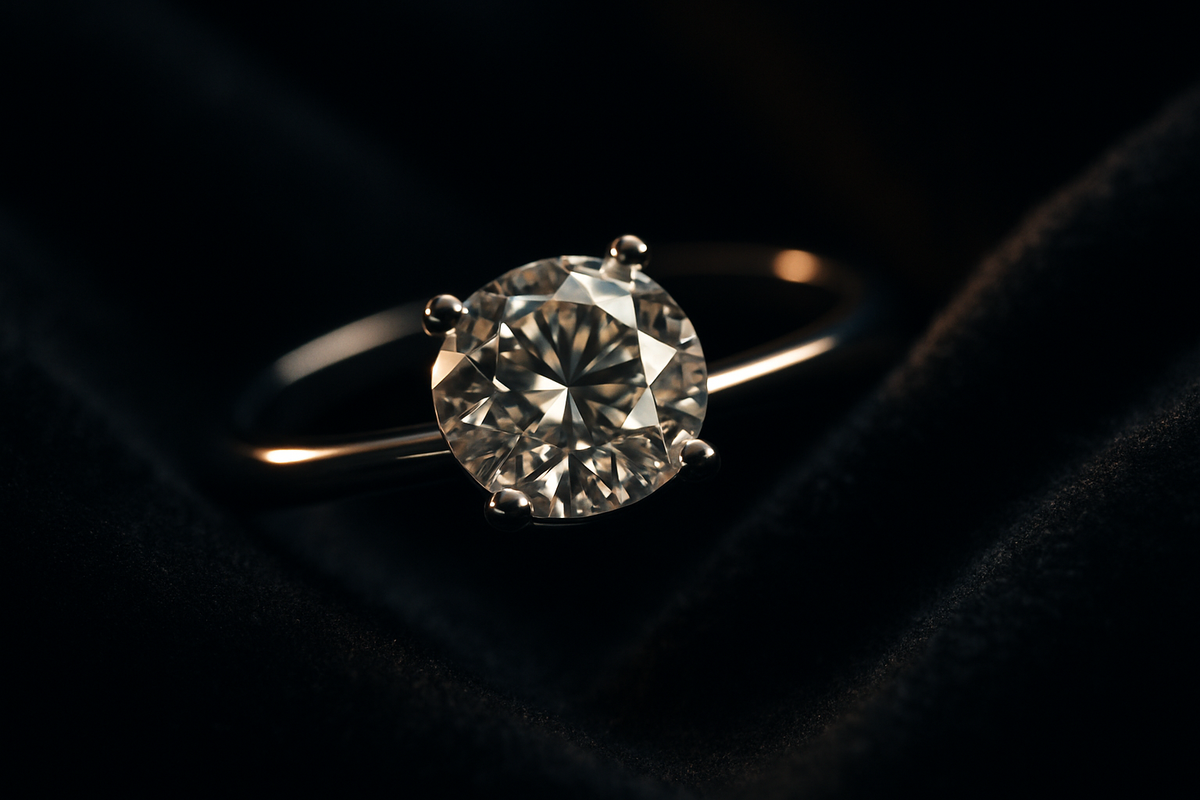
The engagement ring tradition traces back to 1477, when Archduke Maximilian of Austria gave Mary of Burgundy a diamond ring to seal their betrothal—one of the first documented diamond engagement rings in history. Today it remains the most emotionally loaded ring category, typically featuring a center stone (diamond, moissanite, or colored gemstone) set on a band.
Unlike engagement rings, wedding bands are traditionally simple, symbolizing an unbroken circle with no beginning or end—a concept honored in ancient Egyptian, Roman, and Celtic traditions alike. Egyptians believed the ring finger contained the "vena amoris," a vein running directly to the heart, a myth the Romans later adopted and romanticized in their own marriage customs.
Modern wedding bands range from plain gold or platinum circles to diamond-encrusted eternity styles. Metal choice matters here as much as design—couples frequently compare durability and tone before deciding, which is why understanding the difference between silver vs white gold or exploring what rose gold actually is can shape a lifelong decision.
Originating in the small Irish fishing village of Claddagh in the 17th century, this ring features two hands clasping a heart topped with a crown—representing love, friendship, and loyalty. How it's worn (which hand, which direction the heart faces) traditionally signals relationship status. For the full symbolism and history, see our deep dive into the Claddagh ring meaning.
Signet rings date back over 3,500 years to ancient Mesopotamia and Egypt, where flat-faced rings were carved with initials, family crests, or symbols and pressed into wax to seal official documents. Roman senators wore them as marks of status, European nobility used them to authenticate letters for centuries, and the Medici family famously incorporated their crest into signet designs that jewelers still reference today.
Modern signet rings are worn less for sealing wax and more as heirloom-style statement pieces, often engraved with initials, birthstones, or family emblems. They're traditionally worn on the pinky finger, a placement steeped in its own symbolism—explore more in our guide to pinky ring meaning.
Cocktail rings rose to fame during America's Prohibition era in the 1920s, when women wore oversized, colorful rings to illegal speakeasy parties as a symbol of rebellion and glamour. Characterized by large, eye-catching gemstones and dramatic settings, they're statement pieces meant to be noticed—not subtle, and not meant to be.
An eternity ring features diamonds or gemstones set continuously around the entire band, symbolizing never-ending love. Ancient Egyptians linked the unbroken circle to the ouroboros—a serpent eating its own tail—as a symbol of eternal renewal, while the modern eternity band gained mainstream popularity after a De Beers advertising campaign in the 1960s. These rings are often given to mark anniversaries or the birth of a child, distinct from wedding bands because of their all-around stone placement—a visual metaphor for love with no gaps.
Promise rings predate engagement rings in some ways, harkening back to "posy rings" of medieval Europe, which were engraved with romantic poetry and given as tokens of affection long before marriage was on the table. Puritan settlers in colonial America revived a similar idea with plain betrothal rings, since elaborate jewelry was considered vain. Today promise rings signal commitment, exclusivity, or a personal promise—not necessarily marriage—and are typically simpler and less expensive than engagement rings.
Birthstone rings incorporate a gemstone associated with the wearer's birth month, a tradition believed to originate from the biblical Breastplate of Aaron, which described twelve gemstones representing the tribes of Israel. Victorians popularized birthstone jewelry in the 1870s as sentimental, personalized gifts, and the modern birthstone list was formally standardized in 1912 by the National Association of Jewelers, replacing the inconsistent regional lists that had circulated for centuries.
| Ring Type | Primary Symbolism | Typical Finger | Origin Era |
|---|---|---|---|
| Engagement Ring | Commitment, betrothal | Left ring finger | 15th century Europe |
| Wedding Band | Unbroken union | Left ring finger | Ancient Egypt |
| Claddagh Ring | Love, loyalty, friendship | Either hand, varies by status | 17th century Ireland |
| Signet Ring | Identity, heritage | Pinky finger | Ancient Mesopotamia |
| Cocktail Ring | Boldness, self-expression | Any finger, often index | 1920s USA |
| Eternity Ring | Continuous love | Left ring finger (stacked) | Ancient/modern revival |
| Promise Ring | Personal commitment | Left ring finger (pre-engagement) | Medieval Europe |
| Birthstone Ring | Personal identity, sentimentality | Any finger | Victorian era (1870s) |
| Class Ring | Achievement, shared identity | Right ring finger, traditionally | 1835, West Point USA |
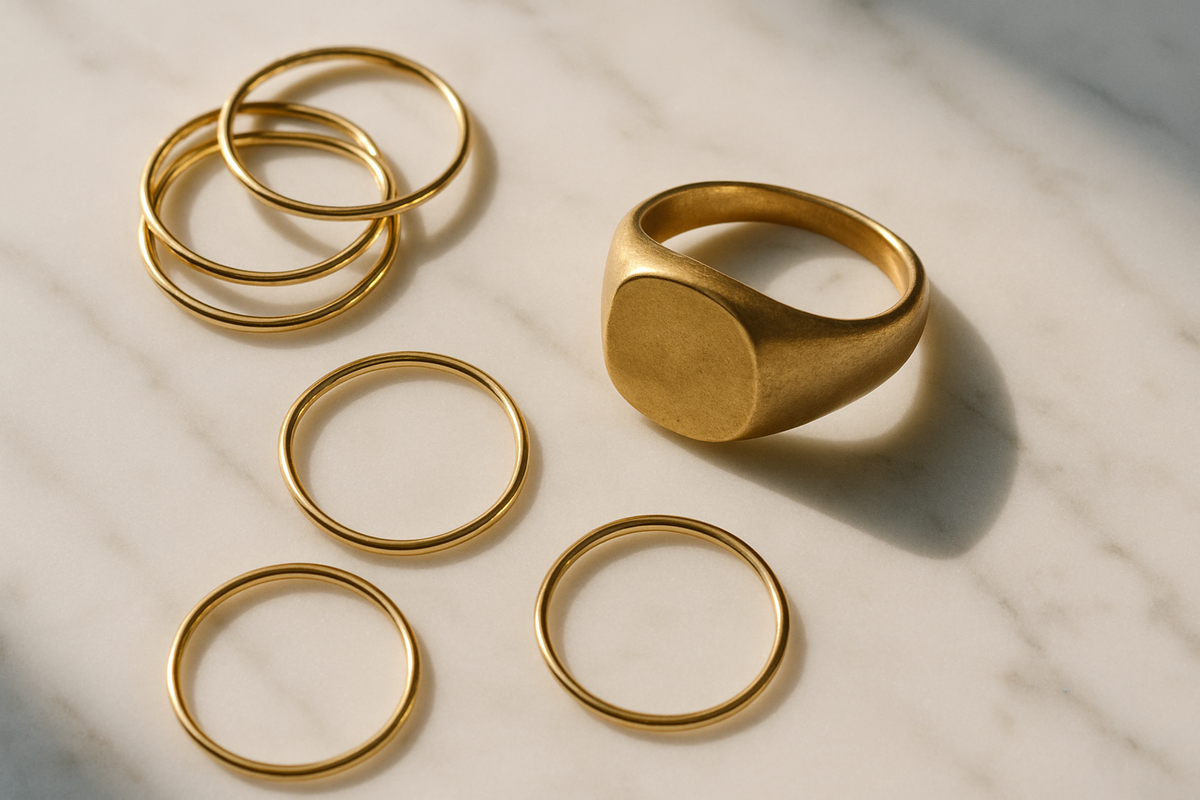
Class rings emerged in American military academies in the early 1800s, most notably at West Point in 1835, as a way to mark graduation and shared identity among classmates. They typically feature the school crest, graduation year, and a chosen gemstone, worn proudly for decades as a badge of accomplishment.
Stackable rings—thin bands worn in multiples on one finger—became a dominant trend in the 2010s as jewelry shifted from purely symbolic to deeply personal and layered. Midi rings, worn above the knuckle rather than at the base of the finger, trace loosely to South Asian and Middle Eastern jewelry traditions, including Kundan-style rings historically worn in Rajasthan, before entering Western fashion. Both styles let wearers mix metals, gemstones, and meanings freely rather than committing to a single symbolic piece.
Beyond ring type, where you wear a ring carries its own quiet language—rooted in astrology, mythology, and centuries of tradition across cultures from ancient Rome to modern China. The thumb has historically symbolized willpower, the index finger ambition and leadership, and the pinky finger independence or social status. For a full breakdown of what each placement communicates, read our guide to the meaning of rings on each finger.
Rings show up often enough in dreams that folklore and pop psychology have both weighed in. In classic Freudian interpretation, a ring in a dream typically symbolizes commitment, wholeness, or a binding agreement—an echo of its real-world role as an unbroken circle. Losing a ring in a dream is frequently read as anxiety about a relationship or a fear of losing control over a commitment, while receiving one often reflects feelings of validation or readiness for a new chapter.
Cultural folklore adds its own layers: in parts of West Africa, dreaming of a broken ring is sometimes interpreted as a warning to repair a strained relationship before it fractures further, while in traditional Chinese dream lore, a gold ring appearing in a dream is associated with incoming good fortune or wealth. None of this is scientific, but it shows how deeply rings are woven into our subconscious sense of connection.
Whatever style speaks to you, the best ring is the one that matches both the moment and the person wearing it—because a ring's meaning is ultimately written by the story you build around it.
The solitaire diamond ring remains the most popular engagement ring style worldwide, prized for its timeless simplicity and the way it puts full focus on a single center stone. Halo settings are a close second, especially for those wanting extra sparkle without a larger carat weight.
The Claddagh ring is one of the most recognized friendship symbols, though its meaning shifts depending on how it's worn and which hand it's placed on. Simple matching bands or personalized initial rings are also common modern friendship ring choices.
Traditionally, wedding rings are worn on the left ring finger in Western cultures due to the ancient belief in the "vena amoris," a vein once thought to connect directly to the heart. However, some cultures—including parts of Northern and Eastern Europe—wear wedding rings on the right hand instead.
Cocktail rings specifically refer to bold, large-stone rings popularized during the 1920s Prohibition era, often worn to social events. "Statement ring" is a broader modern term covering any oversized or eye-catching ring, including cocktail rings, that's meant to stand out.
Discover 17 hoodie styles—from pullovers to cropped and tech hoodies—plus fabric tips to pick the right one for every season and o…
EdP has 15-20% fragrance oil for richer, longer-lasting scent; EdT has 5-15% for a lighter, daytime feel. Compare concentration, l…
30 heel types explained: stiletto, kitten, block, wedge & more. See heel heights, styling tips, and how to choose the right pair f…