Jewelry & Fashion
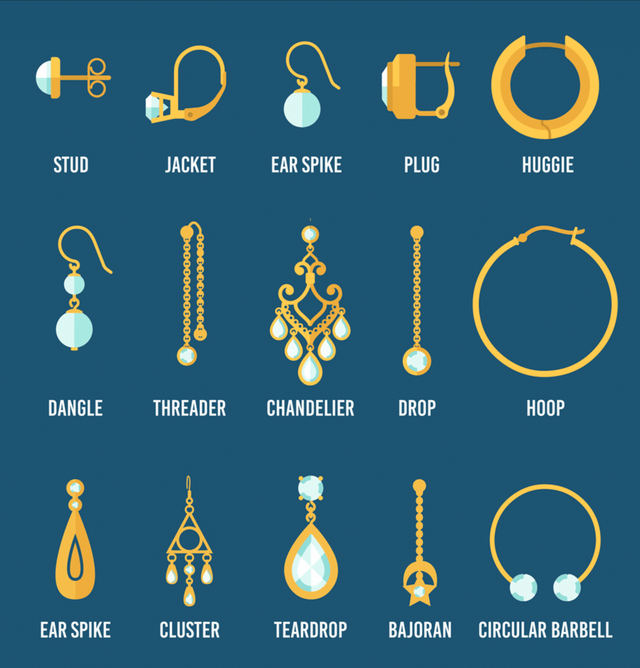
From Studs to Drops: Discover 40 Types of Earrings
Earrings are a kind of jewelry indispensable in any collection of similar objects and have been worn by both women and men for tho…
 KnowMastery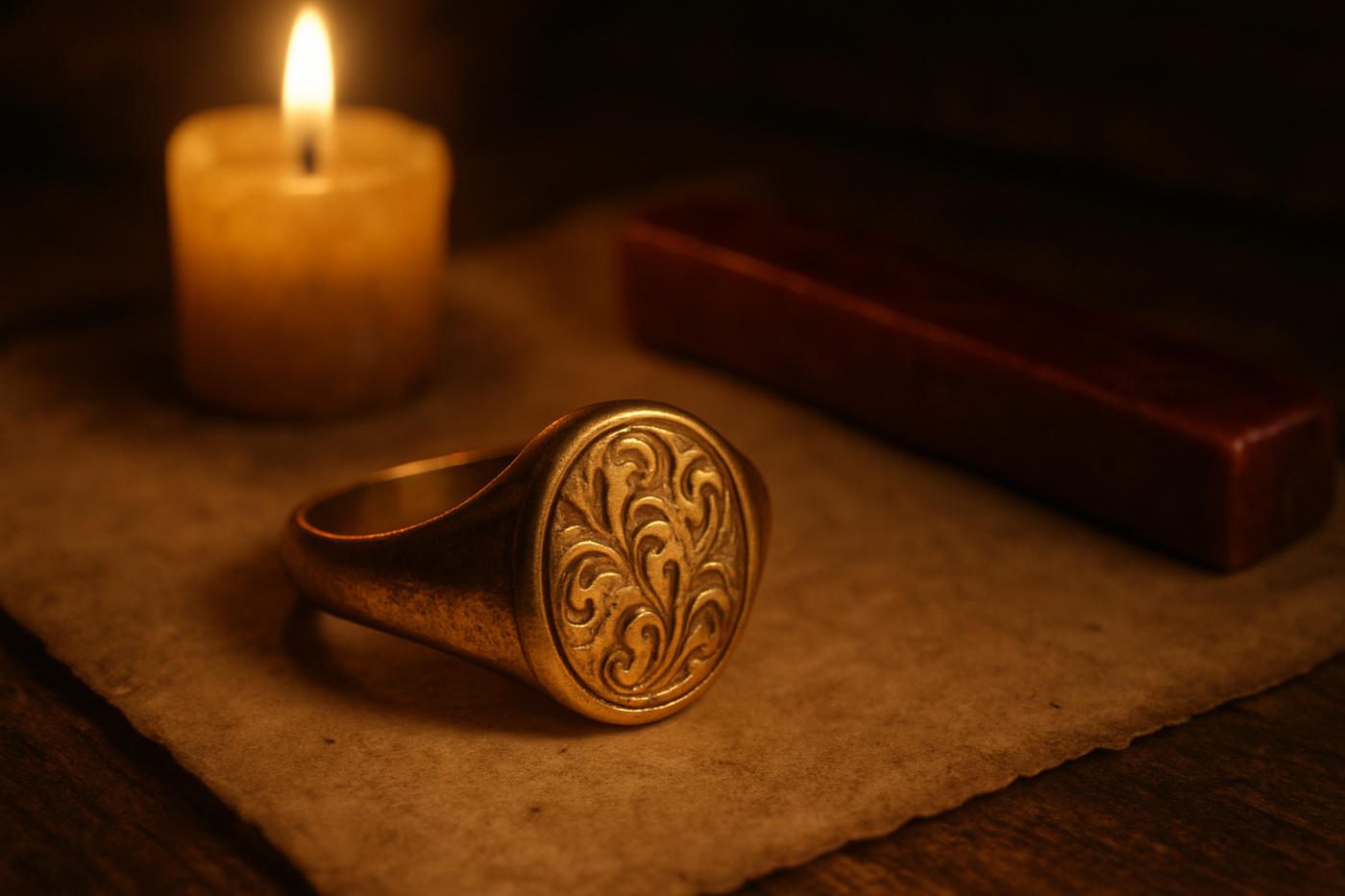
A signet ring is a ring with a flat engraved face, called a bezel, originally used to stamp a person's identity, authority, or ownership into wax seals. Signet ring meaning centers on four core ideas: identity, legacy, authority, and trust. For centuries it functioned as a legal signature before most people could read or write, and it still symbolizes heritage, belonging, and quiet status today, even though almost no one seals letters with wax anymore.
There is something oddly moving about a ring that once acted as a person's legal signature. Press it into hot wax and a document became binding. Lose it, and someone else could forge your name, your debts, even your death warrant. That kind of weight does not disappear just because we stopped sealing letters by hand.
Pick up an old signet ring, maybe one passed down from a grandfather or found in an antique shop, and you can feel that history sitting in the metal. The worn engraving, the slightly loose band, the initials of someone you never met. It is jewelry that carries a story whether or not you know what that story is.
A signet ring has a broad, usually flat top, called the bezel, engraved with a design in reverse (intaglio) so that when pressed into wax it leaves a correct, readable image. The design might be a family crest, a monogram, an animal, or a symbol tied to a guild, university, or club. Unlike most rings, the point was never really the metal or the stone. It was the mark it left behind.
Scarab beetle seals were mounted on swivel rings in ancient Egypt by around 1850 BCE, during the Middle Kingdom, which began roughly two centuries earlier. The scarab represented the sun god Khepri and rebirth, so wearing one was protective as well as practical. Pharaohs and officials used engraved scarabs to seal official documents and mark ownership of grain, cattle, and land.
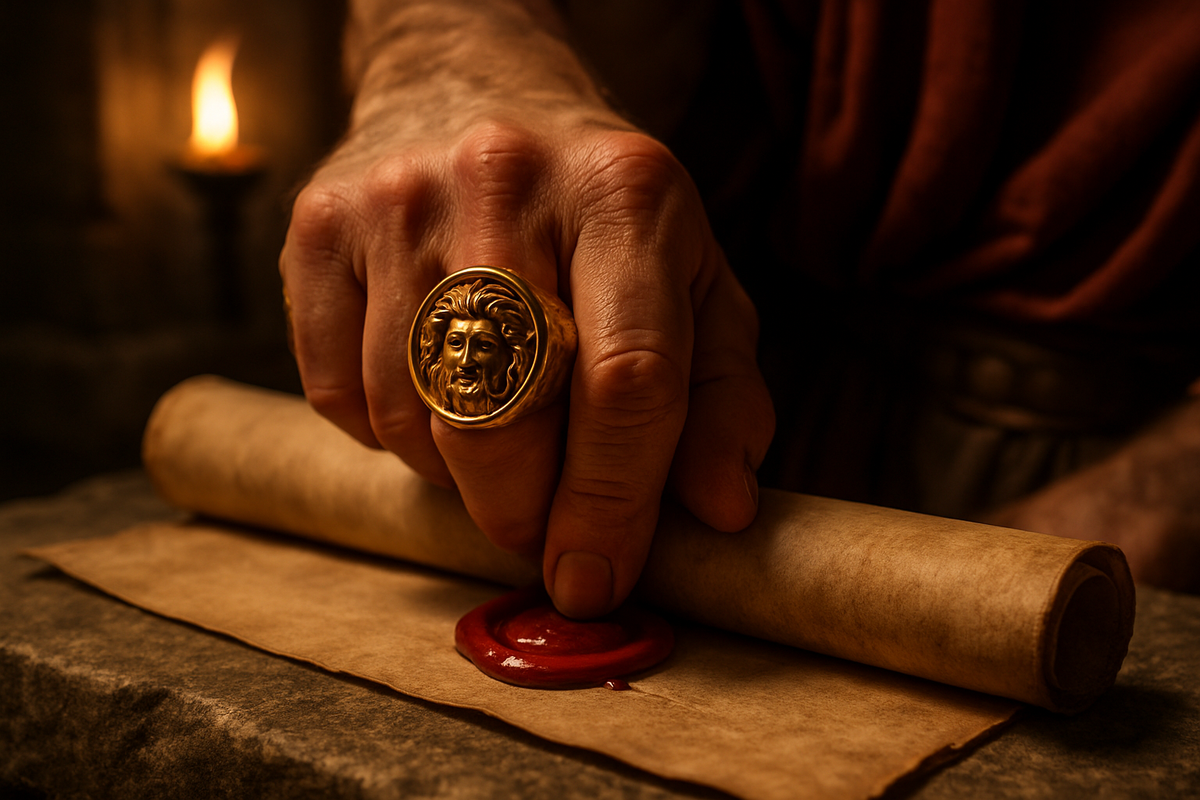
In Rome, signet rings marked social rank. In ancient Rome, gold signet rings were originally a privilege of high-ranking patricians, extended to senators and, by the 3rd century BCE, to the equestrian class, while iron rings remained the norm for ordinary citizens until the privilege spread further under the empire. A Roman man's ring, often engraved with a family emblem or the head of a god, sealed contracts and letters and confirmed his place in society. Julius Caesar promoted his family's claimed descent from Venus through coinage and a temple he vowed to the goddess, a lineage closely associated with the gens Julia, though no verified record describes a specific Venus-engraved signet ring of his.
By the medieval period, signet rings were tied closely to heraldry. Knights, nobles, and clergy used them to seal correspondence, land grants, and wills with a family coat of arms. In medieval tradition, a person's signet seal or ring was often ceremonially destroyed upon their death, by officials or successors rather than by the deceased's own instruction, to prevent it from being used to forge documents in their name. Popes wore the Ring of the Fisherman, a signet stamped on official papal documents and broken with a hammer upon the pope's death to prevent forged decrees during the transition to a new papacy.
Even without wax seals, the symbolism carried forward into modern jewelry. A signet ring today generally represents:
Beyond family and status, a signet ring can carry a more personal meaning. Because it was historically used to make something official and unchangeable, some wearers treat the ring as a symbol of commitment to their word, a physical reminder to act with integrity. Wearing one can feel like carrying a private oath: this is who I am, and I stand behind what I sign, say, or promise.
There is also a protective association inherited from Egyptian scarab rings and medieval seal rings, both once believed to guard against forgery and misfortune. Some modern wearers choose stones like onyx or bloodstone for their signet, drawing on old beliefs that these stones offer grounding or protection, the same logic people apply when picking gemstones for rings on specific fingers based on the qualities they hope to embody.
Tradition varies by country and family, but a few patterns are common. In Britain, signet rings are classically worn on the pinky finger of the left hand, a placement some trace back to the idea that the ring should sit away from the working right hand to keep the engraving pristine. In the United States, it is common to see them worn on the right hand instead, sometimes on the ring finger if that finger is not already reserved for a wedding band.
So what is the correct hand for a signet ring? There isn't a universal rule enforced anywhere today, but if you are following classic etiquette, the left pinky is the traditionally "correct" placement, while right-hand wear is the accepted modern alternative, especially in the United States.
| Hand / Finger | Common Tradition | Associated Meaning |
|---|---|---|
| Left pinky | British upper-class tradition | Family lineage, formal identity |
| Right pinky | American and casual wear | Personal style, subtle authority |
| Right ring finger | When not reserved for marriage | Confidence, status |
| Index finger | Historically used by clergy and officials | Authority, leadership |
If you already wear jewelry with intentional finger placement, it helps to read up on pinky ring meaning before deciding where a signet fits among your existing rings.
Dreaming of a signet ring often points to questions about identity, reputation, or inherited responsibility. A few common interpretations:
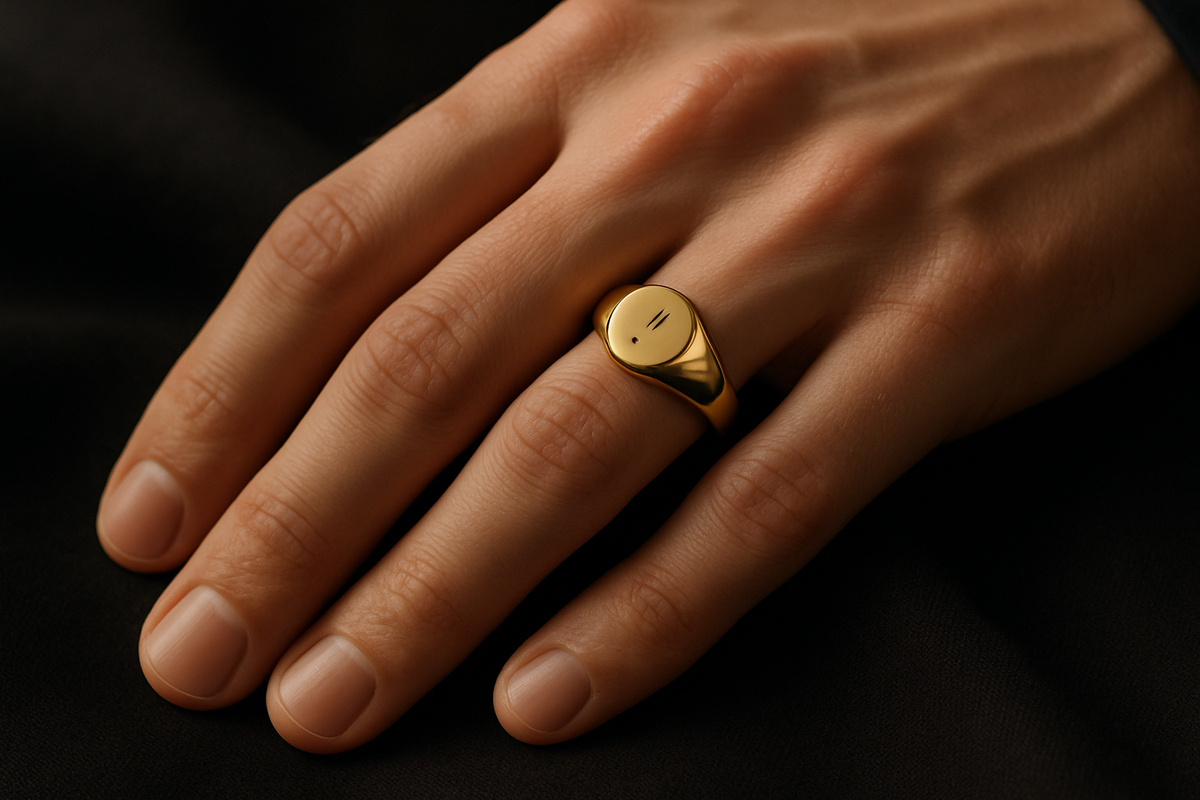
Modern signet rings range from mass-produced monogram styles to custom-engraved heirlooms. A few practical points are worth thinking through before you buy one.
Gold remains the traditional choice, but sterling silver and platinum are common now too. If you are torn between finishes, comparing silver vs white gold can help you decide based on durability and how the engraving will read as it wears over time. Warmer tones like rose gold have also become popular for modern signets, and it helps to know exactly what rose gold actually is before choosing it, since the color comes from a copper alloy rather than a separate metal.
You do not need an actual family crest. Common modern choices include initials, a meaningful symbol, a date, or a small motif tied to a personal interest, like a mountain range, a boat, or a favorite constellation. Some people leave the bezel plain for a minimalist look and wear the ring purely as a signature style rather than a functional seal.
Signet rings sit heavier and wider across the finger than a typical band, so proper sizing matters more than it does with a plain ring. A signet that is even slightly too tight will press uncomfortably into the side of the neighboring finger, and one that is too loose will spin around so the engraving faces the wrong way. Most jewelers recommend getting sized in person, later in the day when your fingers have naturally swelled a little, rather than relying on an online ring size chart alone. If you are building out a whole stack of jewelry and want sizing guidance beyond rings, the same swelling-and-measuring logic applies when using a bracelet size chart or a bangle size chart to get a comfortable fit.
Signet rings are often confused with other symbolic rings, but their history and purpose differ. The Claddagh ring, for example, comes from Irish tradition and centers on love, loyalty, and friendship rather than identity or seals. If you want a full comparison, the Claddagh ring meaning guide covers its heart, hands, and crown symbolism in detail. Choosing between the two often comes down to whether you want a ring that says something about a relationship or one that says something about who you are and where you come from.
If you want your signet ring to carry real meaning rather than just style, take the engraving choice seriously. Some people work with a jeweler to design a symbol that reflects their own values instead of a borrowed family crest they have no real connection to. Others deliberately choose to wear it on the same finger a parent or grandparent did, turning the ring into a quiet, physical link across generations. However you approach it, the ring works best as a personal marker rather than a costume piece, so it is worth spending time on the design before committing to metal.
Signet rings also sit within a much larger world of jewelry symbolism and hardware details worth understanding on their own terms. If you are curious how small design choices carry meaning or function elsewhere in jewelry, something like types of earring backs shows how even a tiny, functional piece of hardware can affect comfort, security, and style in ways that echo the same attention to detail a good signet deserves.
For men, a signet ring traditionally signals family lineage, personal status, or membership in a group such as a university or club. Today it is also worn simply as a style statement tied to classic, understated jewelry rather than any formal claim.
There is no single correct finger, though British tradition favors the left pinky and American style often leans toward the right hand. The most important thing is comfort and making sure the engraved face stays visible and undamaged.
Yes, signet rings are not limited to men and have become increasingly popular among women as both heirloom pieces and personalized jewelry. Many are sized smaller and designed with slimmer bands while keeping the traditional flat engraved bezel.
No, a family crest is optional and mostly a holdover from noble European families with documented heraldry. Most people today choose initials, a personal symbol, or leave the bezel plain, which keeps the tradition alive without requiring any formal claim to a coat of arms.
No, they represent entirely different ideas. A signet ring is about identity, family legacy, and authority, tracing back to wax seals and heraldry, while a purity ring or abstinence ring is a modern symbol worn as a personal pledge, usually related to a commitment around sex or relationships. The two styles can look similar as simple engraved or plain bands, but their meaning and origin have nothing in common.
Earrings are a kind of jewelry indispensable in any collection of similar objects and have been worn by both women and men for tho…

Discover 50 braid styles from classic to exotic — origins, cultural meaning, difficulty level, and which braid suits your hair, in…
Necklaces have been an integral part of human adornment for the past many centuries that span different time, geography, and cultu…