Animal Symbolism
Rabbit Symbolism: Spiritual Meaning, Myths & Totem Guide
Discover what rabbit symbolism really means: fertility, luck, intuition, and folklore from Native American, Celtic, Chinese, and A…
 KnowMastery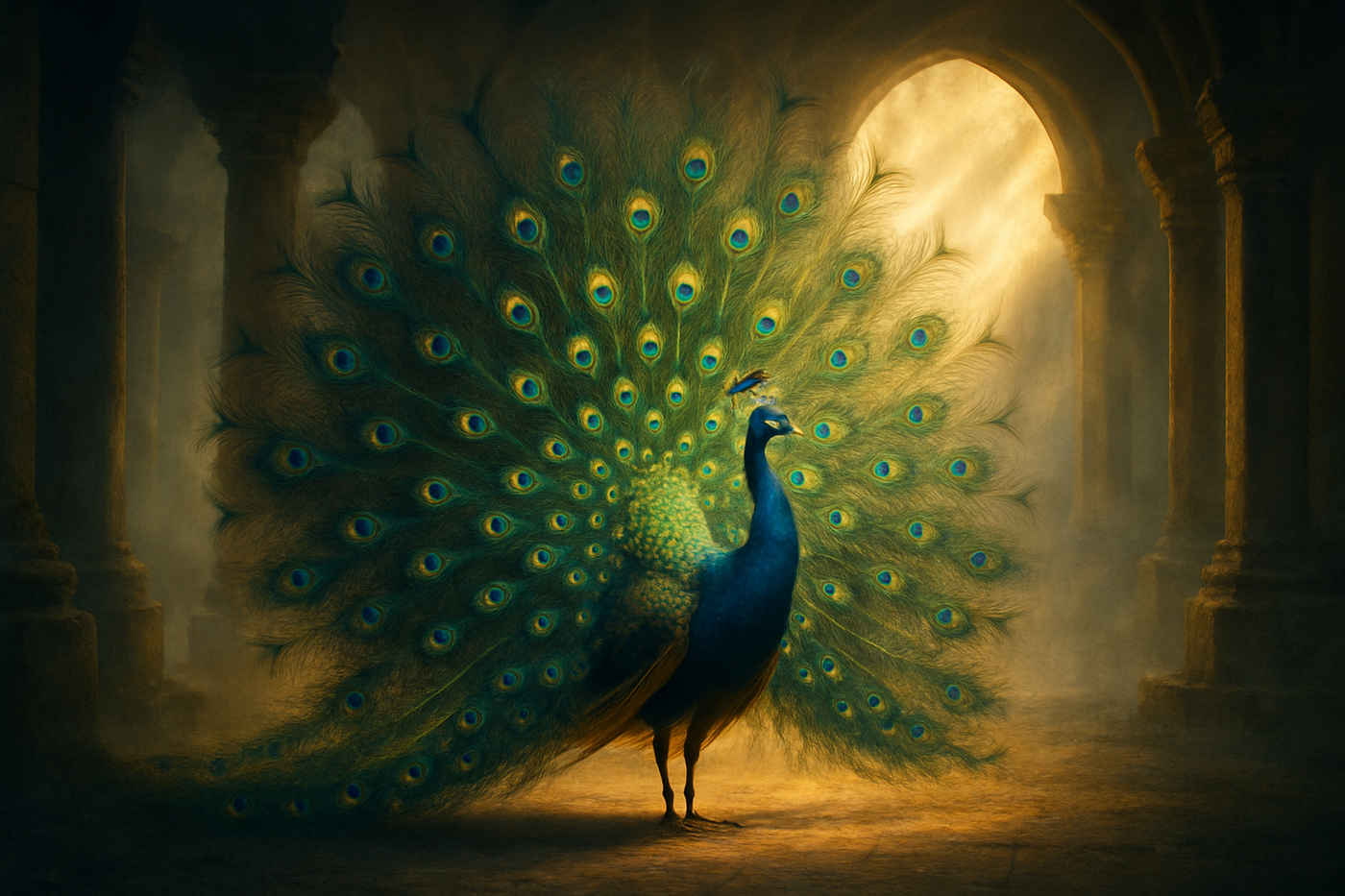
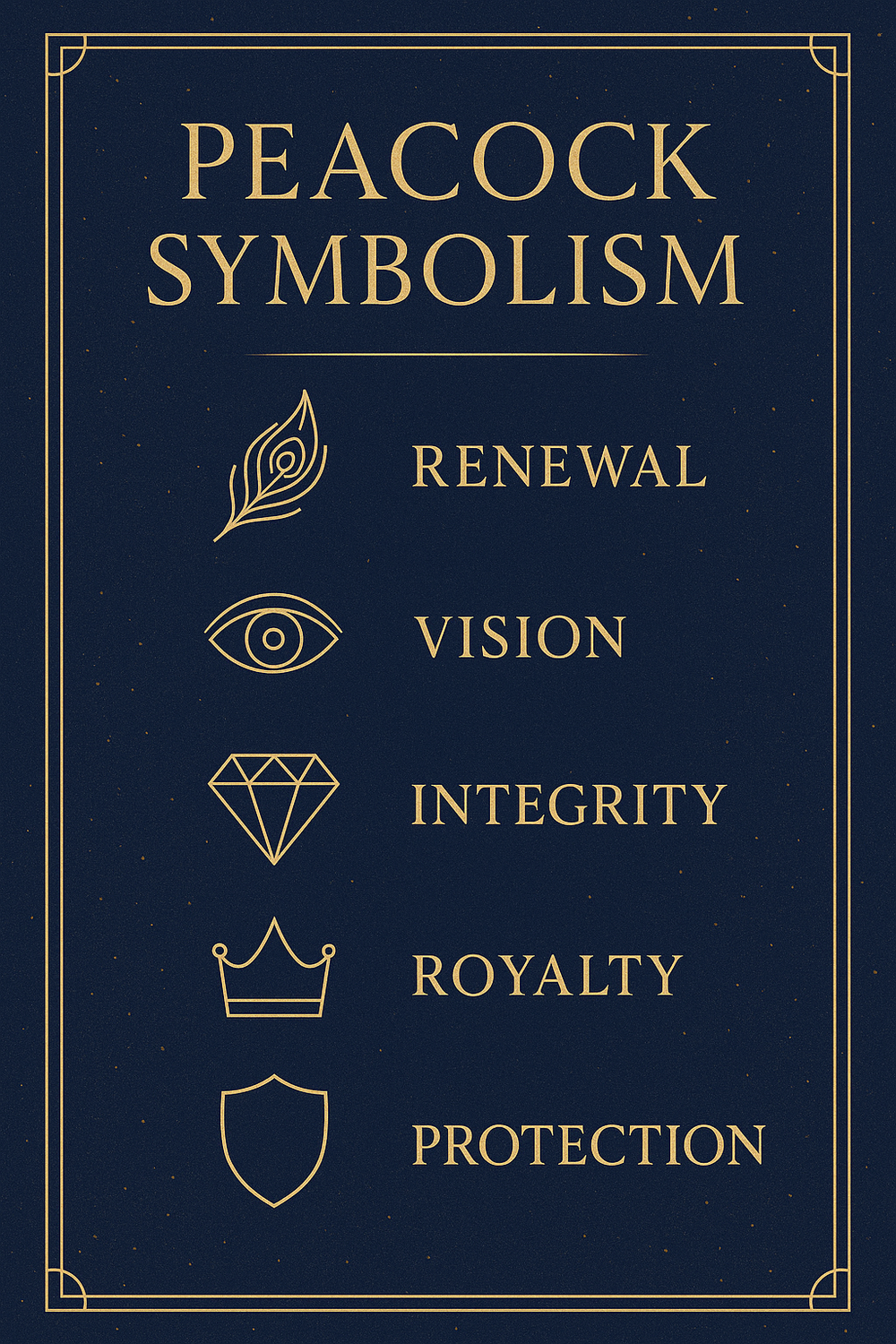
A peacock symbolizes renewal, integrity, immortality, and divine vision. Its shimmering, eye-marked feathers represent spiritual awakening, protection from harm, and the ability to see beyond illusion. Across Hindu, Christian, Chinese, and Persian traditions, the peacock bridges the earthly and sacred—turning ordinary feathers into a message about beauty forged through struggle and transformation that refuses to hide.
There is a reason people gasp the first time they see a peacock unfurl its train in the sun. It feels less like watching a bird and more like witnessing a small miracle—color exploding outward, eyes blinking open one by one across a fan of emerald and gold. Something in us recognizes that this is not just display. It is a language.
Maybe you saw one in a dream, or a stray feather appeared where you least expected it—on a doorstep, in a secondhand book, at a moment when you were quietly asking the universe for a sign. Whatever brought you here, the peacock rarely shows up by accident. It arrives when we need to remember our own radiance.
At its core, the peacock's symbolism revolves around transformation through visibility. Unlike creatures that hide to survive, the peacock survives by being seen—and spiritually, this teaches a powerful lesson: that vulnerability, when owned fully, becomes power. Its feathers, shed and regrown each year, echo cycles of death and rebirth, making the peacock a long-standing emblem of immortality and resurrection in numerous belief systems. This paradox—strength expressed through radiant softness—is why the peacock appears in royal iconography, religious art, and folklore not as a symbol of arrogance, but of earned confidence.
A black peacock—technically a melanistic peafowl whose feathers shimmer in deep charcoal, emerald, and midnight blue rather than classic turquoise—is exceptionally rare, and that rarity is exactly why it carries such weighted symbolism. Where a traditional peacock speaks of open, radiant display, the black peacock speaks in a lower register: mystery, the unseen, and the parts of the self that transform in darkness before they're ready for light.
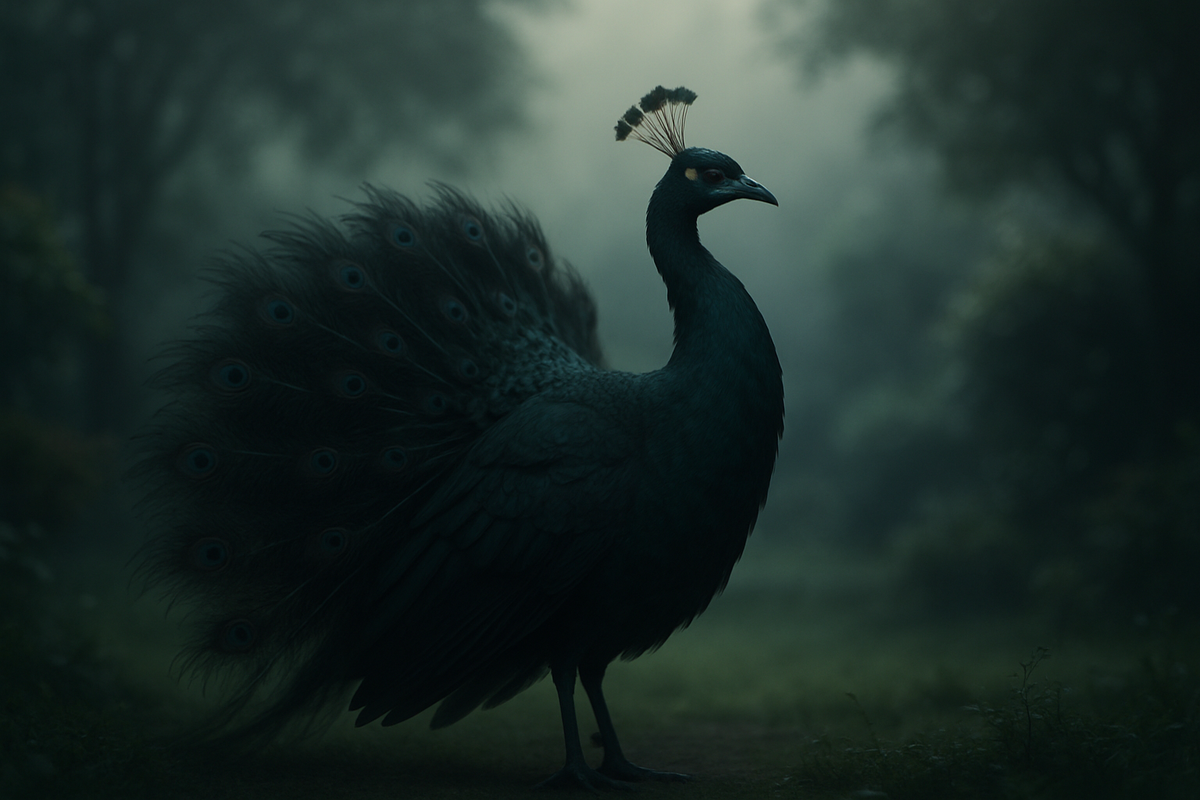
Spiritually, seeing or dreaming of a black peacock is often interpreted as an invitation into shadow work—the process of facing suppressed emotions, hidden talents, or unresolved grief rather than performing confidence you don't yet feel. Its dark iridescence suggests that not all transformation needs an audience; some of the most important growth happens quietly, out of sight, before it's ever displayed. Rather than a warning, most spiritual traditions read the black peacock as a sign that you're being asked to trust a process that doesn't look finished yet—to have faith in the eventual unfurling.
In Hindu mythology, the peacock (mayura) serves as the vahana, or divine vehicle, of Lord Kartikeya (also called Murugan in South India), the god of war and protector against evil. The peacock's ability to kill venomous snakes is treated as a metaphor for transmuting poison—ego, fear, ignorance—into wisdom and beauty. The goddess Saraswati is also occasionally depicted with a peacock, connecting the bird to knowledge, art, and eloquent speech. Even today, some Indian households tuck a peacock feather inside a book or musical instrument as a blessing for creativity and protection.
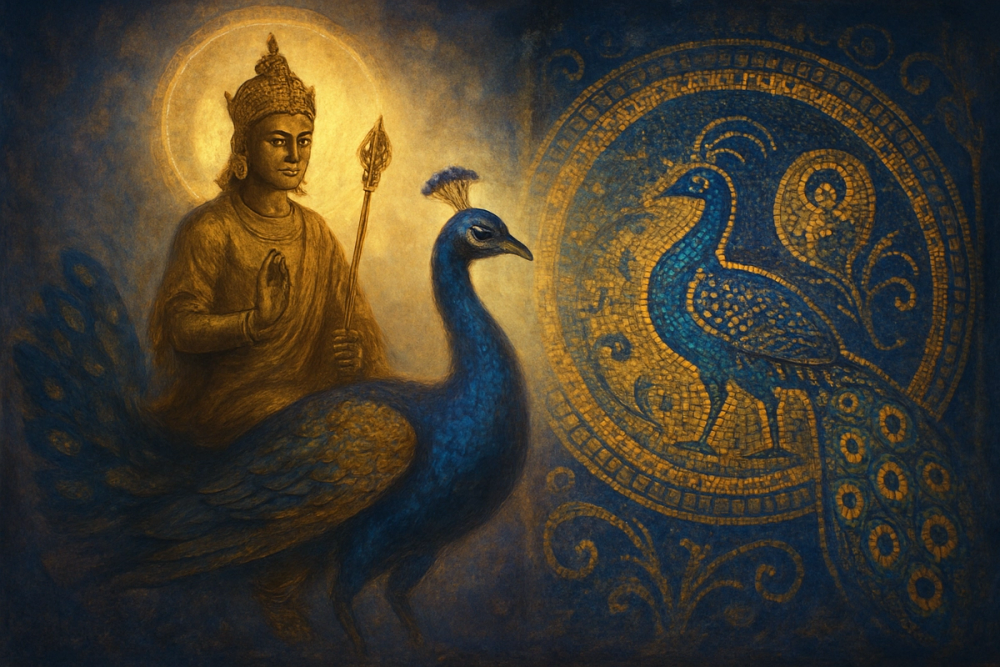
The Greeks associated the peacock with Hera, queen of the gods, whose jealousy and watchfulness were symbolized by the many eyes on the peacock's tail—said to have come from the hundred-eyed giant Argus after Hera placed his eyes there in tribute, a story preserved in Ovid's Metamorphoses. In Rome, the peacock became a symbol of the deified empress; its image appeared on coins minted for the consecratio, the formal ceremony that declared a ruler's soul had ascended to immortality after death.
Early Christians adopted the peacock as an emblem of the resurrection and eternal life, largely because of the mistaken but symbolically potent belief—recorded by Saint Augustine in City of God—that its flesh never rots. Peacock imagery appears in Byzantine mosaics and Renaissance paintings, often flanking depictions of Christ or paradise, its "hundred eyes" interpreted as the all-seeing nature of God and the Church. The motif also survives on early Christian sarcophagi, where carved peacocks flank a chalice or the Tree of Life.
In Chinese culture, the peacock is tied to Guanyin, the bodhisattva of compassion, and represents dignity, rank, and good fortune—during the Qing dynasty, peacock feathers were formally awarded to honored officials as a mark of status. In Persian and Mughal art, the legendary "Peacock Throne" (Takht-e Tavus), commissioned for emperor Shah Jahan, became a symbol of imperial glory, while some Sufi mystical traditions describe the peacock as the soul's original splendor before its descent into the material world. In Tibetan Buddhism, peacock feathers are linked to the buddha Amitayus and used in purification rituals, said to neutralize poison much as the peacock does in Hindu lore.
Encountering a peacock unexpectedly—whether in person, in a photo, or through a stray feather—is often read as an invitation to step more fully into your own light. Many people notice these encounters during a season of self-doubt, right before a public milestone, or during grief, when they most need reassurance that beauty can return. Spiritually, it can suggest:
Much like how a hummingbird appearing can signal joy returning to your life, a peacock sighting often marks a threshold moment—an emotional pivot from hiding to shining.
In matters of the heart, the peacock is closely associated with courtship, devotion, and the confidence to be fully seen by a partner. A male peacock's elaborate tail display exists almost entirely for one purpose—to attract a mate—which is why peacock symbolism in love so often centers on vulnerability as an act of trust rather than vanity. In Indian wedding traditions, peacock motifs frequently appear in bridal textiles and décor, symbolizing a union blessed with beauty, loyalty, and lasting joy.
For those exploring twin flame connections, the peacock is sometimes read as a mirror symbol: its own reflection-like eye patterns are said to represent seeing yourself fully reflected in another soul. A peacock appearing during a twin flame journey often signals a season of "showing up" authentically in the relationship—dropping the performance of who you think you should be and letting your partner witness who you actually are. Two peacocks encountered together, in particular, are frequently interpreted as a sign of balanced partnership, where both people are equally willing to be visible.
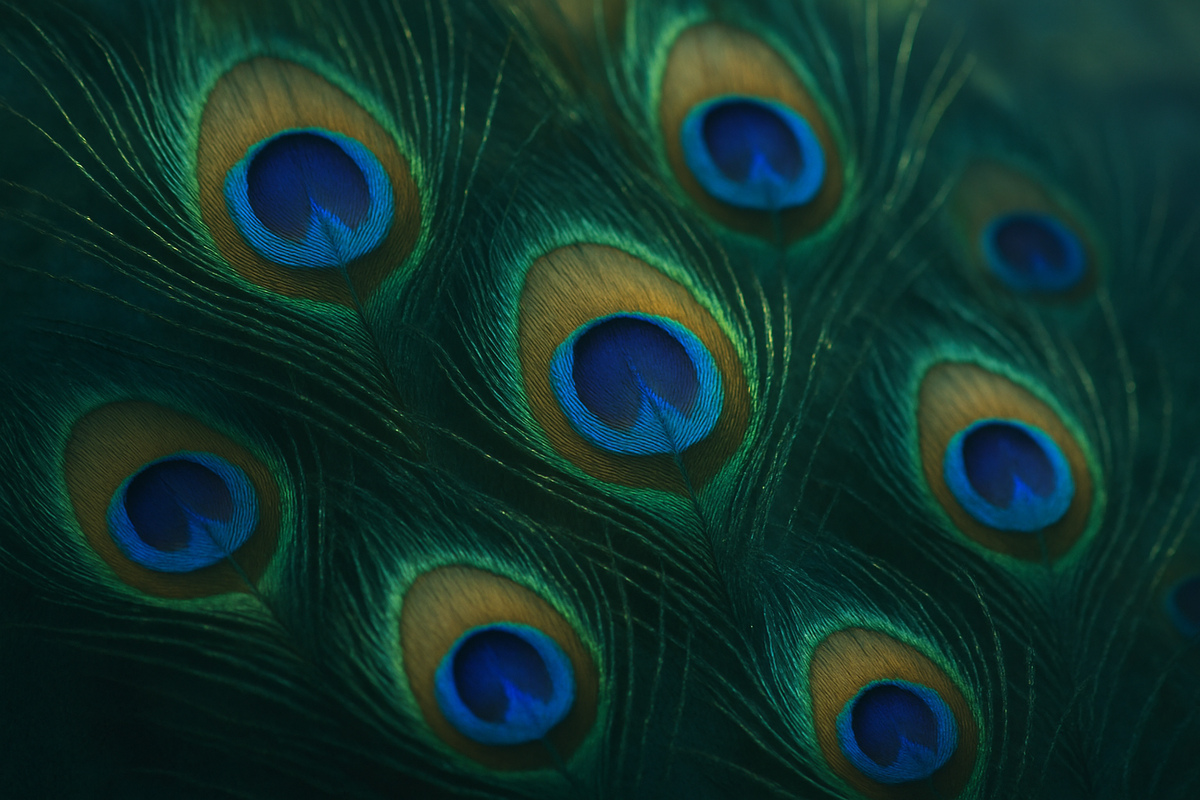
A single peacock feather carries its own concentrated symbolism. The "eye" at its center is considered a mark of protection, awareness, and inner sight in many folk traditions, from South Asia to the Mediterranean. Finding one is frequently interpreted as reassurance that you are being watched over, or a nudge to trust your intuition more. Some practitioners cleanse a found feather with sage smoke or moonlight before placing it on an altar, believing this clears any residual energy from its journey to you.
| Feather Color | Symbolic Meaning |
|---|---|
| Emerald Green | Growth, abundance, heart-centered healing |
| Sapphire Blue | Communication, truth, spiritual insight |
| Gold/Bronze | Confidence, prosperity, divine favor |
| White (rare peacock) | Purity, transcendence, angelic presence |
Dreaming of a peacock often reflects your relationship with self-image, confidence, and how you're being perceived by others. Context matters greatly:
Just as owl symbolism in dreams often points to hidden wisdom emerging, peacock dreams tend to surface right before a personal "unveiling"—a promotion, creative debut, or emotional breakthrough.
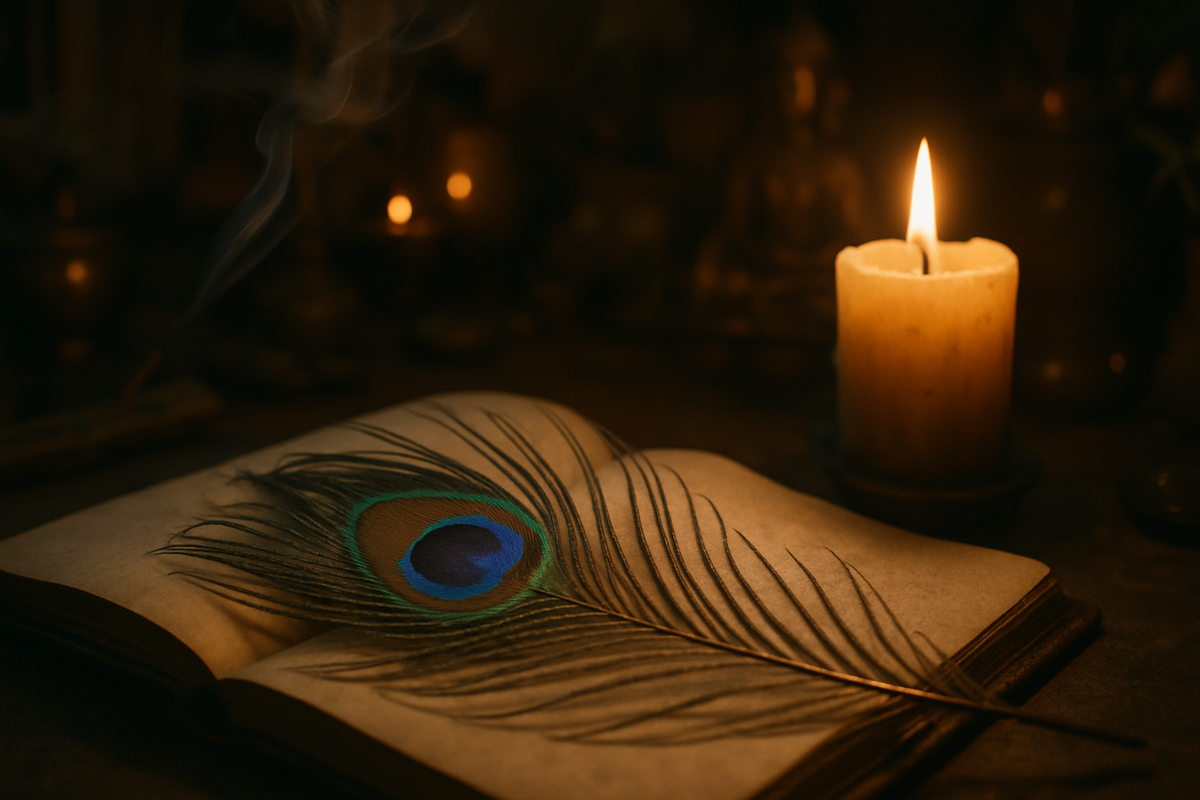
Those who resonate with the peacock as a spirit animal are often naturally magnetic, expressive, and unafraid to stand out—though they may wrestle with balancing confidence and humility. As a totem, the peacock encourages:
People with a peacock totem often share traits with those drawn to the quiet elegance of the swan, yet where the swan glides in stillness, the peacock insists on being witnessed—both are valid paths to grace.
As a tattoo, the peacock is one of the most popular symbols for confidence, rebirth, and protection—which is why it appears so often on shoulders, backs, and forearms as a large, colorful piece rather than a small minimalist design. People choose peacock tattoos to mark a period of personal transformation, to commemorate reclaiming their voice after a difficult chapter, or simply to carry a permanent reminder that visibility isn't something to fear.
If the peacock has entered your awareness, consider these practical steps to integrate its meaning:
It helps to see how the peacock's meaning compares with other symbolic birds, since each teaches a different relationship to power and visibility.
| Bird | Core Symbolic Focus |
|---|---|
| Peacock | Visible transformation, radiant self-expression |
| Owl | Hidden wisdom, intuition in darkness |
| Hawk | Sharp focus, decisive spiritual messages |
| Swan | Graceful transformation, love, inner purity |
| Crow | Omens, transitions, hidden warnings |
Where a hawk sighting often signals urgent clarity or a call to action, the peacock's message is slower and more ceremonial—an invitation to bloom rather than strike.
A peacock crossing your path is generally seen as a sign to embrace self-expression and trust that a period of renewal is beginning. It often suggests you're being protected while you step into greater visibility, whether in relationships, creative work, or spiritual growth. Many people report this encounter arriving right before a decision that requires more courage than usual.
This belief is largely a Western superstition, possibly linked to the "evil eye" pattern on the feather, and isn't universal. In Hindu, Chinese, and many folk traditions, peacock feathers are considered auspicious, protective, and a symbol of good fortune rather than misfortune. If the superstition worries you, cleansing the feather with smoke or sunlight before displaying it is a common way to feel at ease.
While peacocks appear only briefly in biblical texts (notably in 1 Kings, among King Solomon's imported treasures), early Christian art embraced the bird as a symbol of resurrection and eternal life. This connection grew from the ancient belief, echoed by Saint Augustine, that peacock flesh did not decay, making it a fitting emblem of the soul's immortality. That imagery still appears in Byzantine mosaics and church carvings today.
A white peacock in a dream typically points to rare spiritual purity, a significant life transition, or a message that something sacred and unique is unfolding in your life. It's often interpreted more intensely than a standard peacock dream, signaling a pivotal rather than gradual shift. Pay attention to how the peacock behaves in the dream, since a calm white peacock and a fleeing one carry very different emotional messages.
Seeing two peacocks together is generally read as a sign of balance, partnership, and mutual admiration—especially in matters of love or close friendship. It can suggest that a relationship in your life is entering a season where both people are equally willing to be seen and celebrated. Some traditions also interpret paired peacocks as a nudge to notice where you're comparing yourself to someone else instead of appreciating shared beauty.
A peacock feather tattoo typically symbolizes protection, intuition, and inner vision, drawing on the same "watchful eye" folklore associated with loose feathers. It's a popular choice for people who want a subtle reminder to trust their instincts or feel spiritually guarded without committing to a large, full-peacock design. The specific feather color chosen often layers in additional meaning, such as green for growth or blue for truth.
No—despite its dramatic coloring, a black peacock is not considered a bad omen in most spiritual traditions. Its rarity and dark iridescence are more commonly interpreted as symbols of mystery, hidden transformation, and shadow work rather than misfortune. If one appears in your life or dreams, it's usually read as an invitation to trust a quieter, less visible stage of personal growth.
Discover what rabbit symbolism really means: fertility, luck, intuition, and folklore from Native American, Celtic, Chinese, and A…
Discover what the seahorse truly symbolizes - patience, protection, fatherhood, and inner strength - across myth, dreams, and mode…
Ravens and crows look alike but mean different things spiritually. Here's how their symbolism splits across death, magic, and anci…