
Jewelry & Fashion
What is Electroplating
Introduction to Electroplating: The Historical Perspective Although the electroplating process looks flashy and high-tech, electro…
 KnowMastery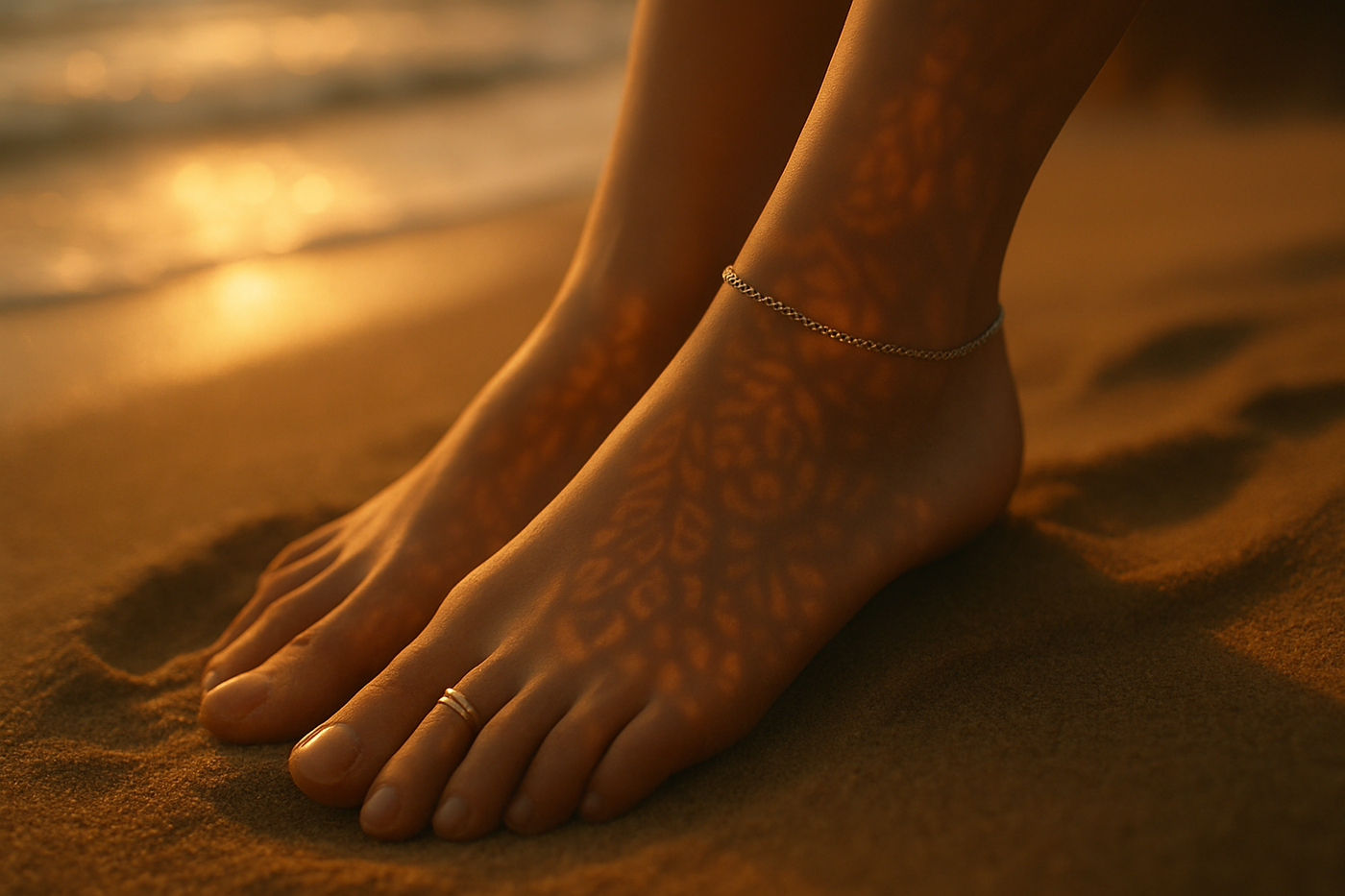
A toe ring is a small, usually adjustable band worn on a toe—most often the second toe—that traditionally signals marriage, fertility, or social status, while today it's just as commonly worn as a style statement. In Indian bridal tradition, Ayurvedic medicine, and ancient Egyptian burial customs, the placement and metal of a toe ring carried specific meaning, from marking a woman as married to protecting her in the afterlife. Below, we break down exactly what a toe ring means depending on culture, placement, and context—plus how to choose and wear one today.
Picture a bride in Tamil Nadu, her feet freshly hennaed, as an aunt slides a pair of silver bands onto her second toes—a quiet ritual that marks her passage into married life more permanently than any spoken vow. Thousands of miles away and thousands of years earlier, an Egyptian noblewoman of the New Kingdom was buried with gold toe rings meant to signal her wealth in the afterlife.
Between those two images lies a surprisingly rich history. A piece of jewelry so small has carried the weight of marriage contracts, medical theory, spiritual belief, and rebellious self-expression—sometimes all at once. Understanding where it comes from changes how it feels to wear one.
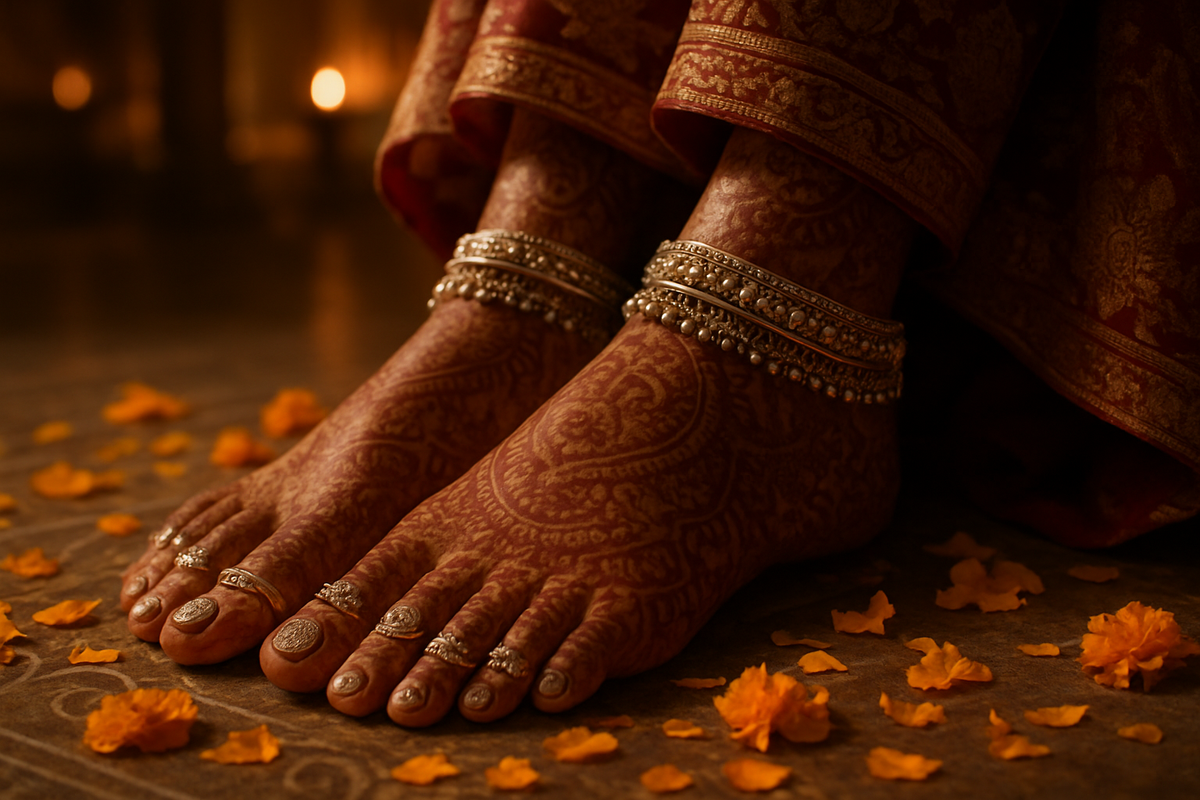
The toe ring (bichiya) is commonly counted among the adornments of the traditional solah shringar, though the exact sixteen items included in that list can vary by region and text. Unlike the mangalsutra necklace, which can be tucked under clothing, the bichiya is worn openly on both second toes, publicly signaling a woman's married status to the community. Tradition dictates that it be made of silver rather than gold, because gold is considered too pure and precious to be placed below the waist or in contact with the ground. In many families, the ring is fitted by the groom himself or a close female relative during the wedding ceremony, and it stays on for the rest of the marriage.
Archaeologists have found gold finger and toe stalls in New Kingdom Egyptian tombs, including those of Tutankhamun and the three foreign wives of Thutmose III, though these were funerary sheaths meant to protect the deceased's digits rather than rings worn in daily life, while separate traditions hold that Egyptian women wore toe rings and anklets as ordinary jewelry as far back as predynastic times. Wealthy Egyptians, including members of royal households, wore toe rings as an extension of their elaborate foot and ankle jewelry, using precious metal to broadcast status even in death. Because Egyptian burial practice emphasized carrying earthly wealth into the next life, toe rings buried with the deceased were believed to protect and adorn the body eternally, much like the gold sandals and amulets found in the same tombs.
Among some Berber communities, silver jewelry more broadly — including anklets and other pieces — is said to have served as a woman's dowry and portable store of wealth. In parts of the Middle East, including Bedouin communities, toe and ankle jewelry historically doubled as a woman's financial security, a form of wearable savings that remained legally hers even within arranged marriages. Heavier, chunkier silver designs in these regions often signaled greater family wealth, functioning almost like a visible bank account.
Beyond social signaling, toe rings carry layered spiritual meaning rooted in body-energy systems from several traditions.
Which toe a ring sits on can shift its symbolic weight, much like a pinky ring communicates something different than a ring on the index finger.
| Toe | Traditional / Symbolic Meaning |
|---|---|
| Second toe (both feet) | Marriage, fertility, Ayurvedic reproductive balance |
| Big toe | Leadership, confidence, personal power |
| Middle toe | Balance and emotional stability |
| Pinky toe | Playfulness, individuality, casual self-expression |
| Right foot vs. left foot | Right often linked to logic/action; left to intuition/emotion in folk symbolism |
In dream symbolism, a toe ring frequently represents grounded confidence and quiet independence—feet in dreams often symbolize one's footing in life, so adorning them suggests feeling secure in your path. Dreaming of receiving a toe ring can point to a new commitment, whether romantic or personal, entering your life, similar to dreams of a proposal or engagement. A gold toe ring in a dream is sometimes read as a signal of coming prosperity, while a silver one leans toward emotional or spiritual balance. Conversely, dreaming that a toe ring breaks or slips off is often interpreted as anxiety about instability, a shaken sense of identity, or fear of losing independence within a relationship.
Outside of ritual contexts, toe rings picked up new cultural associations in the West. During the 1960s and 70s counterculture movement, bare feet adorned with silver toe rings became shorthand for bohemian freedom, beach culture, and rejection of mainstream conformity, worn alongside bell-bottoms and layered anklets at outdoor festivals. By the 1990s, toe rings had crossed into the mainstream as a summer staple, often paired with sandals, flip-flops, or bare feet at the beach and became one of the decade's defining low-cost accessory trends.
Today the meaning is largely personal rather than prescribed. A toe ring might simply express confidence, sensuality, or a love of understated adornment—similar to how choosing between rose gold and other metals is now about aesthetic preference rather than strict tradition.
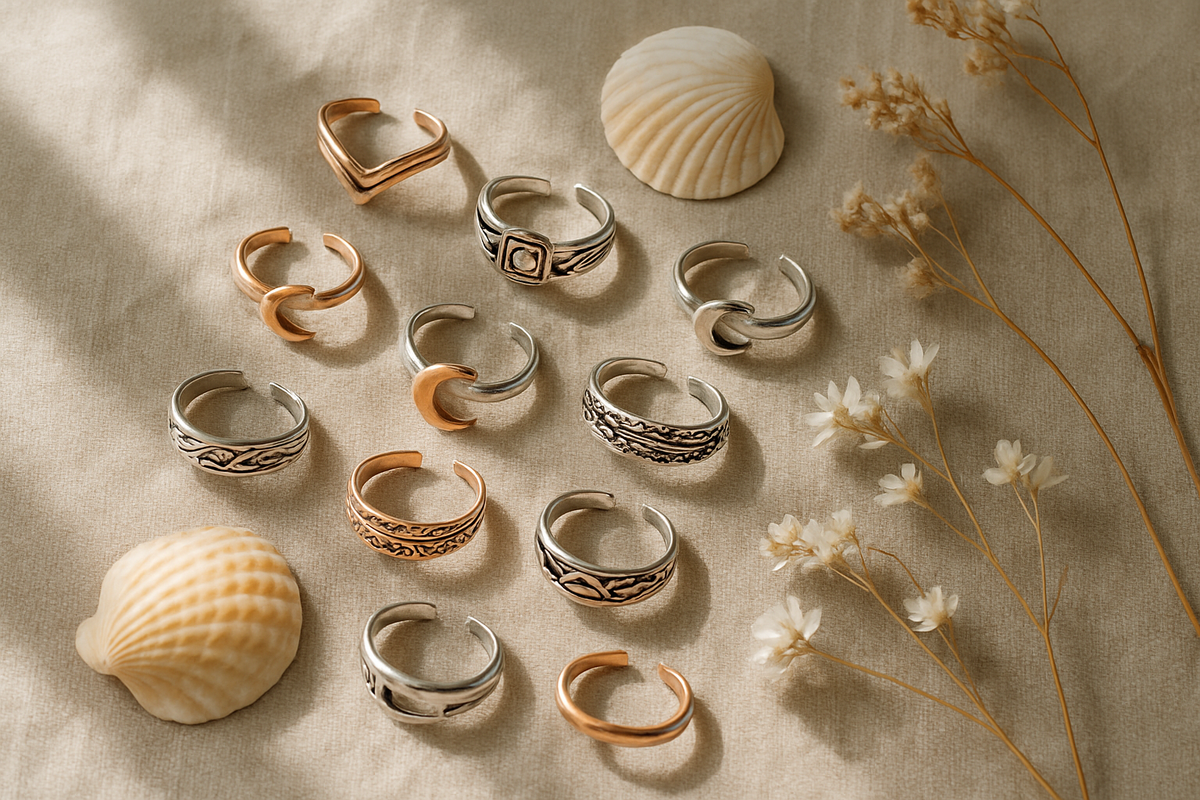
Sterling silver remains the most popular choice, both for its traditional significance and because it resists tarnishing from everyday foot exposure to water and sand. If you're deciding between metals for durability and skin sensitivity, the same considerations used when comparing silver vs. white gold for finger rings apply well to toe jewelry—silver is softer and more affordable, while white gold offers more resistance to scratching for daily wear.
Toes swell slightly throughout the day just as wrists do, which is why most toe rings are designed as open, adjustable bands rather than fixed-size circles. The same logic used to properly size a bracelet—leaving a little room for movement without slipping—applies here; see the general fitting principles in the bracelet size chart for measuring flexible jewelry comfortably. If a ring feels tight by evening, gently reshape the open ends rather than forcing it over the knuckle.
Traditionally, a toe ring signals marital status, fertility, or social rank, particularly in Indian and Middle Eastern customs. In modern Western contexts, it's more commonly worn as a fashion statement tied to confidence, individuality, or beach and bohemian style.
Indian brides wear silver toe rings called bichiya or metti as part of wedding rituals to publicly mark their married status. Ayurvedic belief also holds that a nerve running from the second toe connects to the uterus, so the ring is thought to support reproductive health and regulate the menstrual cycle.
The second toe carries the strongest traditional and symbolic weight, associated with marriage and fertility in several cultures. However, rings can be worn on any toe purely for style, with the big toe often chosen for a bold statement and smaller toes for delicate, layered looks.
There's no universal rule declaring one foot unlucky, though some folk traditions loosely associate the right foot with action and the left with intuition. Most modern wearers choose a foot based on comfort and which sandals or shoes they wear most often rather than superstition.
No—a toe ring and a purity ring are entirely different pieces of symbolic jewelry. A purity ring is worn on a finger, typically by teens or young adults, as a personal pledge of abstinence until marriage, while a toe ring is worn on the foot and traditionally signals marriage, fertility, or status rather than a vow; for a closer look at finger-worn symbolic rings, see how rings on different fingers carry meaning.
Introduction to Electroplating: The Historical Perspective Although the electroplating process looks flashy and high-tech, electro…
Lab-grown vs natural diamonds compared: origin, price, resale value, ethics, and meaning — choose the right stone with confidence.
Introduction to Sterling Silver Above all precious metals stands the sterling silver, an alloy predominantly composed of pure silv…